Zero-Energy Homes With Photovoltaics and Hydrogen Storage
Distinguish annual net-zero energy from outage autonomy, assess the evidence for solar-hydrogen homes, and understand storage losses, batteries and safety requirements.
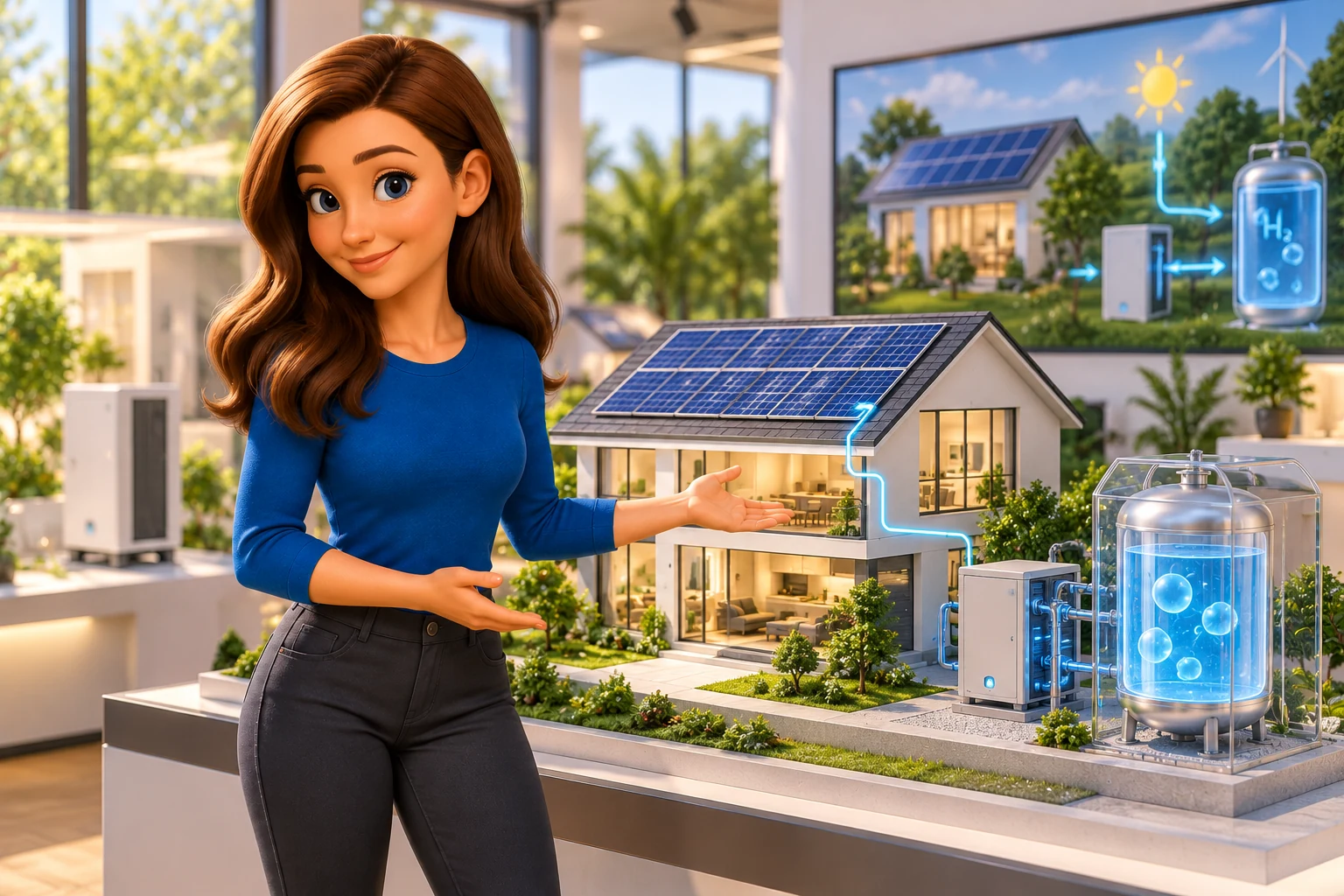
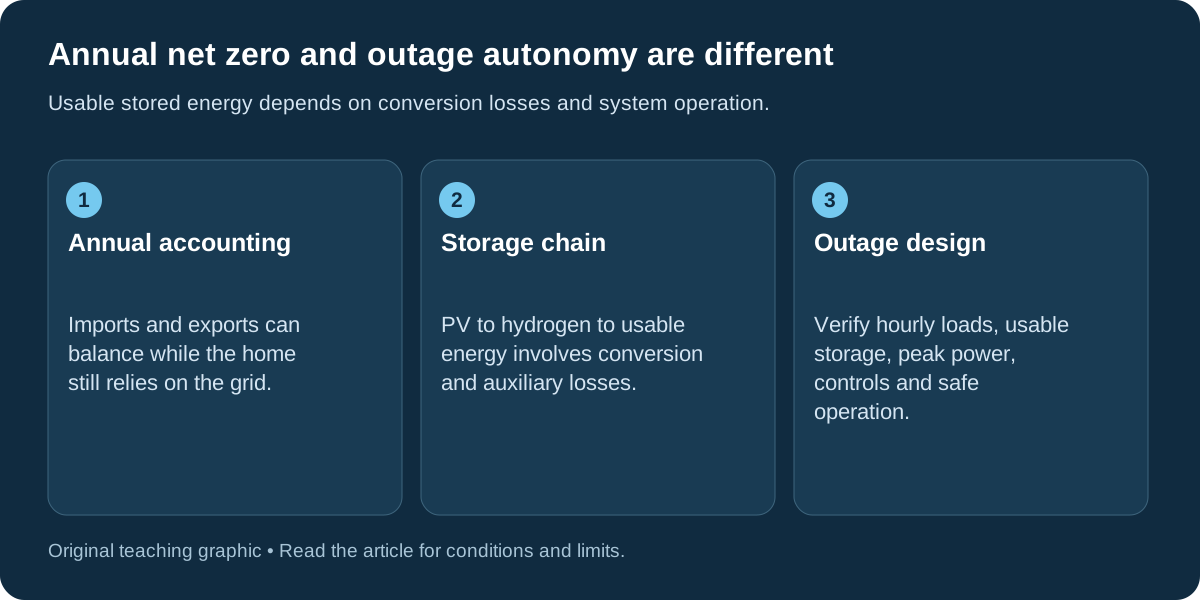
Photovoltaics and hydrogen storage can work together in a designed energy system. But an annual net-zero energy balance does not mean a house can run independently through every outage or season. Reliable autonomy needs an hourly energy balance—a plan matching supply and demand hour by hour—plus adequate storage, equipment capacity and a safe operating plan.
Annual energy balance versus autonomy
A net-zero accounting method can balance energy imports and exports over a year. The home may still import electricity at night or during winter and export a surplus at other times. A grid-connected PV system also needs the appropriate islanding and backup equipment to operate during a grid outage.
The DOE zero-energy building definition concerns defined annual accounting. It is not a certification of outage duration, off-grid reliability or zero emissions under every boundary.
Follow the solar-hydrogen energy path
PV electricity can power an electrolyzer to produce hydrogen. Hydrogen then needs suitable storage and, where required, compression or other conditioning. A fuel cell or another approved conversion device can later produce usable electricity or heat.
Each conversion and auxiliary consumes energy. Storage, controls, pumps and standby operation also matter. Usable recovered energy is lower than the original electrical input; hydrogen is not a zero-waste way to store every surplus. Battery storage can complement the system for faster response and daily balancing, rather than being merely a future possibility.
What the Athens study demonstrated
The published Athens analysis used dynamic TRNSYS modeling for a specified 400 m² residence and a typical weather year. Its reported annual demand of 59.14 kWh/m² corresponds to 23,656 kWh for that modeled floor area. The modeled configuration included about 203 m² of PV and specified initial hydrogen storage of 34 m³.
These are study inputs and model results, not monitored proof that an installed house remained autonomous indefinitely. Initial stored energy, weather assumptions, conversion performance and end-of-year storage balance matter when interpreting autonomy.
Interpret named projects carefully
The New Jersey Hydrogen House Project is a real named project, and its public descriptions include battery backup. That establishes an example to investigate, not a universal system size, panel count, price or household outcome.
Do not treat unrelated eco-housing projects as evidence of a combined PV-hydrogen system unless their actual equipment and results support it. A project name alone cannot substantiate a technical claim.
HyHouse was a safety experiment
The HyHouse report concerns hydrogen-release experiments at Glenglass Cottage near Sanquhar, Scotland. Its purpose was safety research; it did not test autonomous PV-hydrogen energy performance. Distinguish a safety experiment from a monitored energy-storage demonstration when evaluating project reports.
Engineering, safety and cost checks
Hydrogen systems need appropriate ventilation, leak and flame detection, compatible materials, pressure protection, separation and trained operation. The DOE hydrogen-safety guidance explains why specialized engineering is necessary. This is not a homeowner tank-and-piping project.
Evaluate critical loads, peak output, weather sequences, storage state, maintenance, permits, replacement costs and the consequences of a failed component. Compare grid connection, efficiency measures, batteries and other backup options before assuming hydrogen is the best economic choice. Property-value gains or zero bills cannot be promised from the concept alone.
Conclusion
Solar-hydrogen storage is a system-design question with real conversion losses and safety requirements. Separate annual energy accounting, modeled autonomy and measured project results. Start with the home's loads using our home energy audit guide before evaluating a specialized storage design.
Continue with our HVAC guides for related homeowner decisions.

Scott Harding
Scott is the main author of DIY Home Comfort. Learn more about the team and our approach on the About page.