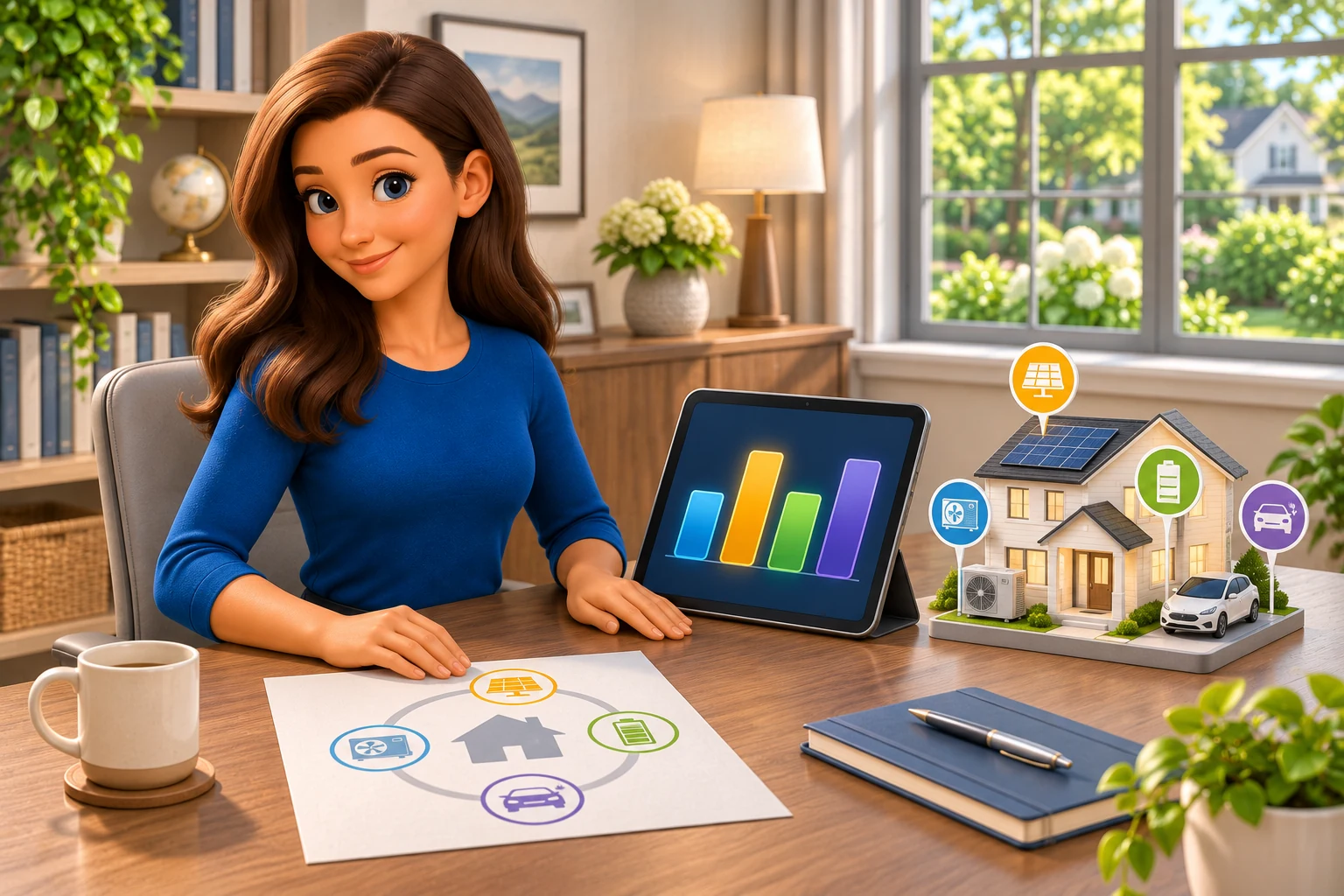
Are Home Energy Monitors Worth It? What the Data Can Tell You
Compare utility interval data, plug-in meters and panel monitors. Find out what each can measure, what installation requires, and when a monitor may answer a useful question.
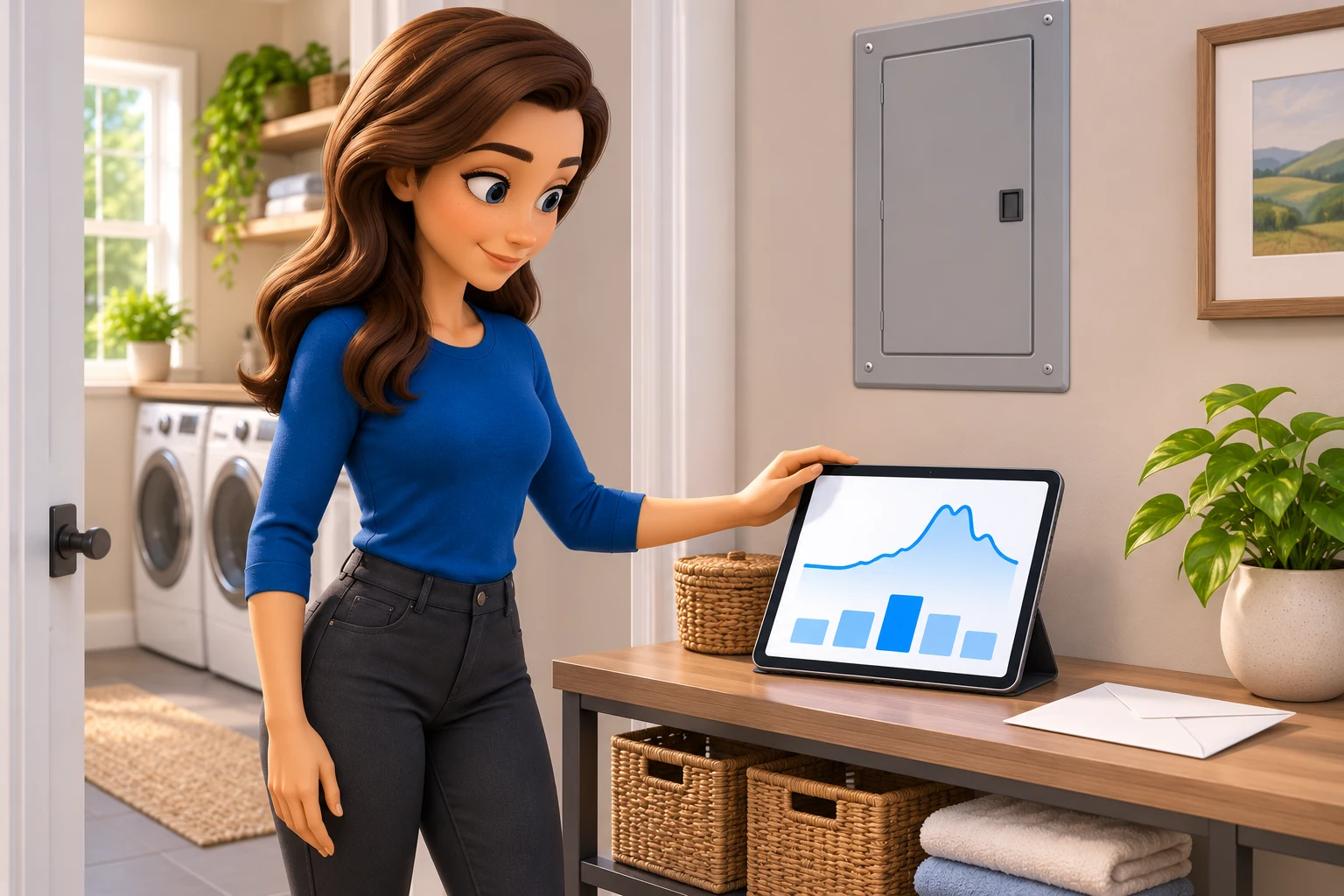
A home energy monitor can be worth it when you have a specific question that a utility bill, smart-meter data or a plug-in meter cannot answer. It does not reduce energy use by itself. You still need to interpret the information and decide what to change.
Before buying hardware, identify the load or timing question you want to investigate. Then choose the least involved measurement method that can answer it.
Start with the data you already have
Check your utility account for daily or interval electricity use. Some utilities provide customer-authorized data through Green Button; the available time interval and history depend on the utility's meter and program. The Green Button Connect My Data description explains that utilities can make usage data available in different intervals when their metering systems support them.
Utility data can help you spot a high overnight baseline, compare weekdays with weekends or see whether a change shifted usage. It may not identify which appliance caused a spike, and the data may arrive later rather than in real time.
Use the energy-bill guide to distinguish kilowatt-hours, fixed charges and time-based rates before using an app's estimated cost.
Choose a measurement method for the question
| Method | What it can help answer | Main limitation |
|---|---|---|
| Utility interval data | When whole-home electricity use rises or falls | Usually does not identify individual circuits |
| Plug-in meter | How much a compatible plug-in appliance uses | Does not measure hardwired loads |
| Whole-home monitor | Total use, sometimes import/export or solar flow | May not tell you which appliance is running |
| Circuit-level monitor | Use on selected monitored circuits | Requires compatible sensors and safe installation |
Ask which conductors or circuits the monitor measures, how it handles solar export, and whether device-level identifications are measured directly or inferred by software. Check whether readings are instantaneous, averaged or delayed.
Turn a reading into a decision
Choose one hypothesis, such as “the overnight base load is higher than expected” or “EV charging is overlapping with the peak-price window.” Record the time period, weather, equipment settings and any other large loads before comparing readings.
Do not treat a monitor's app estimate as a guaranteed bill amount. A utility bill may also include delivery charges, taxes, fixed fees, demand charges or export credit rules that an app does not model. Our before-and-after measurement guide explains how to compare similar periods.
For a larger project, an energy audit may answer more than buying another dashboard. Use the payback worksheet if you want to compare the cost of the equipment with a clearly measured benefit; do not assume the monitor itself creates savings.
Check installation and data handling
A plug-in meter is limited to compatible devices and outlets. A monitor that uses sensors inside an electrical panel may require a qualified professional and must follow its instructions and local rules.
🛑 Do not remove a panel cover or reach near energized parts to install a monitor. Electrical panels can contain hazardous voltage; use a licensed electrician or other qualified professional for panel-connected equipment.
Before sharing utility data with an app, review the authorization scope, how long the connection lasts, which account details are shared, and how you revoke access. A cloud dashboard may retain data after you stop using the hardware; check the product's current privacy terms.
Conclusion
A home energy monitor is a diagnostic tool. It is most useful when the measurement matches a specific decision and the data can lead to an action you are willing and able to take.
Explore our Energy Efficiency guides to connect energy data with practical upgrade choices.

Scott Harding
Scott is the main author of DIY Home Comfort. Learn more about the team and our approach on the About page.