AI-Powered HVAC Zoning Systems: Benefits, Limits and Retrofit Planning
Understand AI-powered HVAC zoning systems, equipment compatibility, airflow requirements and illustrative costs before planning a retrofit.
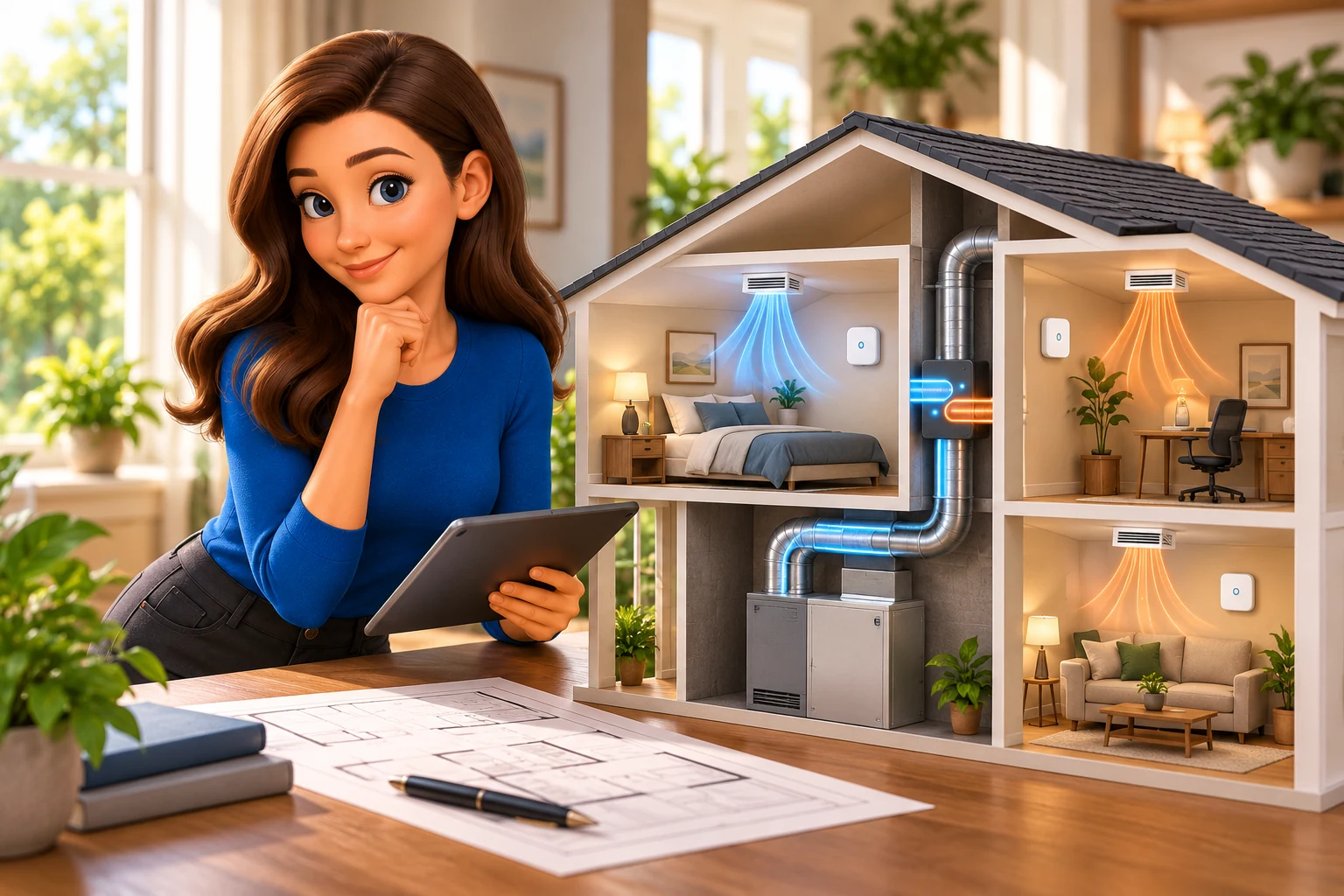
AI-powered HVAC zoning systems are marketed as a way to manage comfort in different areas using sensors, controls and motorized dampers. The features vary by product. Before buying, ask what the selected system can do and whether your equipment and ducts can support it. An AI label alone does not confirm compatibility or energy savings.
What is an AI-powered HVAC zoning system?
A ducted zoning system uses zone controls and dampers to direct conditioned air to different areas. Products may add scheduling, remote access, occupancy sensing or learning features. Check the exact specification: these capabilities are not universal, and conventional zoning does not necessarily use machine learning.
Carrier's residential zoning explanation describes the basic thermostat-and-damper arrangement. It also notes that actual energy savings depend on the home, system design and operation.
How it works
Zone sensors report conditions to the controller, which coordinates the equipment and dampers according to its design. Ask which measurements are actually available, how the controls respond to conflicting demands and what happens if a sensor or network connection fails.
Request documentation for any advertised learning or diagnostic capability, the supported sensor types and the expected control accuracy. Ask how an alert is generated and which conditions require an on-site service visit.
Retrofit versus new construction
A retrofit needs an assessment of duct access, zone sizes, return paths, equipment staging, blower controls and the minimum airflow needed when only a small zone calls. New construction allows these needs to be considered before ducts and equipment are installed.
A hot room may also have an envelope, duct-leakage or balancing problem. Ask the contractor to diagnose the cause before proposing a zoning retrofit. Compare the recommendation with our HVAC energy-efficiency guide.
Benefits and limits
Separate setpoints may improve comfort where different parts of the home have different needs. Energy use and noise depend on equipment behavior and how the zones are operated. Runtime reduction alone does not establish the percentage reduction in electricity or bills.
Ask for evidence relevant to the proposed residential system. Savings measured in a commercial building with a different control strategy cannot establish the expected result in your home. Treat comfort benefits and financial payback as separate parts of the decision.
Installation and airflow
Have qualified HVAC personnel design and commission damper controls. Carrier's damper guidance discusses airflow restrictions and the importance of proper design and balancing.
🛑 Homeowners can document comfort problems, review schedules and position supported wireless sensors as instructed. Duct cutting, equipment wiring, service settings and airflow commissioning belong in the professional scope. Do not close registers as a substitute for an engineered zoning system; see our guide to closing air vents.
Request the manufacturer's approved approach to minimum airflow and pressure control. A bypass damper is not a universal remedy: the installer must follow the instructions for the exact system. Have the quote identify the duct, control and commissioning work actually required.
Cost breakdown and simple payback
The figures below remain an illustrative budgeting example, not a contractor quote or prediction for your home. Both options assume $250 in annual energy-bill savings. No tax credit or rebate is deducted.
| Cost or assumption | Homeowner-assisted install | Professional install |
|---|---|---|
| Equipment | $4,200 | $4,200 |
| Labor / installation | $600 | $3,500 |
| Permits / fees | $900 | $1,200 |
| Total upfront cost before incentives | $5,700 | $8,900 |
| Assumed annual bill savings | $250 | $250 |
| Simple payback | 22.8 years | 35.6 years |
Calculation: Simple payback = upfront cost ÷ annual bill savings. $5,700 ÷ $250 = 22.8 years; $8,900 ÷ $250 = 35.6 years.
This is not a return-on-investment rate. It excludes financing, maintenance, replacement costs and changes in energy prices; equipment may need replacement before the calculated payback. The homeowner-assisted example assumes a lower labor bill, not permission to do regulated work yourself. Obtain an itemized local quote and have qualified professionals assess ductwork, airflow and code requirements.
Do not assume a zoning retrofit qualifies for an incentive. The IRS Energy Efficient Home Improvement Credit guidance limits that credit to eligible improvements through December 31, 2025. Verify any current state or utility program separately.
Cost and payback example corrected October 28, 2026. The earlier unsupported credit deductions and 4.2/6.8-year payback estimates have been removed.
Compatibility and support
Get written confirmation for the exact air handler or furnace, outdoor unit, thermostats, zoning panel and damper models. Refrigerant type or model year alone does not prove control compatibility. Ask about local operation without internet, software support, subscriptions, replacement parts and the written warranty.
Frequently asked questions
Can zoning be added to my existing HVAC system?
Possibly. A contractor must assess equipment controls, ductwork, access and airflow before confirming a suitable retrofit.
Does every smart zoning system use AI?
No. Scheduling and remote control do not by themselves demonstrate machine learning. Ask which documented features distinguish the proposed controller.
Will I save 30%?
No percentage is promised here. Request the calculation assumptions and compare projected energy costs with the installed price.
Do I need attic access?
It depends on where the ducts, controls and proposed dampers are located. Have the installer identify access needs and safe service clearances.
Will the retrofit affect my warranty?
Check the written equipment and installation terms. Have the supplier confirm approved components and installation requirements.
Conclusion
AI-powered zoning may improve comfort, but energy savings alone may not recover its installation cost within the equipment's life. Compare a professional assessment, local quotes and realistic savings before deciding. Request completion evidence with our HVAC commissioning checklist.
Explore more energy-efficiency guides for improvements suited to your home.

Scott Harding
Scott is the main author of DIY Home Comfort. He's also an experienced HVAC technician that enjoys home renovation and spending time with his family. You can find out more about him here.