HVAC Commissioning Checklist: What to Ask Before Signing Off
Use this HVAC commissioning checklist to request sizing, airflow, controls and equipment-test records. Download a homeowner handover checklist for your contractor.
An HVAC commissioning checklist helps you agree on how the installer will show that your system works as intended. Your job is to agree on what will be checked, collect the written results and learn how to use the system. Technicians do the testing and adjustments that need training, tools or applicable credentials.
Use the checklist while choosing a contractor. It helps you plan before installation day. This is an owner-prepared aid; it doesn't replace an ENERGY STAR certification form, a building-code inspection or the manufacturer's instructions.
Agree on the scope and acceptance criteria before installation
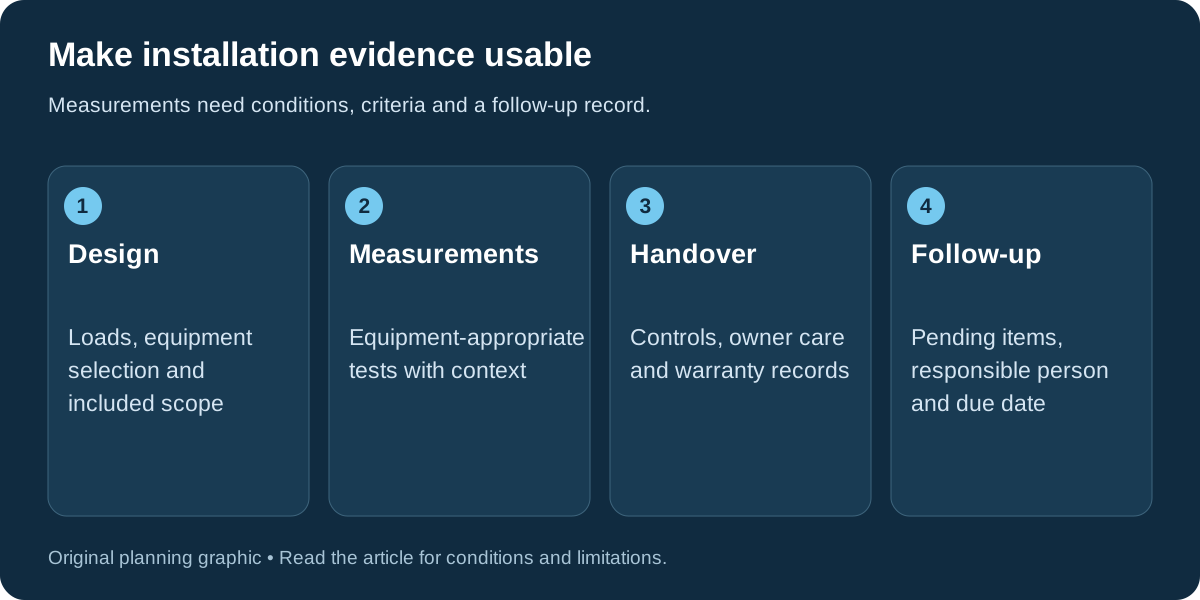
Ask which checks the price includes, which measurements you'll receive and what counts as an acceptable result. A box marked “tested” leaves questions unanswered. Request the test name, operating conditions, result and the relevant manufacturer or design criterion.
ENERGY STAR's quality-installation guidance highlights sizing, airflow, refrigerant charge and ducts. Use those topics to frame the conversation. The exact tests depend on the equipment and project; not every item applies to every home.
Some checks may need to wait for suitable weather, access or another condition. Agree on how they'll be recorded, who is responsible, the next appointment and how you'll accept the result. Follow your actual contract for payment and sign-off; this checklist doesn't change its terms.
Request the design and equipment record
- Home-specific load calculation and the assumptions used.
- Selected heating and cooling capacities and relevant performance conditions.
- Outdoor unit, indoor coil or air handler, furnace where applicable, and control model numbers.
- Applicable matched-system rating documentation.
- Defined duct, filter, ventilation and electrical scope.
- Record of approved substitutions and their effects on selection or ratings.
Use the efficiency ratings guide to distinguish capacity, seasonal ratings and combination records. Request an explanation when the selected size differs from the old equipment or when planned building improvements affect the design.
For a heat pump, ask how the selection addresses relevant outdoor heating conditions and any backup heat. A cooling tonnage and a seasonal heating rating alone do not describe that operating plan.
Ask for airflow, filter and duct findings
| Record | Context to include |
|---|---|
| System airflow | Operating mode, stage or speed and applicable target |
| Relevant static pressure or component pressure drop | Measurement locations, units and comparison criterion |
| Installed filter | Model, size, rating and housing fit |
| Duct findings | Repairs, inaccessible sections and agreed leakage or delivery checks |
| Room distribution | Original complaints, observed results and remaining limitations |
PNNL's existing-system assessment guidance can help identify information worth carrying into a replacement scope. Measurements need context; one pressure number without locations and operating conditions may be impossible to interpret later.
Use MERV rating and airflow to agree on the filter actually intended for use. Do not accept an airflow demonstration with a required filter removed as proof of the filtered system's performance. Leave test-port creation and internal measurements to the technician.
Get equipment-specific test records and safety instructions
For AC or heat-pump work, ask which refrigerant verification method applies and request the findings. The technician needs suitable test conditions. The equipment and installation requirements set the method and acceptance criteria. Leave pressures, charging quantities and adjustments to qualified technicians.
🛑 Ask how condensate drainage was checked and how any supplied overflow protection operates. For fuel-fired heating, request the applicable combustion, venting and safety checks from qualified personnel. Keep required inspection approvals with the job record where relevant.
A permit inspection and an equipment-performance record check different things. Ask what each covers. A passed inspection doesn't show that every requested airflow or room-comfort check was completed.
Demonstrate controls, staging and normal owner care
Ask the installer to demonstrate normal heating and cooling, fan modes and scheduling. Include supplied humidity features and any backup-heat behavior. Explain how your household plans to use the system and ask for a record of the configuration.
For staged or variable equipment, identify what the controller actually enables. If remote access is part of the package, establish who owns the account and how service access can be changed. Do not share passwords in job notes or keep the contractor's account as the only owner login.
Have the technician demonstrate safe owner-accessible filter care, condensate-related owner tasks and warning indicators using the product instructions. Record the service contact and the response expected for an alarm or unusual operation.
Download and use the homeowner checklist
Open the printable HVAC commissioning checklist. It includes blank fields for the item, responsible person, evidence, result, acceptance criterion and follow-up. Print it or save it as a PDF from your browser. Do not mark a row complete solely because a measurement appears somewhere on an invoice.
Collect the owner manuals, warranty terms and any registration requirements when the installation is complete. Record who completes registration and how you will confirm it; do not assume an installation invoice proves that every warranty step is finished.
Mark each item as one of three states: completed with evidence, not applicable with an explanation, or pending with a named person and date. Keep a short follow-up list so everyone knows what still needs doing.
After installation, note whether the original room problem improves under comparable conditions. For persistent dampness, use the temperature and humidity guide. For longer-term use comparisons, keep the energy-bill baseline separate from the installation acceptance record.
Return to the HVAC efficiency hub to connect these checks with the buying decision.
Conclusion
Agree on the commissioning scope before installation. Ask for evidence that fits your equipment, then keep the results and follow-up tasks with your installation records. That makes it easier to check the work you've paid for.
Keep planning the next improvement: read more Energy Efficiency articles on equipment, airflow and whole-home performance.

Scott Harding
Scott is the main author of DIY Home Comfort. Learn more about the team and our approach on the About page.