HVAC Efficiency Ratings: SEER2, EER2, HSPF2 and AFUE
Understand HVAC efficiency ratings, including SEER2, EER2, HSPF2 and AFUE. Compare matched equipment without mistaking a rating for a utility-bill forecast.

HVAC efficiency ratings help you compare equipment tested in the same way. Different ratings measure different jobs, and none can predict your home's annual bill alone. Check the rating, capacity, exact equipment combination and installation plan together.
This guide explains the main U.S. residential labels and gives you a practical way to review competing quotes without treating a bigger number as a complete buying decision.
Match each rating to the service it measures
| Rating | What it describes | Comparison limit |
|---|---|---|
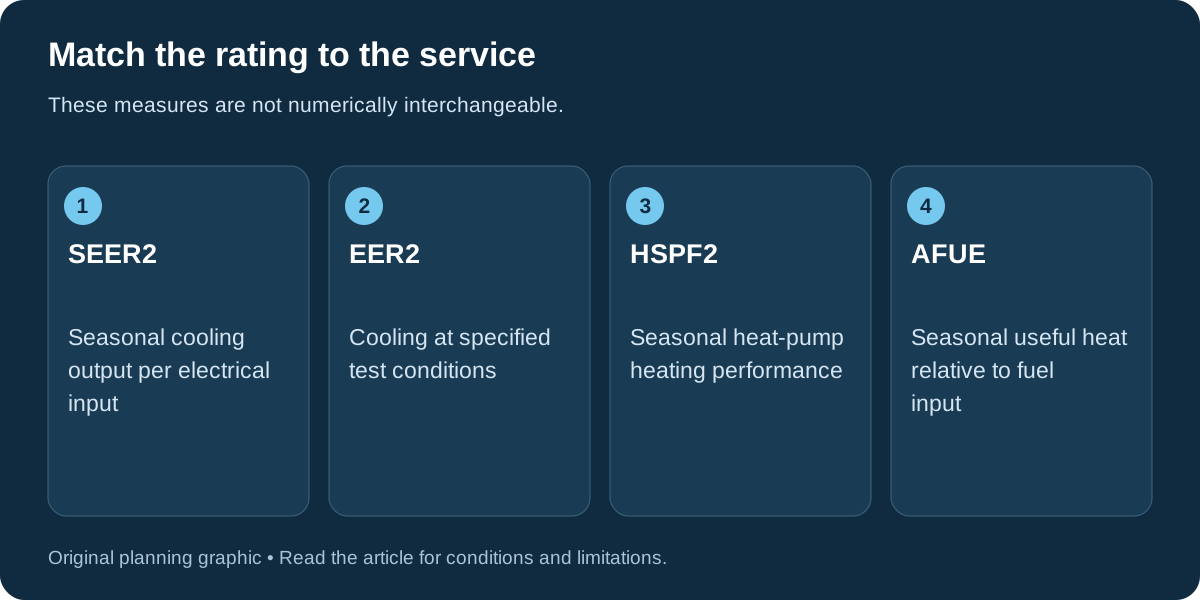
| SEER2: seasonal energy efficiency ratio | Seasonal cooling output relative to electrical energy input | Compare the same rating framework and appropriate equipment combinations |
| EER2: energy efficiency ratio | Cooling output relative to electrical input at specified operating conditions | It is not the same seasonal measurement as SEER2 |
| HSPF2: heating seasonal performance factor | Seasonal heat-pump heating output relative to electrical energy input | It does not establish heating capacity at your winter design temperature |
| AFUE: annual fuel utilization efficiency | Annual useful heating output relative to fuel energy input for a furnace or boiler | It does not include distribution losses or directly compare fuel and electricity costs |
ENERGY STAR's heat-pump criteria define the cooling and heat-pump heating metrics. For a like-for-like rated comparison, higher output per unit of input indicates higher tested efficiency. That statement does not make unlike metrics interchangeable.
Heat pumps have ratings for both cooling and heating because they do both jobs. Fuel furnaces use a different heating measure. To compare running costs, you need more than a furnace's AFUE percentage or a heat pump's HSPF2 number. You also need energy prices, building demand and expected operating performance.
Separate seasonal efficiency from a rating at set test conditions
SEER2 uses a defined cooling-season test calculation. EER2 measures performance at specified test conditions. They help answer different questions, but neither measures your particular summer. Ask why the proposed equipment combination fits your operating conditions.
HSPF2 measures seasonal heating efficiency for heat pumps. For winter planning, also ask for heating-capacity and performance data at the outdoor temperatures that matter to your home. Include the backup-heat plan. Similar HSPF2 ratings don't guarantee similar capacity in colder weather.
The Department of Energy's residential heat-pump purchasing guidance explains the newer rating names. Use that distinction to request consistent documentation, not a universal conversion between old and new labels.
Read AFUE as a fuel-conversion measure
AFUE applies to fuel-fired furnaces and boilers. It expresses useful heating output as a percentage of fuel input under the defined seasonal test. It doesn't include the equipment's separate electricity use. It also doesn't tell you how much heat ultimately reaches your rooms through the ducts.
The Department of Energy's furnace purchasing guidance defines this measure. Compare AFUE with AFUE for appropriate equipment, then account separately for fuel prices, electrical use and installation. Do not compare an AFUE percentage numerically with a heat pump's HSPF2.
Check whether the quote uses SEER or SEER2
The “2” identifies a newer test framework. SEER and SEER2 are not two spellings of an otherwise identical measurement. The same caution applies to EER versus EER2 and HSPF versus HSPF2.
When a quote lists only “16 SEER,” ask whether the contractor means SEER or SEER2 and request the supporting combination record. Do not multiply a legacy number by an online rule of thumb and present the result as the certified rating of a specific system.
Keep the installed equipment's original information when comparing a replacement. An old label can help establish what was purchased; age, maintenance, airflow and current condition still affect operation. The AC age guide helps locate model and serial information without treating age as a performance test.
Verify the matched system instead of an advertised maximum
For a split system, get the outdoor model and the indoor coil or air-handler model. Include any required furnace and controls. A manufacturer's “up to” rating may apply to a different combination from the one on your quote.
- Request complete model numbers for the proposed combination.
- Ask for its applicable certified rating record or manufacturer performance documentation.
- Check that the capacity and rating framework match the quote.
- Confirm whether a substitution changes the rated combination.
- Keep the documentation with the commissioning and warranty records.
The AHRI homeowner explanation of seasonal efficiency provides background on rated comparisons. A rating certificate documents tested equipment performance; it does not certify that your home's ducts and installation have been checked.
Compare capacity, staging and ratings as separate decisions
Capacity is how quickly equipment delivers heating or cooling, usually measured in Btu/h. Air-conditioner tonnage describes capacity: one refrigeration ton equals 12,000 Btu/h. Efficiency compares output with input. More tonnage doesn't mean a higher efficiency rating.
Staging and variable-speed operation describe how output or airflow can change. They can influence comfort and rated performance, but the terms alone do not specify a SEER2 value or prove that the ducts can support the system.
Ask for a home-specific load calculation and the selected equipment's relevant performance data. Avoid replacing the old unit with the same nominal size solely because that is what is already installed.
Use a bounded calculation rather than a bill guarantee
Hypothetical Example
Cooling Input
About 16.7% LessFor an illustrative rating-only comparison, assume two cooling systems deliver the same seasonal cooling output under the same test framework. Moving from SEER2 15 to SEER2 18 gives a calculated input-energy ratio of 15 ÷ 18, or about 0.833. That is roughly 16.7% less cooling input in this simplified comparison, not 16.7% off the whole household bill.
That example assumes the systems deliver the same cooling. It leaves out changes in weather, sizing, controls, ducts and operating conditions. It also doesn't show whether an old system still meets its original label rating. For your own cost estimate, use measured or modeled HVAC energy use and the charges that apply to you.
Our bill-baseline guide explains why fixed charges and non-HVAC loads remain. Compare the installed-price premium with realistic operating scenarios rather than applying the percentage to every dollar on the bill.
Finish the comparison with installation evidence
On each quote, record the exact equipment combination, cooling and heating capacities, and relevant ratings. Add the included duct work, controls and verification scope: what the installer will check. Ask for missing information before comparing the proposals.
Use the commissioning checklist to agree on the records you will receive when the work is complete. The HVAC energy efficiency hub connects ratings to airflow, filtration, humidity and installation quality.
Conclusion
Use efficiency ratings to compare equipment that does the same job under the same test framework. Confirm the exact combination and keep capacity separate from efficiency. If you calculate savings, show the assumptions and treat the result as an estimate.
Keep comparing the decisions that affect comfort: read more Energy Efficiency articles before choosing your next upgrade.

Scott Harding
Scott is the main author of DIY Home Comfort. Learn more about the team and our approach on the About page.