How Old Is My Air Conditioner? Find and Verify Its Age
Find AC model and serial information safely, verify manufacturer date codes, distinguish manufacture from installation, and plan an evidence-based replacement decision.

Find your air conditioner's age using its model and serial number together with the manufacturer's date-code guidance or installation records. A serial number may encode manufacture date, but the format varies by brand and product era. The model number alone usually identifies a product family, not the exact installation date.
Find the identification label safely
Look for a readable exterior rating plate on the outdoor unit and any accessible indoor equipment label. Photograph the full label without removing service panels or reaching through grilles. Record manufacturer, model and serial number exactly; similar-looking characters can change a lookup result.
The indoor coil or air handler and outdoor unit may have different dates. Record each one. If the label is missing or unreadable, a service company may find the information in records or inspect it safely.
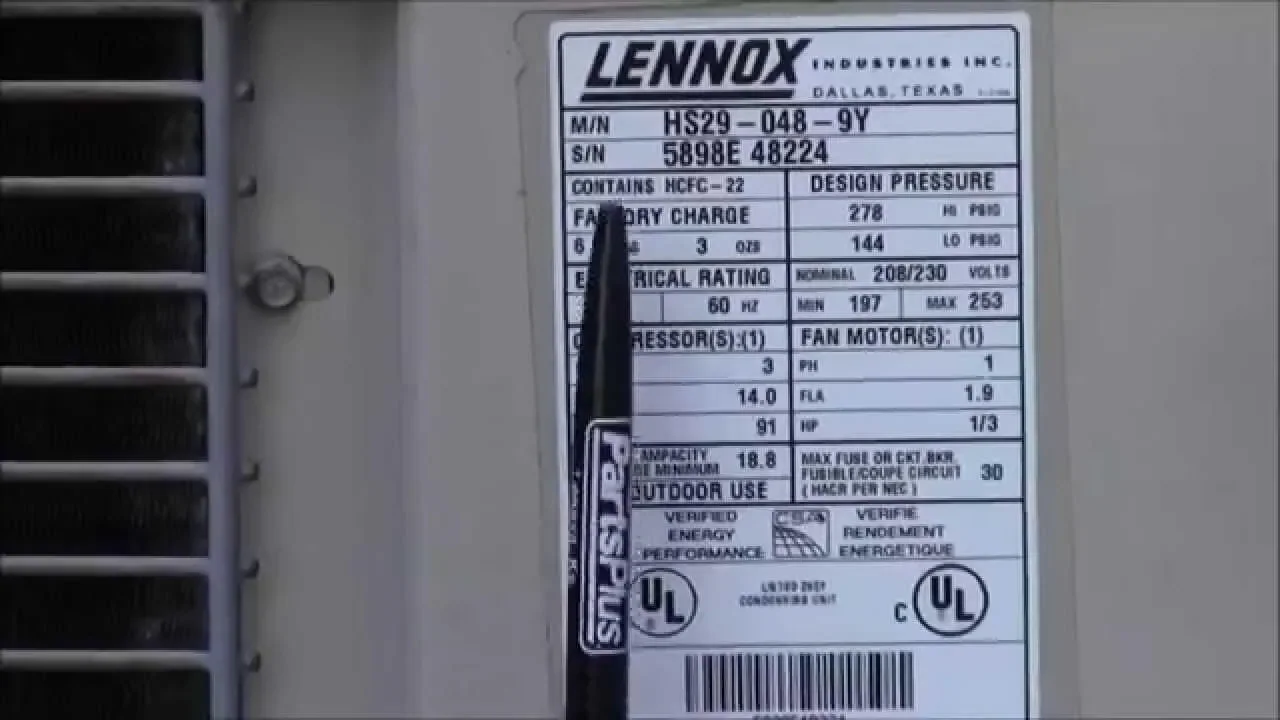
Verify the date-code method
- Check the manufacturer's owner support, warranty lookup or published product guidance.
- Confirm the code format applies to that exact brand and manufacturing period.
- Use both model and serial information if support requests it.
- Label an uncertain result as an estimate rather than forcing an online decoder's answer.
Do not assume the first four digits always mean week and year or month and year. A format that works for one manufacturer can produce a plausible but wrong date for another. Avoid posting your complete equipment label publicly when direct manufacturer support can resolve the question.
Manufacture date is not installation date
Equipment may sit in inventory before installation. A later replacement coil, compressor or thermostat does not reset the age of every connected component. Look for the original invoice, permit, startup report, warranty registration or dated service record to establish when the system entered service.
Keep manufacture date, installation date and major repair dates as separate entries. If only the manufacture date is known, say so. Our commissioning checklist shows the records worth retaining for future work.
What age tells you about replacement
Age can justify planning and inspection, but it cannot establish remaining life. The ENERGY STAR replacement guide also considers repairs, comfort and performance. An older system may have a repairable airflow problem; a newer one may have serious installation defects.
Ask for a documented diagnosis, parts availability, warranty coverage and repair scope. Compare that with a complete replacement quote and likely future needs. A fixed repair-percentage rule or a universal service-life number is not enough.
Use the information to plan a better project
Before replacement, reassess loads, duct condition, humidity needs and heating options. Do not automatically buy the old nominal capacity. Compare AC-only replacement with a suitable heat pump using heat-pump versus AC cooling and the heat-pump buying guide.
For the next planning step, see repair vs replace air conditioner.
Conclusion
Identify the exact equipment, verify the correct date-code method and separate manufacture from installation. Use the resulting age alongside condition and repair evidence, then retain the records for the next owner or service visit.
Continue with our HVAC guides for related homeowner decisions.

Scott Harding
Scott is the main author of DIY Home Comfort. Learn more about the team and our approach on the About page.