MERV Rating and Airflow: Choose a Filter Your HVAC Can Handle
Understand MERV rating and airflow together. Compare filter fit, pressure drop and system limits before upgrading filtration or changing replacement routines.
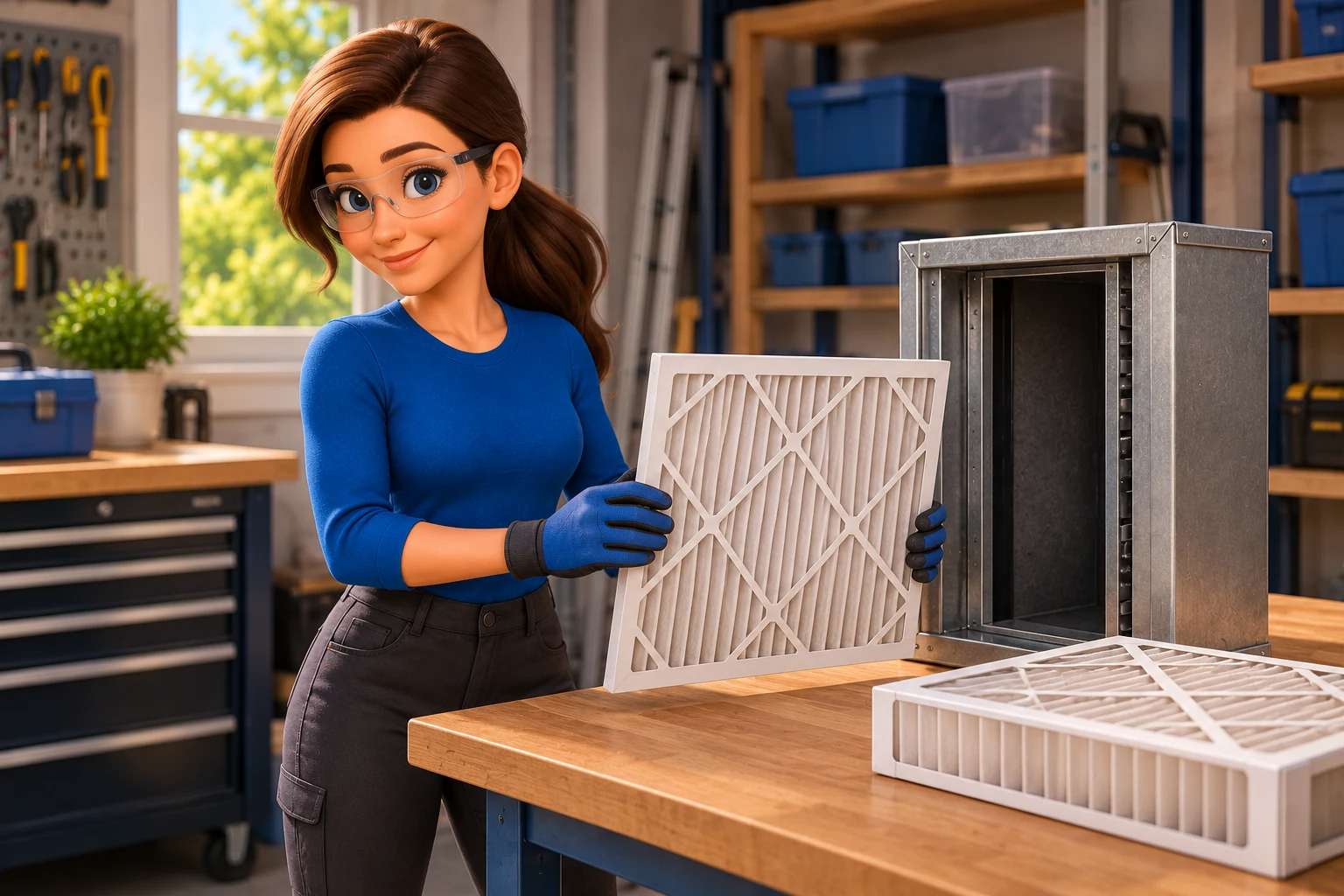
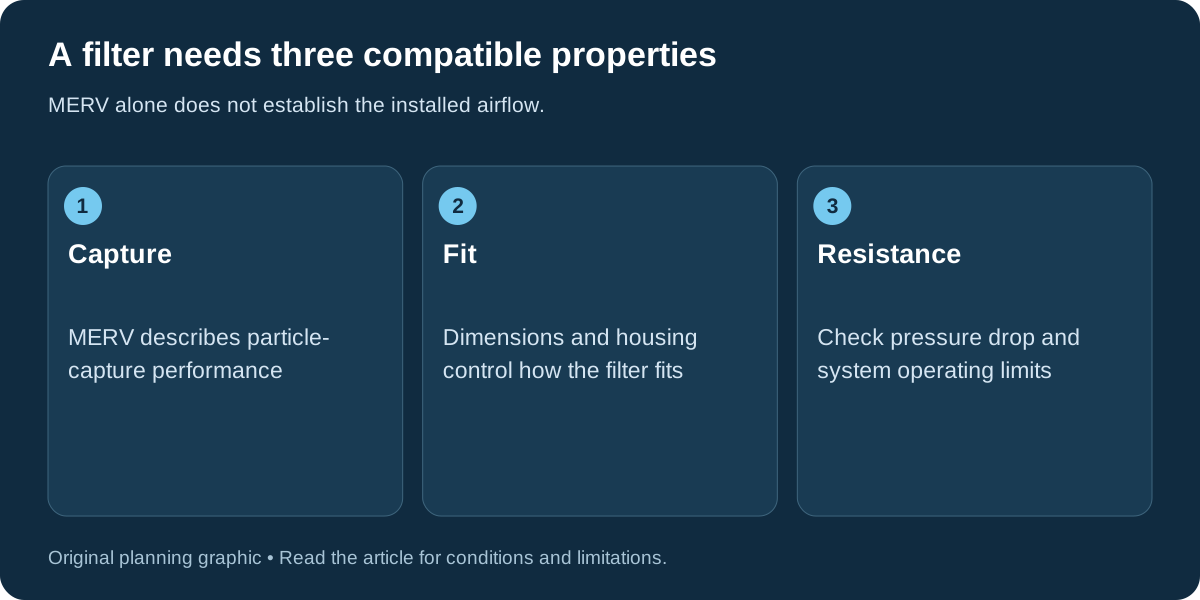
MERV rating and airflow tell you different things about a filter. MERV measures particle-capture efficiency in a test. Airflow depends on resistance, filter size and condition, housing, ducts and fan behavior. Choose filtration that works within your system's operating limits.
Use this guide to compare replacement filters and ask better questions before upgrading the rating. It is a selection and assessment guide, not instructions to modify a filter cabinet or change installer fan settings.
Understand what MERV measures and what it leaves out
Key Distinction
What MERV Measures
Particle CaptureMERV stands for Minimum Efficiency Reporting Value. It tells you how well a filter captures specified particle sizes in a standardized test. A higher rating means greater capture efficiency in the relevant size ranges. It doesn't measure airflow or fan power.
EPA's MERV explanation recommends considering MERV 13 or the highest rating the system fan and filter slot can accommodate. That compatibility condition matters. Ask an HVAC professional when the equipment's limits or the proposed filter's resistance are unclear.
MERV also does not describe every indoor-air concern. A particle filter is not a complete solution for gases, odors or a moisture source. Keep the reason for the upgrade specific instead of assuming a higher number resolves all air-quality problems.
What about MERV 8, MERV 11 and MERV 13?
These labels describe capture-performance classes. They don't rank every filter as good, better or best for your furnace. Check dimensions and compare product resistance at the same airflow. A package label alone can't show what your fan and ducts can accommodate.
Compare pressure drop at an appropriate airflow
Pressure drop describes resistance across the filter at a stated airflow or face velocity. Face velocity is how fast air moves through the filter's face. Compare values measured under similar conditions. Without the airflow, a pressure-drop figure doesn't give you a complete comparison.
PNNL's high-MERV filter guide distinguishes capture efficiency from resistance. Filter design and media area mean that a higher MERV rating does not automatically imply a higher pressure drop than every lower-rated product.
The installed system affects the result too. Added resistance may reduce airflow, make the fan work harder within its control range, or do both under different conditions. Check product data and system measurements before assuming a higher MERV rating always uses more electricity.
Check dimensions, housing and bypass
🛑 Confirm the required nominal and actual dimensions, depth and permitted filter type in the equipment information. A deeper filter is only an option if the housing is designed to accept it. Do not force it into a shallow slot, stack filters or remove a required filter to regain airflow.
The filter should fit its housing so air doesn't routinely bypass the media, the material that captures particles. If the cabinet, seals or rack are damaged, ask for a repair plan. Have the technician assess any gaps around unfamiliar service components.
PNNL's filter-installation guide addresses fit and system compatibility. Any cabinet or duct modification should be evaluated as part of the system design, not treated as an interchangeable accessory purchase.
Set a replacement routine around instructions and conditions
Start with the equipment and filter manufacturer's maintenance guidance. Check an owner-accessible filter safely using the specified shutdown procedure. Household conditions such as renovation dust, pets and longer operation can change how quickly a filter collects dust and debris.
Record when you installed the filter, its product details and what you find during checks. A calendar reminder helps, but the filter may need attention sooner. If it loads with dirt unusually quickly or becomes wet, find the cause instead of repeatedly replacing it.
🛑 Do not continue operating equipment that shows an unexplained loss of airflow, icing or other concerning change merely because a filter is new. Arrange an appropriate service assessment. The residential AC check guide can help organize the service conversation.
Request a filter comparison the technician can verify
| Record | Why it matters |
|---|---|
| Filter model, rating and dimensions | Identifies the actual product being evaluated |
| Proposed pressure drop and its airflow condition | Makes the product comparison meaningful |
| System operating mode and fan setup | Provides context for the measurements |
| Measured airflow and relevant pressure readings | Checks the installed result against equipment requirements |
| Housing fit and replacement access | Addresses bypass and practical maintenance |
Suppose two filters fit your system and have similar particle-capture ratings. Next, compare their resistance at the airflow your system needs. Ask whether each will give an acceptable installed result. Package color, price and nominal thickness alone won't answer that.
🛑 These are questions for a qualified technician. Homeowners do not need to drill pressure-test holes, remove blower panels or change fan programming to complete the worksheet. Use the commissioning checklist when the filter choice accompanies a new installation.
Separate filter restrictions from other airflow problems
A weak room supply can also involve ducts, dampers, return paths or the equipment. Keep furniture clear of grilles, note when the complaint occurs and report what changed. Do not assume every airflow problem requires a lower-MERV filter.
Review duct sealing versus duct insulation for the difference between leakage, heat transfer and delivery. Also read why closing registers is not a general energy-saving strategy before trying to redistribute flow yourself.
The HVAC efficiency hub connects your filter choice with equipment, controls and the rest of your home. If airflow is the concern, ask for a diagnosis and record the result before trying more products.
Conclusion
Check capture performance, fit and resistance together when choosing a filter. Confirm the choice with manufacturer limits and appropriate installed measurements. Then follow the maintenance guidance for your equipment and household conditions.
Keep exploring practical improvements: read more Energy Efficiency articles on airflow, equipment choices and whole-home planning.

Scott Harding
Scott is the main author of DIY Home Comfort. Learn more about the team and our approach on the About page.