How to Conduct a Residential Air Conditioning Check Safely
Use a safe homeowner AC checklist and learn what to request from a professional performance check, including airflow, drainage and commissioning records.
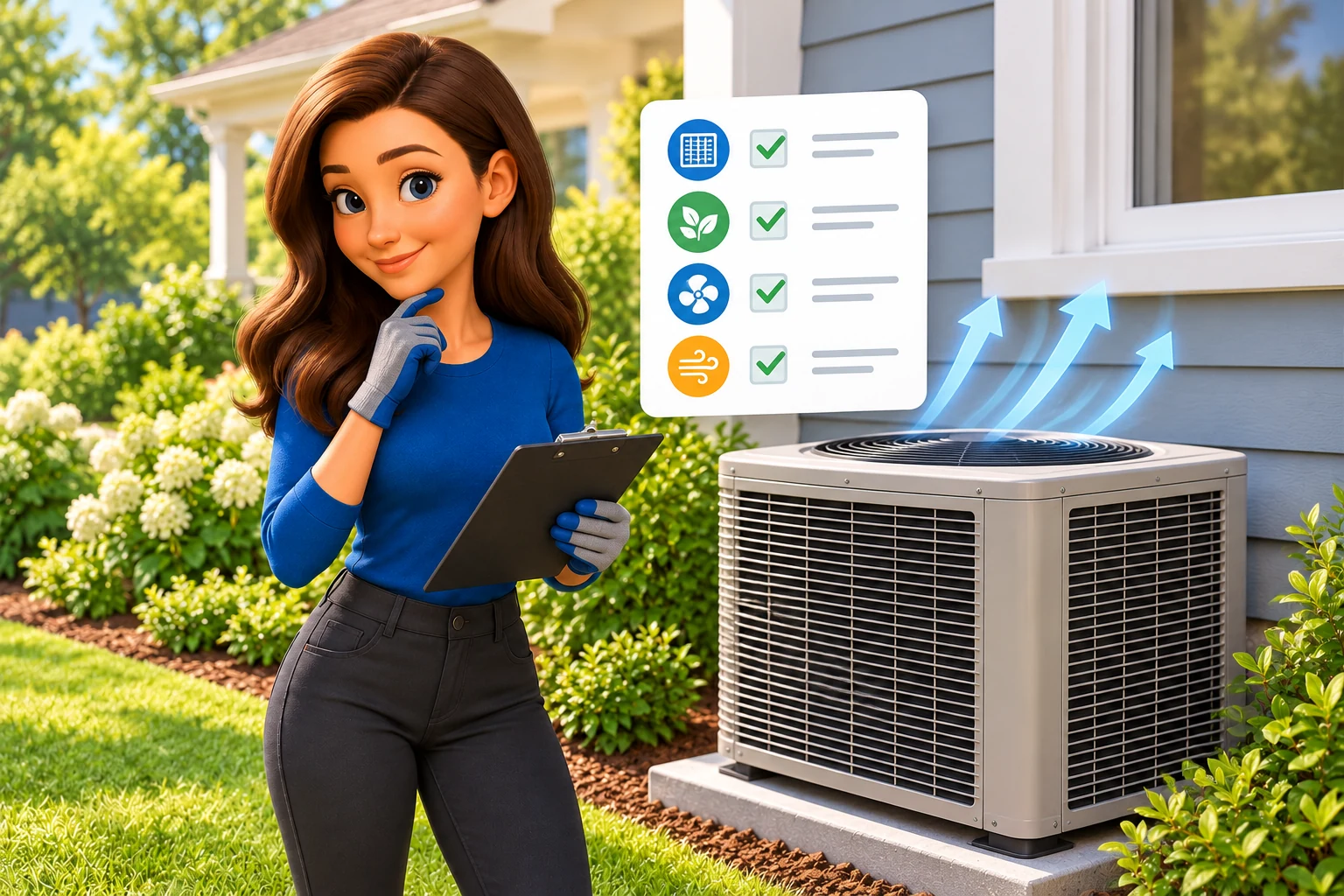
A residential air conditioning check has two parts: safe observations you can make and measurements a qualified technician can perform. The goal is to identify comfort or reliability problems, not to open energized equipment or add refrigerant as routine maintenance.
🛑 Keep away from smoke, arcing, burning smells and wet electrical components. If the system repeatedly trips a breaker or makes severe mechanical noise, stop operating it and arrange service.
Make a useful homeowner record
- Record the thermostat mode, setting, room conditions and any displayed code.
- Note when cooling starts, which rooms remain uncomfortable and whether airflow changes.
- Check filters through the owner-accessible opening described in the manual. Use a compatible replacement and the correct airflow direction.
- Look for blocked supply and return grilles, visible ice, stains or water near the equipment.
- Observe the outdoor unit from outside the guards. Note debris or damage without reaching inside.
🛑 Temperature and humidity together are more informative than a single cold-air reading. Our temperature and humidity log helps record conditions and equipment operation. Do not drill ducts, insert probes near moving or electrical parts, or treat one supply-air temperature as proof of correct capacity.
Separate the service tasks
| Area | Owner observation | Professional assessment |
|---|---|---|
| Filtration | Correct filter, visible condition and access | Pressure drop, fit and compatibility with required airflow |
| Air delivery | Blocked openings and room complaints | Airflow, external static pressure and duct distribution |
| Drainage | Visible water or staining | Trap, vent, slope, overflow protection and approved termination |
| Outdoor unit | Obvious obstruction or unusual sound | Electrical components, coil condition and equipment operation |
| Refrigeration circuit | Ice, warning messages or loss of cooling | Leak diagnosis, charge verification and repairs |
Connecting refrigerant gauges is not an ordinary homeowner check. EPA Section 608 identifies covered refrigerant-service activities and technician certification requirements. State trade licensing and other qualifications are separate questions.
Request measurements with conditions
Ask the contractor to record the equipment combination, operating mode, outdoor and indoor conditions, instruments used and the manufacturer's acceptance criteria—the limits used to judge the results. For a ducted system, ask for airflow and external static pressure to be assessed together. Refrigerant checks must use the right method for the model and the available operating conditions.
A generic pressure, temperature difference or airflow number is not a pass criterion for every system. A reading without test conditions or a model reference may be impossible to interpret later. The HVAC commissioning checklist explains the records to request after installation or major work.
Avoid maintenance that creates another fault
🛑 Leave capacitors, contactors, wiring, motor lubrication and internal coil cleaning to qualified service unless the manufacturer explicitly assigns a particular task to the owner. Some motors are permanently lubricated. Cleaning methods that are suitable for an outdoor coil may damage an indoor unit or wet its electronics.
Do not add a restrictive filter merely because its rating is higher. Read MERV rating and airflow before upgrading filtration. Do not close registers to disguise an uneven-room problem or bypass a condensate safety switch to restore cooling.
Decide what happens next
- Resolve visible ice or water before continuing normal cooling.
- Request diagnosis when performance changes persist after safe basic checks.
- Compare repaired operation with the same sort of conditions that revealed the problem.
- Keep the invoice, measurements, settings and follow-up items together.
Conclusion
A good AC check produces observations and evidence you can use. Keep owner tasks accessible and model-permitted, and require a professional diagnosis for internal service or unexplained loss of performance. Our repair versus replacement guide can help with the next decision.
Continue with our heat-pump guides for related homeowner decisions.

Scott Harding
Scott is the main author of DIY Home Comfort. Learn more about the team and our approach on the About page.