EV Charger Installation Requirements: What to Check Before You Buy
Get ready for an EV charger installation. Find out what to ask about available power, equipment, permits, costs and the finished setup.
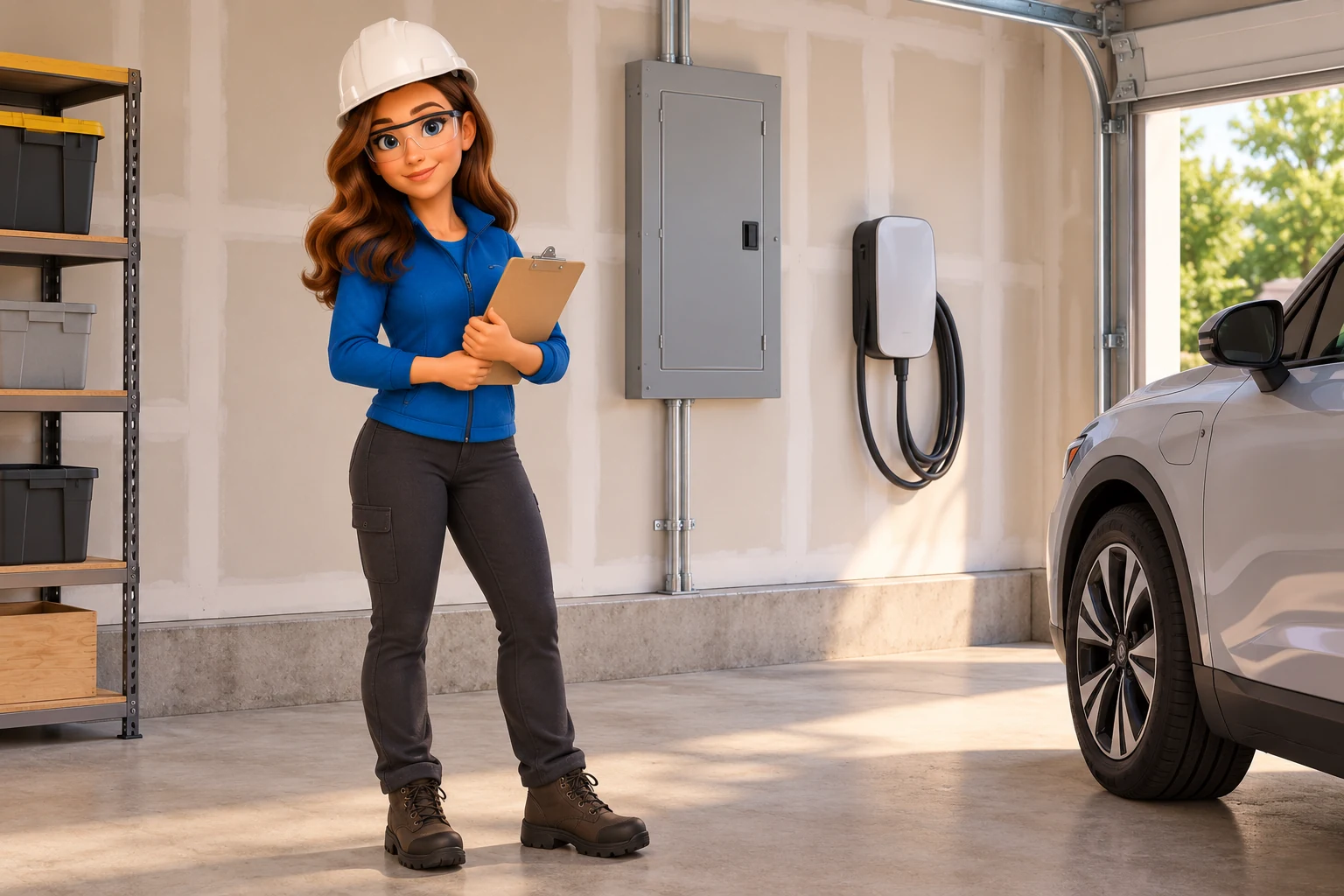
EV charger installation requirements depend on your car, the charging rate, your home's electrical system and local rules. The equipment's instructions matter too. Before buying a charger, have a qualified electrician check what your home can safely support. You may not need a service upgrade.
Use this checklist to plan the job and compare quotes. Leave wiring, breaker selection and panel work to qualified professionals. Our home EV charging guide will help you work out how much charging you need.
Tell the electrician what you need
Tell the electrician which car and model year you have. Include its AC charging limit, your usual and longest regular drives, and how long you'll plug in. Ask what charging rate will meet those needs.
- Show where you'll park and where the car's charging port sits.
- Point out cable routes, doors, walkways, weather exposure and places a car could hit the equipment.
- List major electrical appliances and planned additions, including another EV.
- Say whether you also want solar, a home battery or approved vehicle backup.
- For rented or shared property, agree on who approves the work and pays for electricity.
Photos of closed equipment and a simple parking plan can help the first discussion. 🛑 Electrical safety: Don't remove covers to take photos or collect information. Use the charging-level worksheet to explain how much energy you need and when you need it.
Find out what your electrical system can support
Spare panel spaces and the service's amp rating don't tell the whole story. The electrician also needs to check the wiring that supplies the panel, its condition, existing appliances and the proposed charger. They'll use the calculation or measurement method local rules allow. Damaged or unsuitable equipment may need work even at a lower charging rate.
The EPA's home charging guide includes an electrician's load check and permits among the steps. General examples of service sizes can't tell you whether your own home is ready.
| Option | Question to ask | What to ask for in writing |
|---|---|---|
| Use a suitable existing connection | Has this circuit and connection been checked for the proposed charging use? | Confirmation of suitability and the approved equipment setup |
| Set a lower charging rate | Can it replace the energy you use in the time available? | The set limit and a calculation of charging time |
| Add approved power controls | What limit does it protect, and what happens when other appliances need more power? | Compatible models, what is monitored and controlled, and what happens if there is a fault |
| Upgrade the electrical equipment or supply | What condition or power limit makes this work necessary? | The electrician's findings, utility requirements and a separate price |
Ask about alternatives. In a suitable design, power controls may reduce the need for upgrades. They won't repair damaged equipment or make every existing setup safe.
Check what the power controls actually do
A timer changes when charging starts. It doesn't, by itself, protect an electrical limit. Someone might change the schedule, another appliance might switch on or a connection might fail.
Some controls set a fixed charging limit. Others adjust charging as household demand changes, or share power between cars. Ask which job the proposed system does and how the installer will set it up. If you need more than one function, check that they work together.
For example, Tesla's Wall Connector guidance treats these as different functions. It currently says Dynamic Power Management works with a single Wall Connector, rather than multiple units. Don't assume two advertised features can be combined. Check the exact setup with the installer; other makers have different limits.
For more than one car, bring the two-car charging worksheet. The installer needs to know when each driver leaves and how much energy each car needs.
Agree on equipment, location and approvals
Agree on the equipment model, safety certification, compatible plug, mounting spot, weather rating and cable reach. Ask whether a plug-in or hardwired connection is suitable and allowed for that equipment and location.
Ask the electrician which local electrical rules, permits and inspections apply. Check whether the utility needs to be involved. The DOE's charging-code overview explains why requirements vary by state and locality.
Agree on who gets permission, digs trenches, repairs walls, handles utility paperwork and arranges inspection. If the job needs a new meter or utility work, find out who handles it and what must happen first. Do that before setting an installation date.
🛑 Electrical safety: Leave panel work, new circuits, safety-device selection and internal equipment settings to qualified professionals. Don't make your own adapters, splitters or wiring connections. Stop using equipment that seems damaged or abnormally hot and have it checked.
Compare the full installation quotes
Give each installer the same brief and ask for an itemized quote. A price for the charger alone isn't the price for a finished installation.
- Equipment: model, plug, cable, warranty and ongoing service costs.
- Electrical work: the checked supply, set charging limit, cable route and equipment changes.
- Controls: meters or sensors, power controls, setup checks and what happens if something fails.
- Site work: digging, holes through walls, weather protection, repairs and cable storage.
- Approvals: permits, inspections and utility responsibilities.
- Handover: records, a demonstration, cover for the installer's work and support contacts.
Separate essential work from extras, such as preparing a second parking space or future backup. Ask what “future-ready” actually includes. Spare space for cables won't guarantee that a later car or backup product will work. Use the charging cost guide to check electricity costs and current incentives separately.
Make backup power part of the plan from the start
Tell the installer at the start if you want the car to power home circuits. An ordinary AC charger won't establish that capability. The vehicle, power-conversion equipment, transfer equipment and controls must be approved to work together. The design must also identify which home circuits it can supply.
Our V2L vs V2H vs V2G guide explains those different uses. Hyundai and Kia owners can also use the vehicle readiness checklist. Adding backup later may mean buying different equipment, even if ordinary charging already works.
Check the setup before the installer leaves
- Get the required inspection records, equipment details and installation documents.
- Have the installer show you how to connect, read the lights, set schedules and shut down safely.
- Confirm the set charging limit and who can change electrical settings.
- Ask what happens if monitoring, communications or a required part fails.
- Check cable storage, maintenance, who registers the warranty and who to call about faults.
Keep the records for your next vehicle or home upgrade. Have the design checked again when you add major electrical loads or change equipment.
Conclusion
Start with your charging needs, then get the electrical system checked. Compare exact equipment, required approvals and the full installed price. Before the installer leaves, make sure you know how to use the setup and who to call for help.
Read our Energy Efficiency guides to plan charging alongside solar, storage and other electrical upgrades.

Scott Harding
Scott is the main author of DIY Home Comfort. Learn more about the team and our approach on the About page.