Home EV Charging: A Simple Guide to Getting Started
Choose a home EV charging setup that fits your driving, parking space and budget. Check charging time, electrical needs, solar and backup options.
A good home EV charging setup puts back the energy you use each day while your car is parked. Before you buy a charger, check how far you drive, how long you can plug in and what your car can accept. Then ask an electrician to check your home's power supply.
This guide is for U.S. homeowners. It covers everyday charging, solar and backup power. Charging your car and using it to power your home are different jobs. A plug that fits doesn't prove the equipment is safe for your home or can send power back.
Start with your weekly driving routine
Think through a normal week before you compare chargers. Note when you leave, when you get home and your longest regular drive. Include any charging at work and anyone else who shares the parking space. A car parked for ten hours has more time to charge than one that gets home late and leaves early.
- Vehicle: model year, charging port, maximum AC charging rate and the maker's instructions.
- Energy: how far you drive and an energy-use figure that says whether it measures electricity at the wall or battery.
- Parking: charging-port position, cable reach, walkways and weather exposure.
- Electricity: your electricity plan, any cheaper hours and other appliances that use a lot of power.
- Future needs: another EV, a heat pump, solar or an approved backup system.
If you rent or share a parking area, check permission first. Agree on the parking space, how electricity will be measured and who will pay. Advice for a private garage won't cover every shared-property rule.
Choose your next guide
| Your question | Start here | What to bring |
|---|---|---|
| Will a standard-outlet charging setup be enough? | Level 1 vs Level 2 charging | Daily miles and the hours you can plug in |
| What will the electricity cost? | Cost to charge an electric car at home | Electricity drawn from the wall and your own prices |
| Does the house need electrical work? | EV charger installation requirements | Vehicle details, parking plan and future loads |
| How much solar should cover the car? | Solar panels for EV charging | Yearly miles charged at home and a solar estimate for your roof |
| Can two cars share the available power? | Charging two electric cars at home | How much charge each car needs before its driver leaves |
| Can the car supply appliances, the house or the grid? | V2L vs V2H vs V2G | The exact car and equipment approved to work together |
| Should backup come from the EV or a fixed battery? | EV battery vs home battery backup | Appliances to run, charge kept for driving and time the car is home |
Choose a charging rate that meets your needs
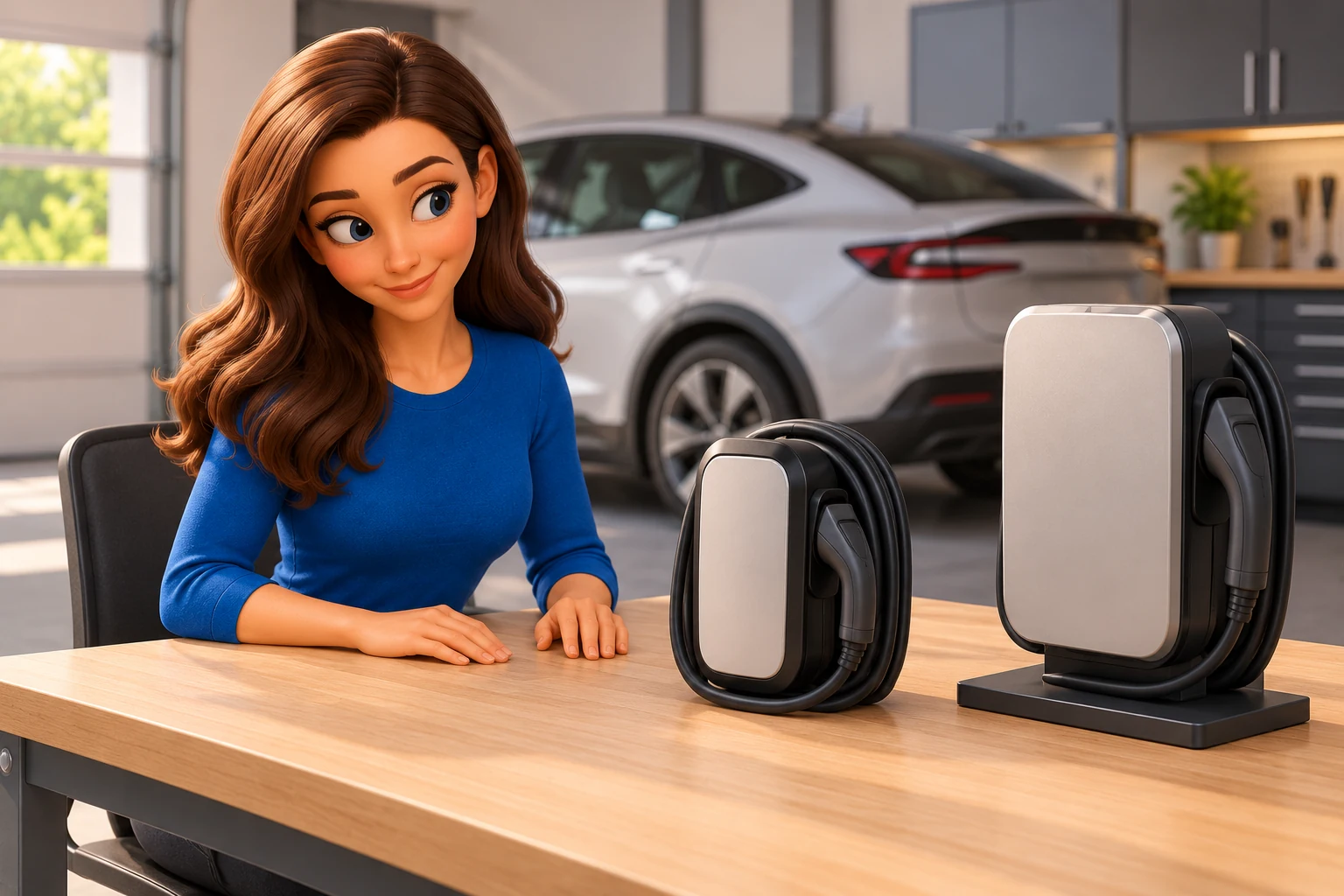
In a U.S. home, Level 1 normally uses 120-volt alternating current (AC). Level 2 normally uses 240-volt AC. The car's built-in charger turns that electricity into direct current (DC) for the battery. It can limit the charging rate even if the wall unit can supply more. Kilowatts (kW) tell you the rate of charging. Kilowatt-hours (kWh) tell you how much energy is delivered.
The Department of Energy's home charging guide describes both levels as home options. Choose one that can replace the energy you use. A faster charger can help after a long drive or when you're short on time.
Here's a made-up example. A 30-mile drive at 0.30 battery kWh per mile uses 9 kWh from the battery. If charging is 90% efficient, replacing that energy takes 10 kWh from the wall. Over eight hours, the average charging rate would need to be 1.25 kW. Your result will depend on the car, equipment and conditions. Battery heating or cooling, pauses and a lower charging rate can all change it.
Choose equipment that fits your car and home
Check your car's charging port and the approved AC connection for its exact model. U.S. vehicles may use J1772 or J3400/NACS connectors. An adapter for a public DC fast charger may not work for AC charging at home. Use an adapter only when it's specifically approved for your car, equipment and type of charging.
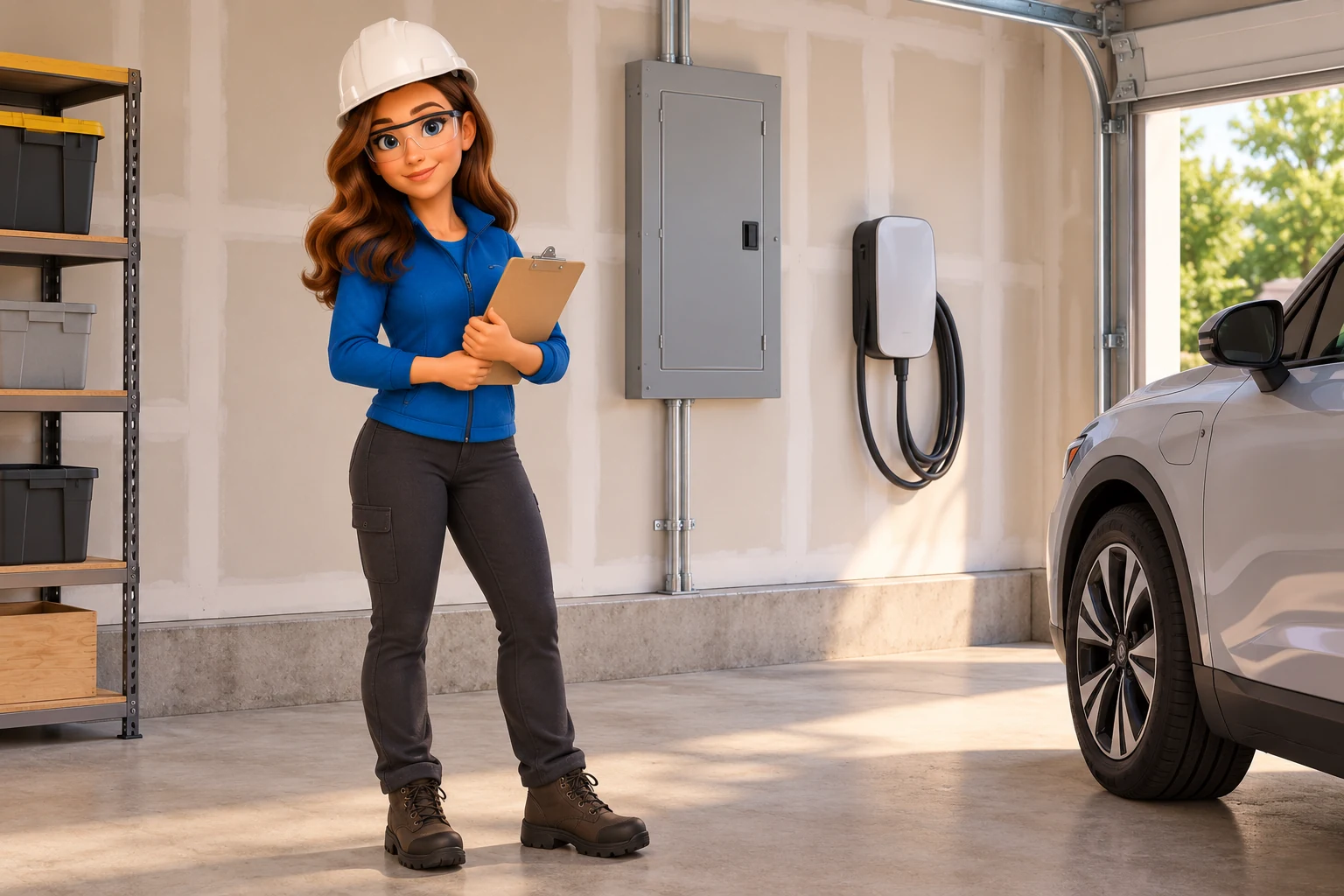
Choose equipment certified for safety by a nationally recognized testing laboratory. Check its outdoor rating, cable reach and storage needs. Have an electrician check any existing outlet and circuit you plan to use. A plug that fits, or spare space in the panel, doesn't tell you how much power the system can safely supply.
🛑 Charging safety: Never use an extension cord, multiplug adapter, damaged charger or makeshift connection. Stop using equipment that is damaged or gets abnormally hot. Have a qualified professional check it. Don't open it or keep resetting its safety devices. The U.S. Fire Administration's charging advice explains these precautions. If there's smoke, fire or immediate danger, move away and call emergency services.
Plan charging around your electricity bill
Check whether cheaper charging hours line up with the time your car is home. Before switching electricity plans, compare the whole household bill. An EV discount may come with higher daytime prices or fixed charges. A timer sets when charging starts. An approved load-management system can also slow or pause charging to keep demand within an electrical limit.
When the installer sets up the charger, choose where you'll set the schedule: in the car, the charger or the utility program. Conflicting schedules can leave the car waiting to charge. Check the clock, seasonal rates and the charge you need before leaving. Watch a few normal charging sessions and keep a plan for an urgent trip.
If you have solar, compare daytime solar charging with the price of charging overnight. Include any credit you'd give up by using solar power instead of sending it to the grid. The home solar guide covers the roof and utility decisions. Enough solar energy over a year doesn't mean your car runs directly on solar every night.
Plan home backup separately
An ordinary AC charger doesn't make your car a home backup system. Powering household circuits needs compatible equipment and controls. The design must also prevent power from reaching utility lines when they should be disconnected. Your installer and utility need to confirm the requirements. Sending power to the grid involves further approvals and program rules.
If you own a Hyundai or Kia, start with our V2X readiness checklist for vehicle-specific checks. If your car is often away, the home battery storage guide can help you compare a battery that stays at home.
Ask for a clear quote and setup instructions
- Give each installer the same details about your car, parking, driving and schedule.
- Ask for the charging rate, electrical checks, equipment models, permits and all work included.
- Ask for separate prices for power controls and future expansion.
- Before the installer leaves, get instructions, charging limits and warranty contacts. Ask what happens if the system develops a fault.
- Check that normal charging gets the car ready on time. Don't override the installer's electrical settings.
Keep your equipment details, installation records and electricity plan together. Review them when you change cars, add a major appliance or switch electricity plans.
Conclusion
Choose home EV charging around your daily driving, time at home and available power. Once that setup is clear, ask for separate prices for solar controls, a second car or backup power.
Read our Energy Efficiency guides for help planning the rest of your home's upgrades.

Scott Harding
Scott is the main author of DIY Home Comfort. Learn more about the team and our approach on the About page.