Does Adding a Bathroom in the Basement Add Value?
Assess local resale evidence, drainage feasibility, permits and moisture control before budgeting for a basement bathroom addition.
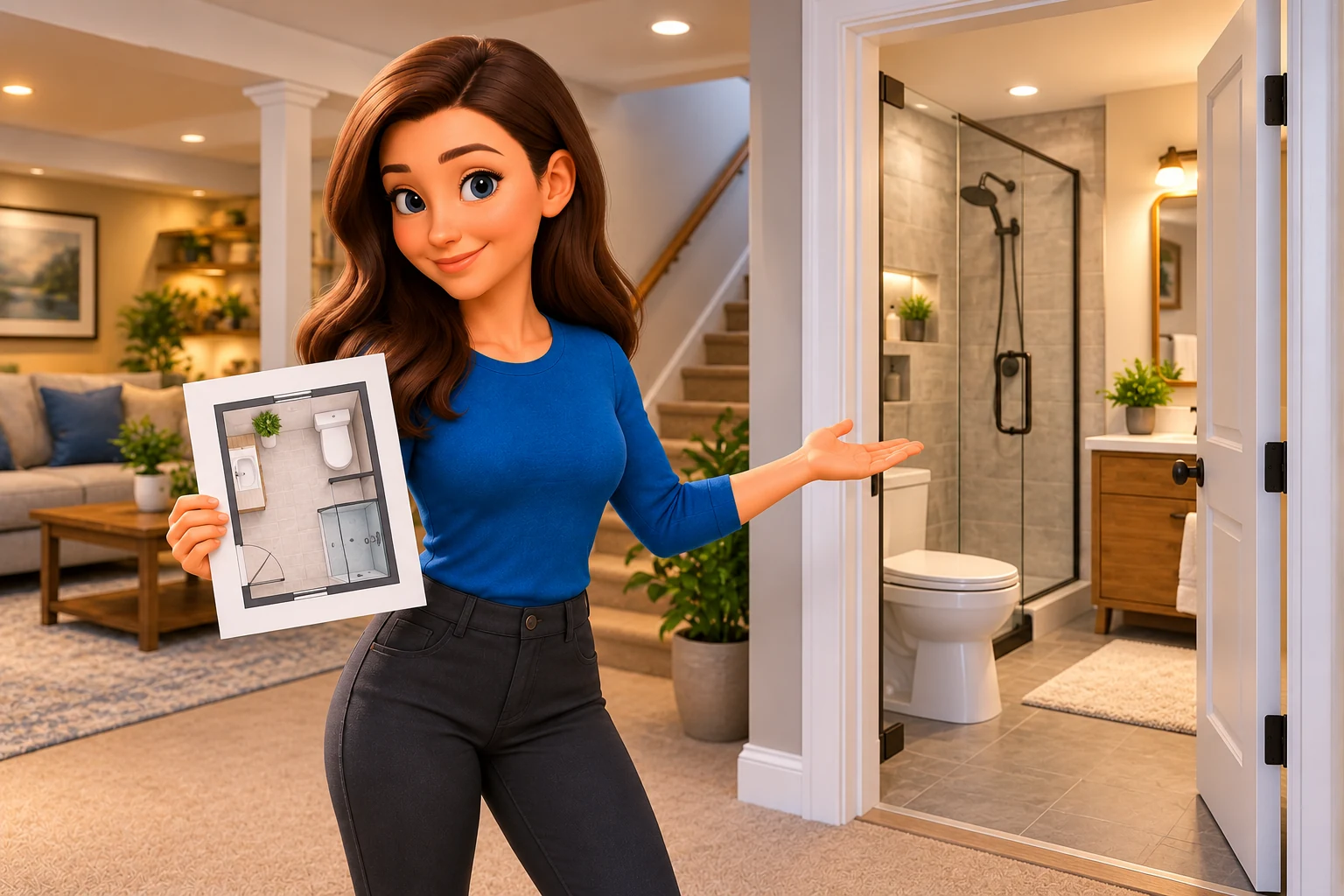
Adding a bathroom in the basement can improve convenience and make finished space more useful, but it does not guarantee a particular resale return. Value depends on local comparable homes, legal use, workmanship, layout and the cost of solving drainage or moisture problems.
Before shopping for fixtures, confirm whether wastewater can drain by gravity and whether the space can meet local requirements. A basement bathroom is a plumbing and building project, not simply an extra fixture count.
Assess resale value using local evidence
Ask a local real-estate professional or appraiser how buyers value permitted basement bathrooms in comparable homes. Explain whether the basement is finished, how it is accessed and whether the proposed bathroom changes practical use of the space.
Do not count below-grade finished space as above-grade living area. Fannie Mae’s appraisal guidance treats below-grade areas separately. Separate reporting does not mean the improvement has no value; it means the appraisal should represent it correctly.
A national bathroom-addition report is not automatically a basement-bathroom study. A cost-recouped percentage is also different from profit: recovering part of construction cost at sale does not establish that the project pays for itself. Avoid using unrelated square-footage or remodeling survey figures as a promised return.
Check drainage before design
| Question | Why it matters | What to obtain |
|---|---|---|
| Can fixtures drain by gravity to an approved connection? | The relative pipe and fixture elevations matter more than the room being called a basement. | A drainage assessment with elevations and the proposed route. |
| Is sewage pumping needed? | A pump system needs suitable capacity, venting, access and approved installation. | A specified system, discharge arrangement and maintenance plan. |
| Is backwater protection required? | Protection depends on sewer conditions and the adopted code; it is not the same thing as a pump. | The local authority’s requirements and an accessible design. |
| How will traps and drains be vented? | Improper venting can affect drainage and trap seals. | An approved venting plan, not a generic instruction to add any vent valve. |
A basement does not automatically need an ejector, and an ejector does not automatically solve sewer-backup risk. Portland’s backwater-valve guidance illustrates how local requirements depend on the connection and sewer elevations. It is a local example, not a national design rule.
🛑 Have a qualified plumber check the existing drain condition, cleanout access, water supply and the effect on any septic system. Avoid cutting a slab until utilities and the proposed connection are identified.
If a pump is needed
Ask the designer to specify listed sewage-pumping or macerating equipment that suits your fixtures and how you will use them. The design must account for flow, total dynamic head, solids handling, approved discharge piping and valves, sanitary venting and service access. Ask the designer to explain those requirements, identify any required alarms and provide the procedure for a power failure.
IAPMO’s illustrated pump-sizing discussion explains the relationship between flow and head. It is an educational example from an older model-code edition, not a substitute for current local approval or the selected equipment’s instructions.
Confirm building and use requirements
- Ask the local authority which plumbing, building, electrical and mechanical permits apply.
- Confirm fixture clearances, ceiling height, access and the proposed layout under the locally adopted rules.
- Check ventilation and exhaust discharge requirements for the actual room.
- If adding a bedroom or rental use, confirm the separate rules for emergency escape, occupancy and any accessory dwelling unit.
🛑 Have a qualified electrician confirm circuits, shock protection, bonding and the location of electrical equipment under the adopted electrical requirements. Plan any required bathroom exhaust to discharge outdoors, not into another enclosed part of the building.
There is no single national bathroom floor-area minimum that establishes compliance in every jurisdiction. A bathroom is not automatically a bedroom, and a window is not a universal substitute for required exhaust. The intended use matters.
A bathroom alone also does not establish a legal rental unit. Zoning, occupancy, fire separation, utilities and other requirements need local confirmation before rental income is included in a budget.
Resolve moisture and ventilation
Investigate water intrusion, condensation and existing odors before enclosing walls or flooring. Use moisture-appropriate materials as part of a sound design, rather than assuming finishes will correct a wet basement.
EPA’s remodeling guidance discusses moisture, outdoor exhaust and indoor-air concerns, including radon considerations. Coordinate ventilation and any radon work before the room is finished.
For existing odors, our sewer smell guide helps distinguish routine observations from conditions needing professional attention. A new bathroom should not be used to cover an unresolved drainage or moisture fault.
Get a complete quote
Use a written scope instead of a national price range. Ask contractors to identify demolition, slab work, drainage, pumping if needed, water supplies, venting, electrical work, exhaust, waterproofing, finishes, permits and inspections.
- List exclusions and assumptions, especially concealed pipe condition and access.
- Confirm who handles permits, inspections and repair of disturbed finishes.
- Allow a project-specific contingency based on identified uncertainties; a percentage is a budgeting choice, not a plumbing standard.
- Include future access and maintenance for valves, cleanouts and pumps.
Compare like-for-like quotes and discuss the cost ceiling before choosing fixtures. The project may be worthwhile for your own use even when resale evidence does not support full cost recovery.
Conclusion
A basement bathroom can add useful space and potential buyer appeal when it is legal, dry and properly drained. Confirm feasibility and local value before relying on a resale percentage. Browse our plumbing guides to prepare informed questions for your contractor.

Scott Harding
Scott is the main author of DIY Home Comfort. Learn more about the team and our approach on the About page.