Sewer Smell in House? A Safe Troubleshooting Guide
Investigate sewer-like odors with a simple location table, limited accessible checks, gas-emergency precautions and clear plumber callout conditions.

A sewer smell in a house can come from a dry drain trap, dirty drain surfaces, a faulty fixture seal or a drainage/venting problem. A rotten-egg odor can also have another source, including fuel gas or the water itself. Treat an uncertain smell as something to investigate carefully, not proof of a single plumbing defect.
This guide separates safe observations from work that belongs to a plumber. For other odor types, start with the bathroom-smells hub.
Rule out an emergency before investigating
🛑 If you suspect a natural-gas leak, leave the area and call 911 and your gas utility from a safe location. Do not operate lights, fans, phones or other possible ignition sources while still in the affected area. Do not try to locate the leak yourself.
🛑 PG&E's gas-safety guidance explains why odor alone is not a reliable way to assess gas safety. Use your own utility's emergency instructions. Do not stay in a strong, unexplained odor to complete a troubleshooting checklist; get help if anyone feels unwell.
Narrow down the source without taking plumbing apart
Once there is no suspected gas emergency, note the pattern. Is the odor at one fixture, at an unused drain, only when water runs, or across several rooms?
| Pattern | Possible area to investigate | Safe next step |
|---|---|---|
| Odor at an infrequently used drain | Evaporation may have reduced the trap's water seal. | Restore ordinary use if it drains normally; recheck afterward. |
| Odor around the stopper or sink overflow | Accessible organic buildup may smell. | Clean suitable surfaces without dismantling plumbing. |
| Odor and moisture around a toilet base | A leak or seal problem needs assessment. | 🛑 Stop using a leaking fixture and arrange plumbing help. |
| Gurgling, several slow drains or wastewater backup | A drainage or venting fault may be involved. | 🛑 Stop affected use and call a plumber. |
| Odor seems to follow the water, especially hot water | The water supply or heater may need separate investigation. | Ask the water utility or a qualified professional about testing and service. |
A trap normally retains water as a barrier to drain gases. Oatey's sewer-odor explanation describes traps, seals and venting as different potential sources. The pattern above helps choose an investigation; it does not confirm a diagnosis.
Try limited, accessible checks
- List the affected fixtures. Include guest bathrooms and accessible floor drains, not just the room where the odor was first noticed.
- 🛑 Use a little-used fixture normally. If it drains freely and there is no backup, running water can restore a trap's water seal. Stop if water rises or drainage is abnormal.
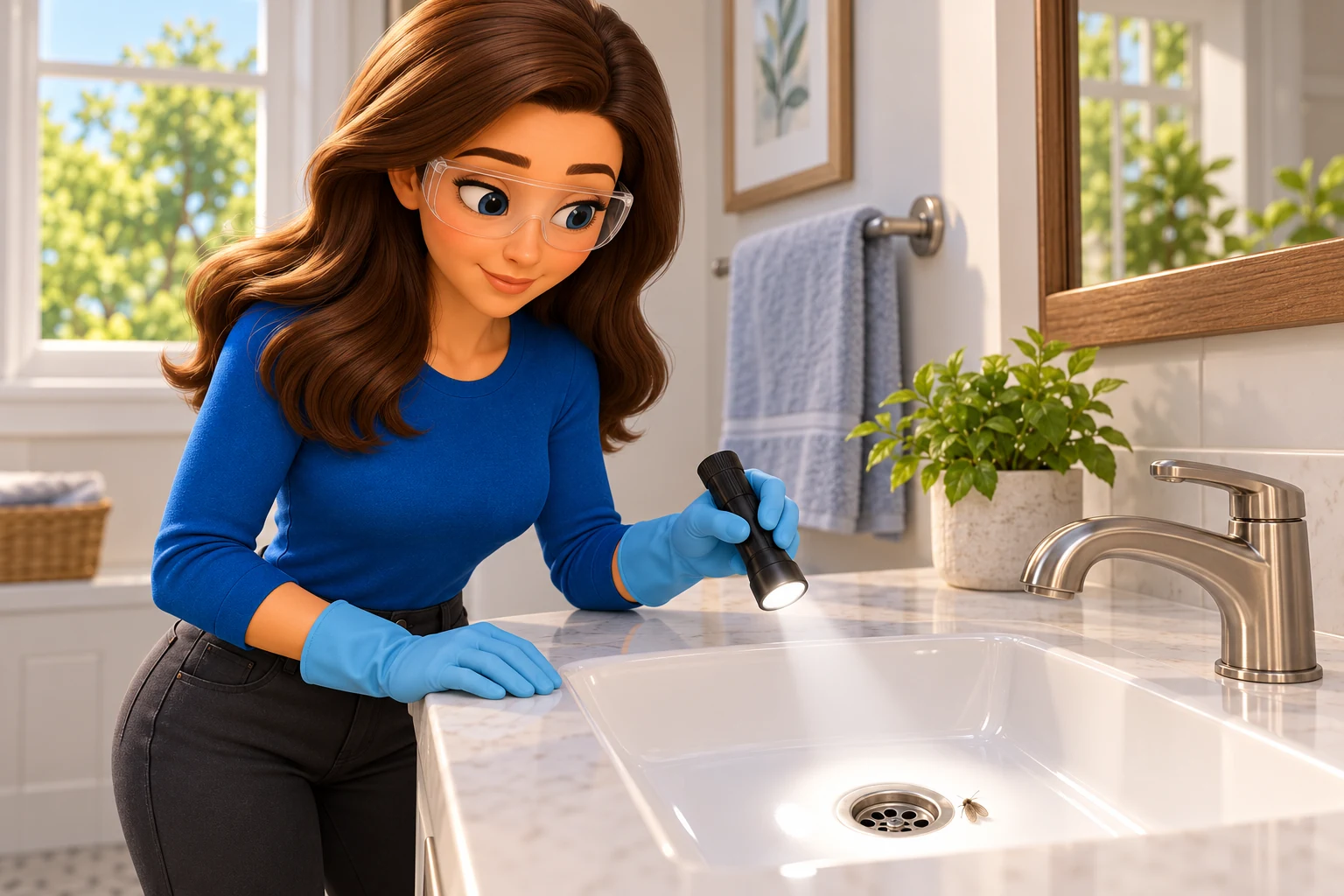
- Clean the drain opening that appears to be the source. Remove accessible residue using the fixture's approved method; our smelly-drain guide covers the limits.
- 🛑 Look for visible leaks and movement. Record drips, damp flooring or a rocking toilet. Do not tighten bolts hard or remove a fixture as a diagnostic experiment.
- Recheck and record the result. A smell that returns soon after normal use, or persists across several fixtures, needs a more complete investigation.
🛑 Do not climb onto the roof, feed a hose into a vent or open a sewer cleanout to investigate an odor. Leave vent clearing, seal replacement and sewer testing to a qualified professional. Never enter a septic tank or other confined wastewater space.
Separate water odor from drain odor
🛑 Tell the professional whether the odor occurs with hot water, cold water or either. Do not flush or disinfect a heater, remove its anode or dose a well as a general odor remedy.
Minnesota Department of Health's hydrogen-sulfide guidance explains that rotten-egg odor can originate in well water or a water heater. It is a water-quality question as well as a plumbing observation, particularly for a private well.
A stale or damp room without a sewage-like pattern may instead need the musty-bathroom moisture checks. Avoid treating every unpleasant bathroom odor with the same product.
Arrange help and prevent repeats
- Arrange prompt plumbing help for recurring odors, leaks, gurgling or drainage problems.
- Tell the plumber which fixtures are affected and whether normal use changed the odor.
- Ask for a diagnosis before committing to sewer excavation or a particular repair method.
- Keep little-used fixtures in appropriate regular use and clean accessible residue.
- Repair leaks and report renewed odors rather than masking them.
Conclusion
For a sewer smell in the house, rule out an emergency, identify the pattern and limit homeowner work to safe, accessible checks. Persistent odor or abnormal drainage deserves diagnosis rather than roof work or repeated chemical treatment.
Continue with our Plumbing articles for related bathroom and drain troubleshooting.

Scott Harding
Scott is the main author of DIY Home Comfort. He's also an experienced HVAC technician that enjoys home renovation and spending time with his family. You can find out more about him here.