How to Clean a Smelly Drain: Safe Checks and Cleaning Steps
Clean accessible drain buildup with a simple tool list and numbered steps. Check for chemical treatments, dry traps and drainage faults before starting.
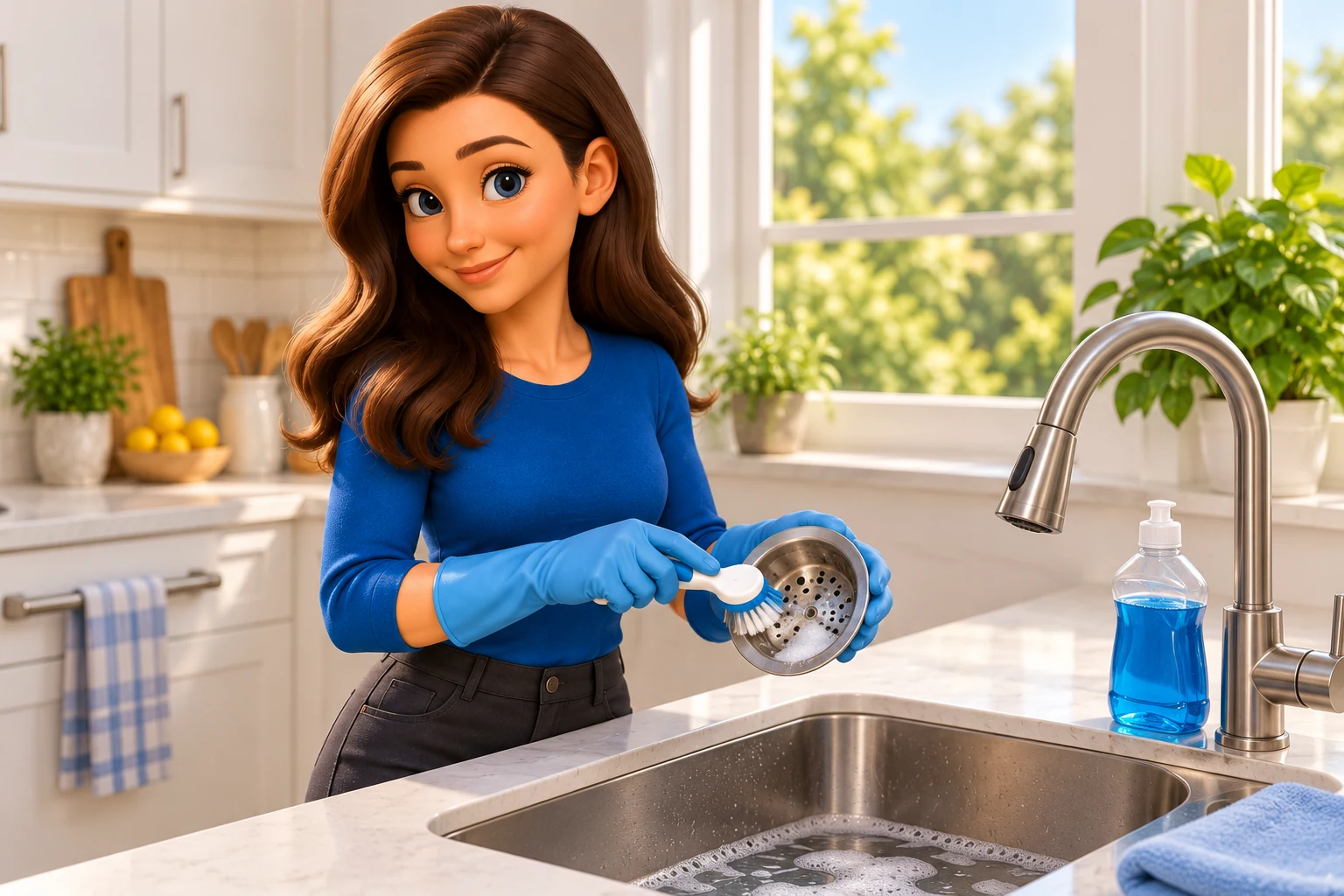
To clean a smelly drain, first check whether the odor comes from accessible residue, a little-used trap or a wider plumbing problem. Remove reachable buildup using the fixture's approved cleaning method. A drain that backs up, contains an unknown chemical or keeps smelling after cleaning needs a different response.
For a smell that is hard to locate, use the bathroom-smells guide before choosing a cleaning task.
Check before cleaning
- 🛑 Standing water or several slow drains? Stop and arrange help for the drainage problem.
- 🛑 Drain cleaner already added? Follow its label. Do not add another product, disassemble the trap or put a brush into a chemical-filled drain.
- Strong, unexplained sewer-like odor? Use the sewer-smell safety checks, including the possible gas-emergency distinction.
- 🛑 Garbage disposal attached? Follow its separate manual. Do not reach into the grinding chamber.
| Pattern | Likely investigation | Next step |
|---|---|---|
| Residue around the stopper or opening; drainage otherwise normal | Accessible film and trapped debris. | Clean the removable parts and reachable surfaces. |
| Odor at a rarely used drain | A reduced trap water seal is possible. | Restore normal water use if it drains freely; recheck. |
| Odor remains, with gurgling or recurring slow drainage | A problem beyond surface cleaning is possible. | Ask a plumber to diagnose it. |
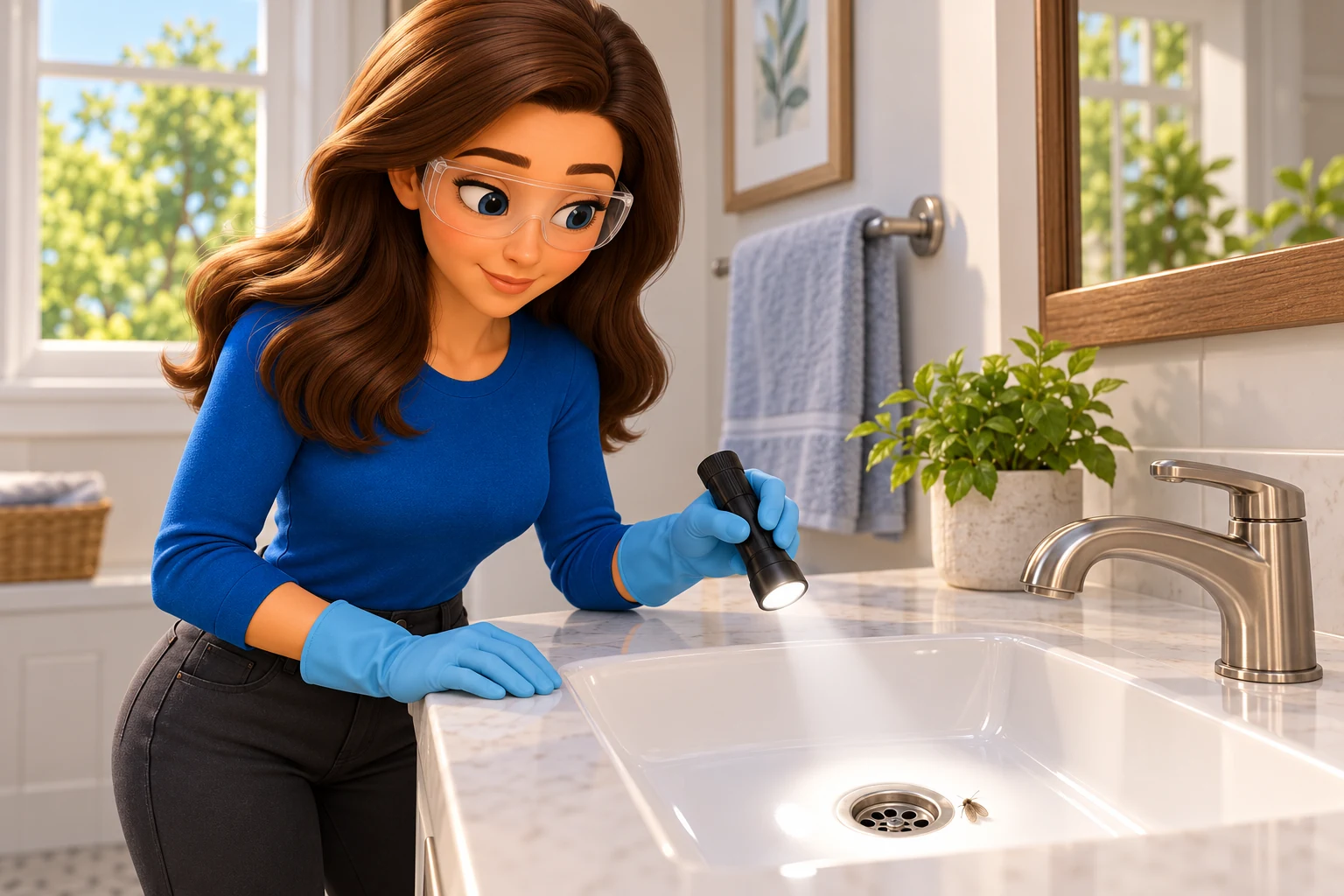
| Fuzzy flies around the opening | Wet organic material may be a breeding site. | Use the drain flies guide alongside source cleaning. |
Gather compatible cleaning tools
For a freely draining fixture with no chemical treatment present, you may need:
- Gloves and any eye protection specified by the cleaning product.
- A suitable small brush, cloth and container for removable parts.
- Detergent or another product approved for the fixture and task.
- The stopper or drain-cover manufacturer's removal instructions.
Some covers lift out; others use screws, catches or a model-specific mechanism. Our shower drain-cover guide can help identify the type, but do not force a cover or loosen sealed plumbing fittings to reach further.
Clean the opening and removable parts
- Prepare the area. Keep cleaning products separate, protect nearby finishes and have a place for screws or removable parts.
- 🛑 Remove only an owner-removable cover or stopper. Follow its instructions. Stop if it resists or you cannot identify the fitting.
- Lift out reachable debris. Dispose of hair and residue in the trash instead of pushing them deeper into the drain.
- 🛑 Brush reachable surfaces gently. Clean the cover, stopper and accessible opening with the approved method. Do not force a long tool into concealed pipework.
- Rinse as directed. Use the water temperature allowed by the fixture and product instructions, then refit the parts correctly.
- 🛑 Check the result. Confirm normal drainage and compare the odor after cleaning. Stop if you discover a leak or water begins rising.
🛑 A sink overflow can also hold residue. Clean only the accessible opening by a method the sink manufacturer allows; do not assume its concealed passage can be safely scrubbed or dosed like an open drain.
Know the limits of poured remedies
A fizzing recipe is not a substitute for removing reachable buildup or repairing a fault. This guide does not recommend boiling water as a universal treatment for drains, seals or fixtures, and it does not prescribe mixing baking soda, vinegar, bleach and commercial drain products.
For drain-fly breeding material, Minnesota Extension emphasizes removing the organic film and notes that boiling water, bleach and chemical drain cleaners are not effective control methods. A compatible biological cleaner may be an option when its label and the plumbing instructions allow it; it does not replace finding the source.
Recheck traps and recurring odor
A trap's retained water helps separate the room from the drainage system. Oatey's explanation of sewer odors describes why an unused drain can smell when that water seal is lost.
🛑 If normal use temporarily helps but the odor quickly returns, ask a plumber to check the installation and drainage. Do not repeatedly remove the trap or climb onto the roof to clear a vent.
- Use a suitable strainer and remove collected debris.
- Keep washable covers and stoppers clean.
- Attend to leaks and little-used drains.
- Get a diagnosis for repeated odor, backup or abnormal drainage.
Conclusion
Cleaning a smelly drain starts with the right diagnosis. Remove accessible residue safely, keep the trap functioning and stop when the evidence points to a drainage or plumbing fault.
Explore our Plumbing guides for related bathroom and drain problems.

Scott Harding
Scott is the main author of DIY Home Comfort. He's also an experienced HVAC technician that enjoys home renovation and spending time with his family. You can find out more about him here.