Bathroom Smells: Find the Source Before Choosing a Fix
Match bathroom smells to moisture, drain, sewer or water checks. Use a quick selector to find the relevant guide and recognize urgent conditions.
Bathroom smells can come from damp material, a dirty drain, a fixture or the water itself. Each source needs a different response. Notice where the odor is strongest and when it appears before choosing a cleaner or repair.
Use the table below to choose a detailed guide. Descriptions such as “sewer-like” and “musty” help you organize checks. They don't identify a particular gas, organism or building defect.
Check for urgent conditions first
🛑 If you suspect a fuel-gas leak, leave the area and call 911 and your gas utility from a safe location. Do not switch on an exhaust fan, use a phone or operate other possible ignition sources while still in the affected area.
🛑 PG&E's gas-safety guidance explains these precautions. Follow your own utility's emergency instructions. A strong, unexplained odor is not a reason to remain indoors and test several cleaning remedies.
🛑 For wastewater rising from a fixture or several drains backing up, stop affected water use and arrange plumbing help. Surface cleaning will not correct a backup.
Choose the odor pattern
| Pattern | First investigation | Detailed guide |
|---|---|---|
| Damp, musty or stale odor, especially after showers | Wet fabrics, slow drying, ventilation and leaks. | Musty smell in bathroom |
| Sewage-like odor at an unused fixture or around plumbing | Trap water seal, visible leaks and drainage symptoms. | Sewer smell in house |
| Odor concentrated at a drain opening or stopper | Accessible residue and whether the drain flows normally. | How to clean a smelly drain |
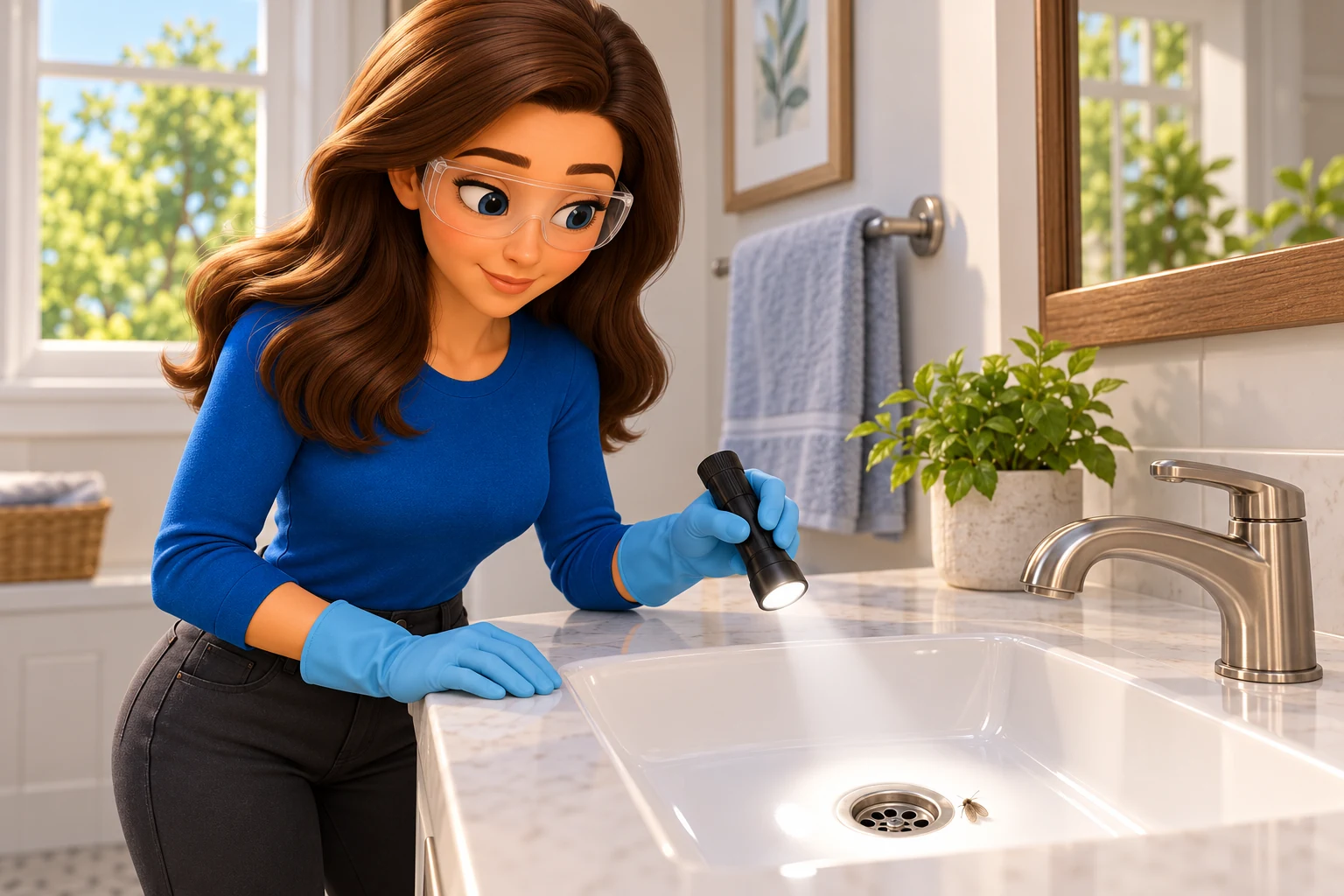
| Small flies near the drain as well as damp residue | Insect identification and breeding material. | Drain flies and related bathroom pests |
| Odor appears mainly when water runs | Hot versus cold water and supply information. | The water-odor checks below, then utility or professional advice. |
You may have more than one source. Washing a bathmat might improve the room's smell while a separate dirty overflow or plumbing leak remains.
Check the room in a simple order
- Describe the pattern. Record the room, fixture and timing, including whether it follows showers or an extended period without use.
- Remove obvious wet or dirty items. Empty waste and remove damp fabrics or cleaning tools for appropriate washing and drying.
- Inspect accessible surfaces. Look for drips, stains and drain residue without removing sealed fittings or electrical covers.
- Choose one relevant guide. Follow its checks rather than combining several chemical treatments.
- Recheck the result. If the odor persists or quickly returns, record that evidence and arrange the appropriate inspection.
🛑 Do not mix bleach, vinegar, disinfectants or drain cleaners. A product suited to a toilet bowl may not be suitable for a tank, sink finish, seal or drain system.
If moisture is the main clue
Find out where moisture comes from and why the area stays wet. Use the bathroom's exhaust system appropriately and fix leaks. Give wet cloths and mats room to dry instead of storing them damp.
🛑 EPA's mold-cleanup guidance explains why correcting moisture matters and when homeowner cleanup is inappropriate. Smell alone does not identify mold. Do not paint or caulk over wet or moldy material, and get qualified help for substantial or hidden damage.
If the water itself seems to smell
🛑 Note whether the pattern affects hot water, cold water or both. Tell the water supplier or professional whether other fixtures show the same issue. Do not taste suspect water or treat a well or heater with a generic internet recipe.
Minnesota Department of Health describes rotten-egg odor associated with hydrogen sulfide, well water and water-heater conditions. Local testing or equipment-specific service may be needed.
If the toilet water is discolored too, use the brown-toilet-water guide to check the tank, bowl and cold supply separately. Water appearance and odor are clues. They don't prove drinking-water safety.
Keep odors from returning
- Dry towels, mats and cleaning equipment between uses.
- Keep accessible drain covers and stoppers clean.
- Use little-used fixtures appropriately and investigate recurring drainage symptoms.
- Repair leaks and check that shower moisture is being exhausted effectively.
- Seek a diagnosis when an odor returns rather than adding stronger fragrance.
Conclusion
Find the source of bathroom smells before choosing a treatment. Follow the matching guide and keep checks limited to what you can do safely. If the problem persists, arrange the appropriate inspection.
Continue through our Plumbing articles for detailed help with individual fixtures and household water problems.

Scott Harding
Scott is the main author of DIY Home Comfort. He's also an experienced HVAC technician who enjoys home renovation and spending time with his family. You can find out more about him here.