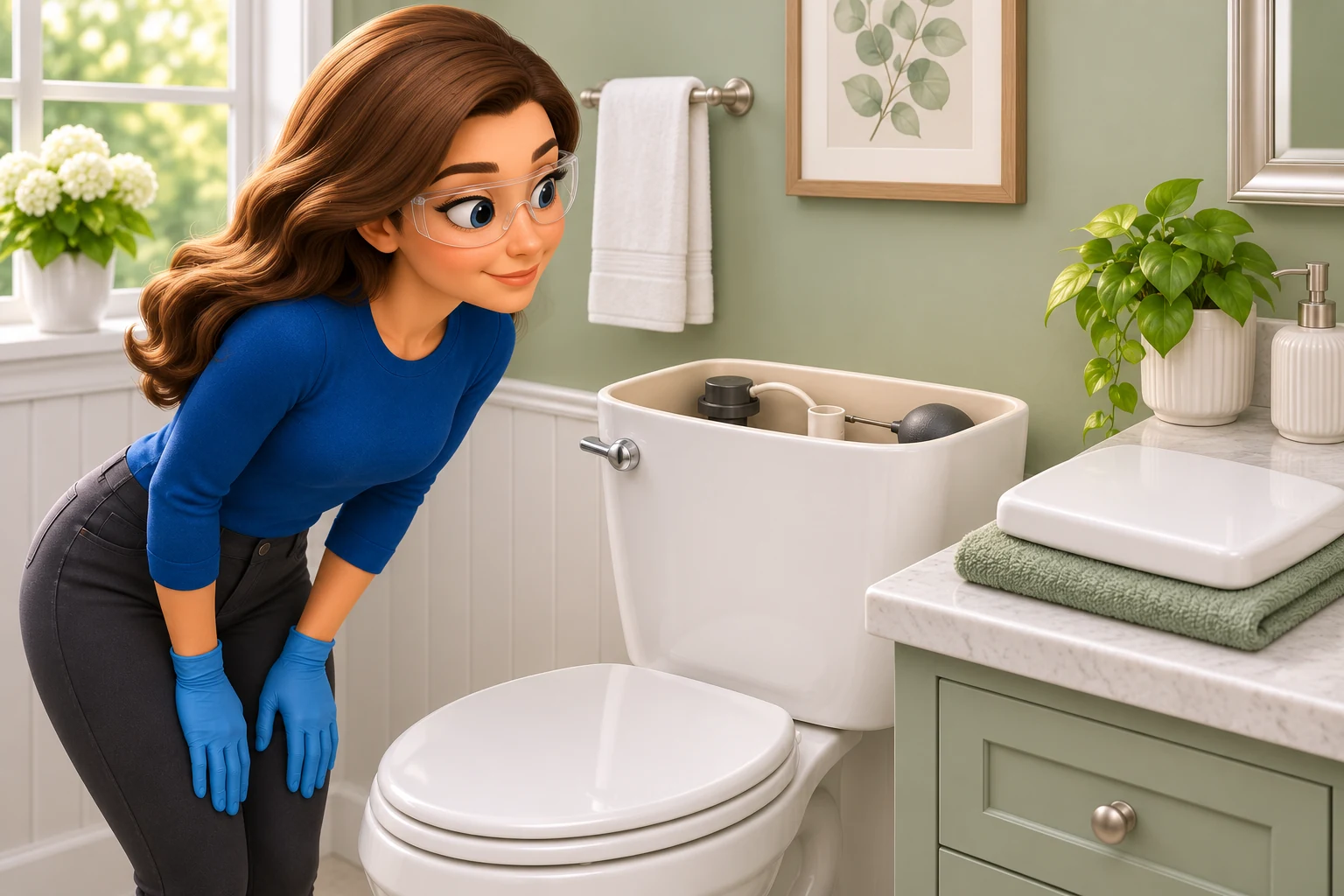
Toilet Problems: What to Check First
Find the right next step for a running toilet, weak or slow flush, rising bowl, gurgling, or a leak around the base.
Toilet problems are easier to sort out when you notice where the water goes and when the trouble starts. A running toilet, a bowl that rises after a flush, and water on the floor each call for a different first check.
🛑 If the bowl is rising, stop flushing. If the toilet is overflowing and its shutoff valve is easy to reach and turns freely, close it. Stop using a cracked or leaking toilet and arrange service. If wastewater is coming up through more than one fixture, stop using water in the house and get urgent plumbing help.
Match the symptom to the next step
| What you notice | First check and next step |
|---|---|
| The tank runs or refills on its own | Listen for a steady hiss or short refills between uses. Use the running-toilet guide to check the water level and tank seal. |
| The handle moves but nothing flushes | See whether the tank is full. A full tank points you toward the handle and flush mechanism. See the checks below. |
| The flush is weak or slow | Notice whether the bowl rises or the flush just lacks force. See the slow-flush checks below. |
| The bowl rises and drains slowly | Notice whether nearby drains are affected too. For an isolated clog, read how to plunge a toilet safely. |
| The bowl stays low after a flush | See whether the tank fills normally. Check the bowl refill clues below. |
| The toilet gurgles | Note whether it happens when a sink, tub or washer drains. See the gurgling checks below. |
| Water appears on the floor or the base moves | Look for moisture above the puddle, such as on the tank or supply hose. See leak and wobble checks below. |
| The tank is empty and the water is off | Check for a supply outage and local notices. See how to flush during a water outage if the toilet type and drainage allow it. |
If your concern is the color of the water or something moving in it, use the brown toilet water guide or the toilet worm identification guide.
If the toilet won't flush or the bowl stays low
In a conventional gravity toilet, the handle or button opens a seal so tank water can rush into the bowl. That pushes waste through the curved passage inside the toilet, called the trapway. Then the fill valve replenishes the tank and sends some water back to the bowl. Kohler's flush-cycle guide shows how the parts work together.
- Full tank, loose or stuck handle. If you can safely lift the tank lid, look for a disconnected chain, a broken lever or a linkage that catches. A handle you have to hold down can also point to the flush mechanism. Check your model's parts diagram before changing the linkage.
- Empty tank, but the sink has cold water. Look for an obviously kinked supply hose or a fixture shutoff left closed after service. A float that sticks or a fill valve that won't open can also leave the tank empty. Get help if the shutoff is stiff or leaking.
- Full tank, low bowl. Notice whether the bowl starts low right after refill or drops later. The first pattern is a reason to check the small bowl refill hose against your model's instructions. A bowl that repeatedly loses water after a normal refill needs a drainage or fixture check.
If the toilet flushes slowly
- The bowl rises first. A drainage restriction is possible. Use the clog guidance above if other fixtures are draining normally.
- The bowl clears, but the flush feels weak. Compare the settled tank level with your model's mark. Buildup at the bowl's water inlets can also weaken the flush. Check the manufacturer's cleaning instructions.
- The flush works, but the tank refills slowly or whistles. Check whether nearby cold taps are also weak. If only the toilet is affected, note whether the noise stops when the tank is full. The supply to that fixture or its fill valve may need attention.
Kohler's poor-flush guide explains why water levels and drainage both matter. Use your own model's instructions before adjusting anything.
If the bowl rises or overflows
When other fixtures drain normally, a blockage may be in the toilet or its nearby drain. Use a toilet plunger with an extended rubber flange only when the bowl has room for the tool and water displacement. A plumber can use a toilet auger or check the line if the clog keeps returning or an object may be lodged inside.
🛑 Leave the handle alone while the water is high. If someone already added drain cleaner, skip plunging and tell the plumber what was used. See our plunging guide for the safe sequence.
If the toilet gurgles
Notice whether it happens only at this toilet or when another fixture drains. If it keeps happening or other drains are slow, arrange a plumbing check. Tell the plumber which fixtures are affected. If there is an odor too, see the sewer smell troubleshooting guide.
🛑 If wastewater comes up through a toilet, tub or floor drain, stop using water and keep people and pets away from the affected area. Follow your local sewer utility's instructions or contact a septic professional if you have a private system. Simsbury's blockage guide is one example of how a local utility handles these calls.
If there's a leak, a loose seat or a rocking base
Look for the highest wet spot without flushing again. Water can start at the shutoff or supply hose, come from the joint between the tank and bowl, or appear at floor level during a flush. A cold tank can also collect condensation. A puddle by itself leaves several possibilities open. The base leak guide helps you narrow them down.
If only the seat shifts or creaks, check its hinge hardware. Use the seat maker's tightening directions, or look up a matching replacement for a cracked seat. TOTO's seat instructions show one example. If the whole bowl moves, the support or drain connection needs a different check.
🛑 Stop using the toilet if the bowl rocks, the floor feels soft, or the tank or bowl is cracked. Leave the area if water has reached electrical equipment. Keep people out of standing water and get qualified help.
What to note before you call
- When it started. Note a recent outage, repair or change in how the toilet flushes.
- When it happens. Distinguish trouble during the flush, during refill, and while the toilet sits unused. Mention a whistle that continues through refill or a knock when the water stops.
- What else is affected. Report other slow drains, weak taps or new moisture. Use observations from normal use when a test flush could make things worse.
Ask what the visit covers. A tank part, an isolated clog and a toilet that needs lifting for a flange or floor inspection are different jobs. Ask for the trip charge, parts and labor, and any after-hours fee. If the porcelain is damaged, parts are hard to find or failures keep coming back, ask for a repair and replacement comparison.
After a repair, ask how the plumber verified that the toilet stays stable, flushes normally and stays dry at the supply and base.
To prevent repeat problems, flush only human waste and toilet paper, keep small items off the tank lid, and investigate new running sounds, moisture or wobble early.
Conclusion
Start with what you can see or hear. A running tank, a weak flush and a rising bowl call for different checks. Get help promptly for a leak, damaged ceramic or signs of a backup.
Browse our Plumbing guides for more household troubleshooting.

Scott Harding
Scott is the main author of DIY Home Comfort. Learn more about the team and our approach on the About page.