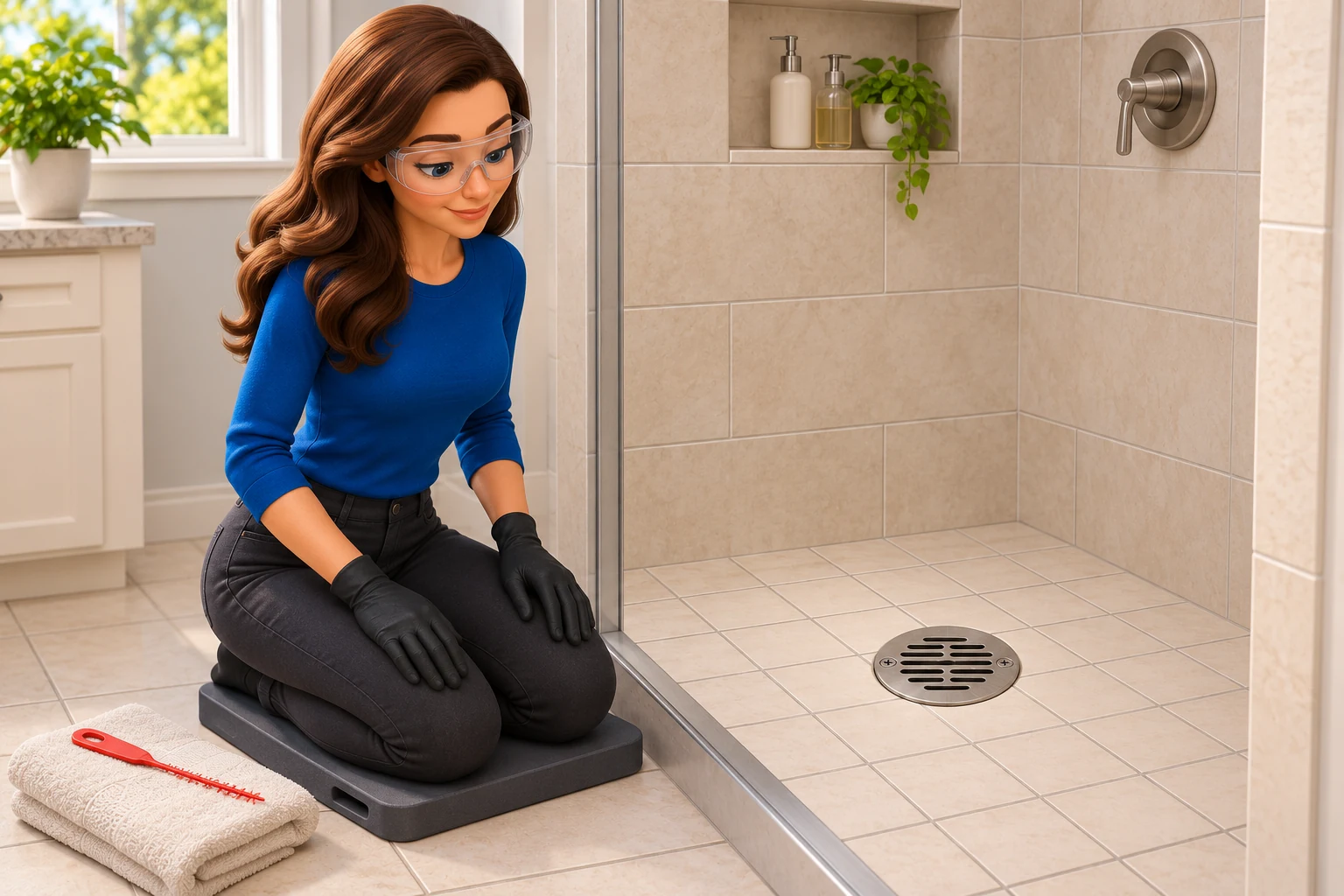
Slow Draining Bathroom Sink? What to Check First
Check the stopper, lift out hair, and test a slow bathroom sink. Four illustrated steps show when to use a plastic strip or sink plunger and when to stop.
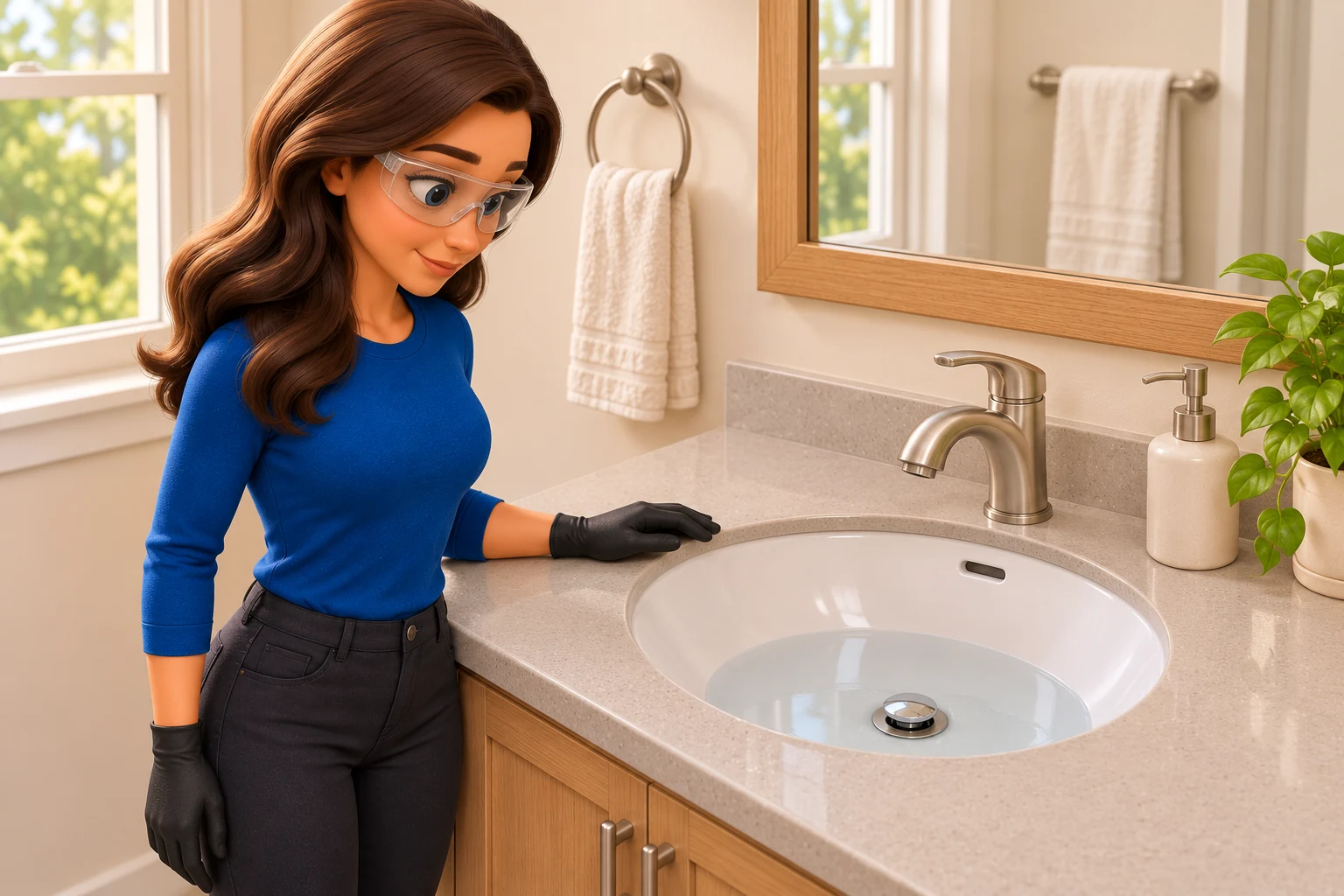
If water pools in one bathroom sink even with the stopper fully open, start at the stopper. Hair and soap residue can narrow the gap where water enters the drain. Clear what you can reach, then run a small stream to see whether the water still collects in the bowl.
🛑 If wastewater comes up through a drain, stop using water and follow the clogged drains guide for the next step. If drain cleaner may still be in the sink or pipe, keep your hands, tools and other products out of the drain. It can splash and burn skin or eyes. Tell the plumber what was used. Poison Control has guidance if someone was exposed.
Check whether the problem is at this sink
- Water flows from the faucet and collects in the bowl. Check that the stopper is open. If it barely rises even though you’ve opened it all the way, the stopper may need cleaning or adjustment.
- The stream from the faucet is weak and water drains as it arrives. Check the faucet or its aerator, the small screen at the end of the spout.
- A nearby tub or shower is also slow, or another fixture gurgles when the sink drains. Arrange a plumbing check for a possible shared drain issue before trying to clear the sink on its own.
Set out gloves, eye protection, a flashlight, a paper towel and a trash bag. A flexible plastic hair tool can help if your drain opening is accessible. A flat cup sink plunger and damp cloth are useful if the sink still drains slowly after the first checks.
1. Clean the stopper and drain opening
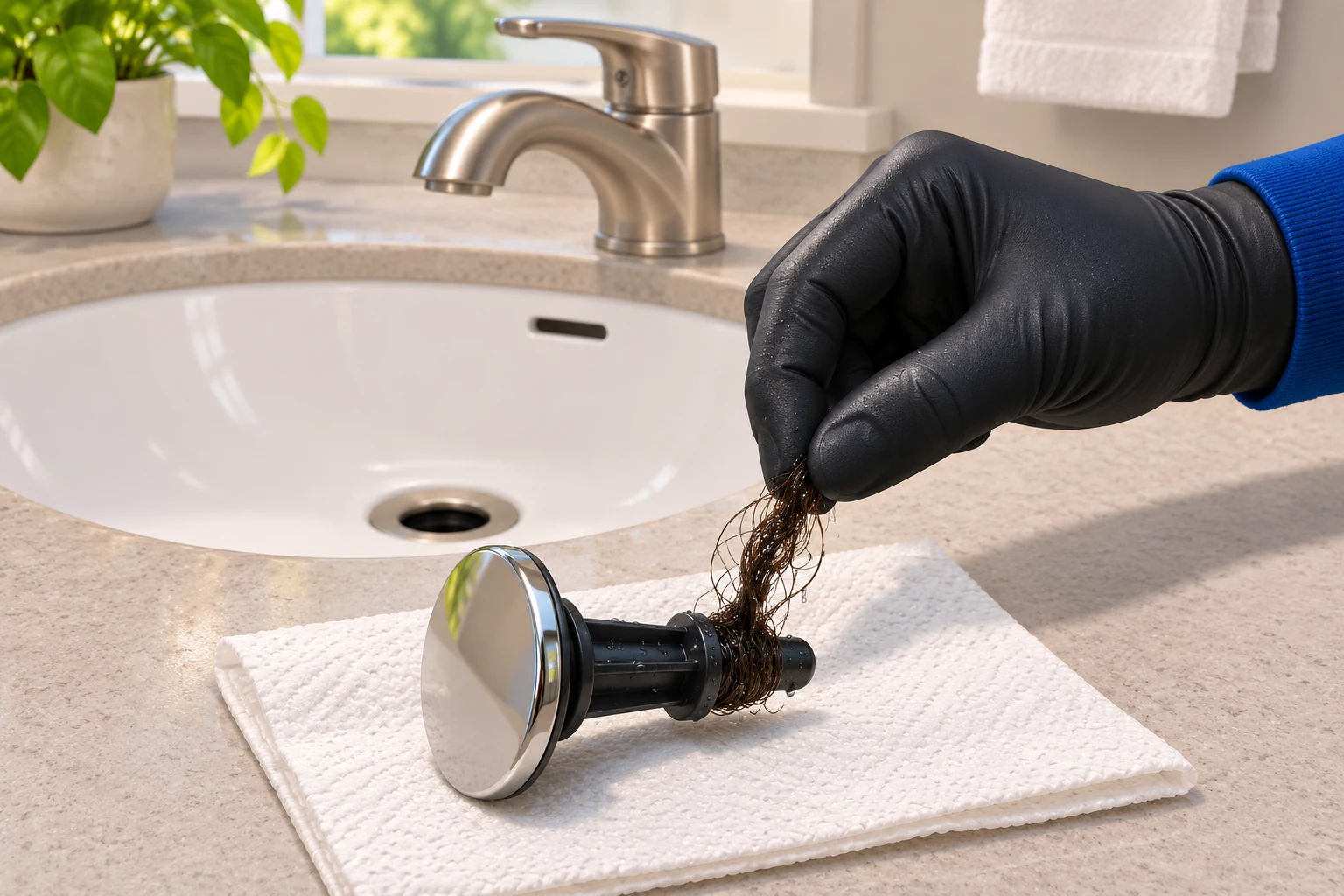
Turn the faucet off and open the stopper. Lift visible hair from around the cap with gloved fingers or a paper towel. Leave the metal ring against the sink in place. If the stopper has a removable part, check the fixture instructions before lifting or turning it.
- Pull rod behind the faucet. A rod can hold the stopper from below. Check the model’s instructions before taking it out. Delta’s bathroom sink stopper guidance shows why some stoppers lift straight out and others stay attached.
- Push-button stopper. Press the cap to open it and check what your model allows you to remove for cleaning. Some designs give you access from above.
- Fixed grate or an unfamiliar part. Wipe what you can reach around it. Leave a piece in place if it resists or you can’t confirm how it comes out.
Once the removable piece is out, wipe the hair off its underside and stem. Put the debris in the trash. If the sink drains freely after the stopper is back in place and open, skip to the flow check.
2. Try a plastic hair strip if the opening is clear
If the sink slowed right after something fell down the drain, skip the strip and plunger. Retrieve the object only if you can see and reach it without pushing it deeper.
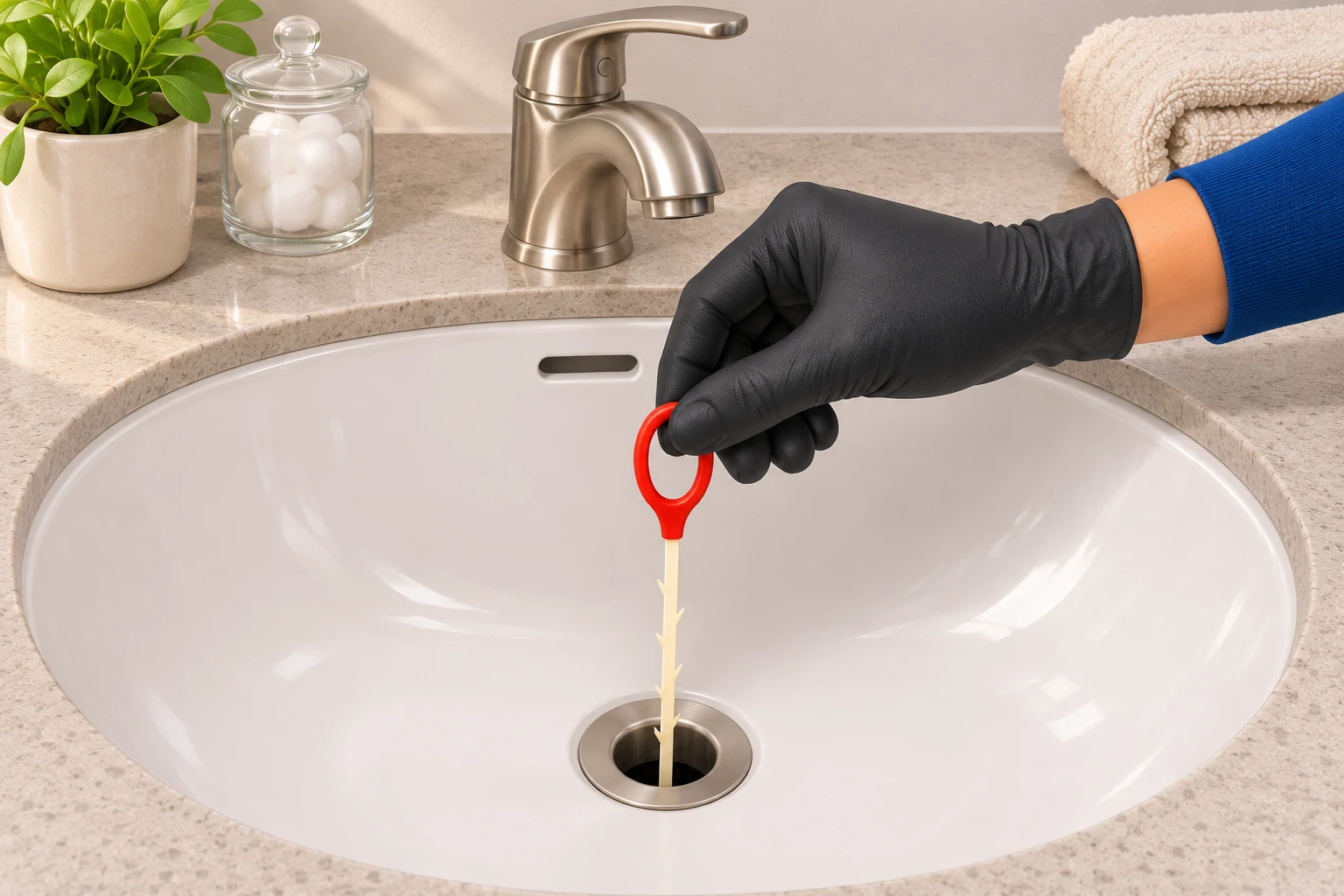
With the stopper removed as directed for your model, feed the tip of a thin barbed plastic hair tool into the open drain. Keep the handle above the bowl and follow the tool’s instructions. Guide it gently past the opening. If it catches on the stopper mechanism or takes force to move, stop and back it out gently.
Pull the strip back slowly so its teeth can bring hair up with it. Wipe the debris into the trash. If the strip moves freely and keeps bringing up hair, another gentle pass may help. BrassCraft’s product sheet shows how this type of strip is designed.
3. If needed, try a flat cup sink plunger
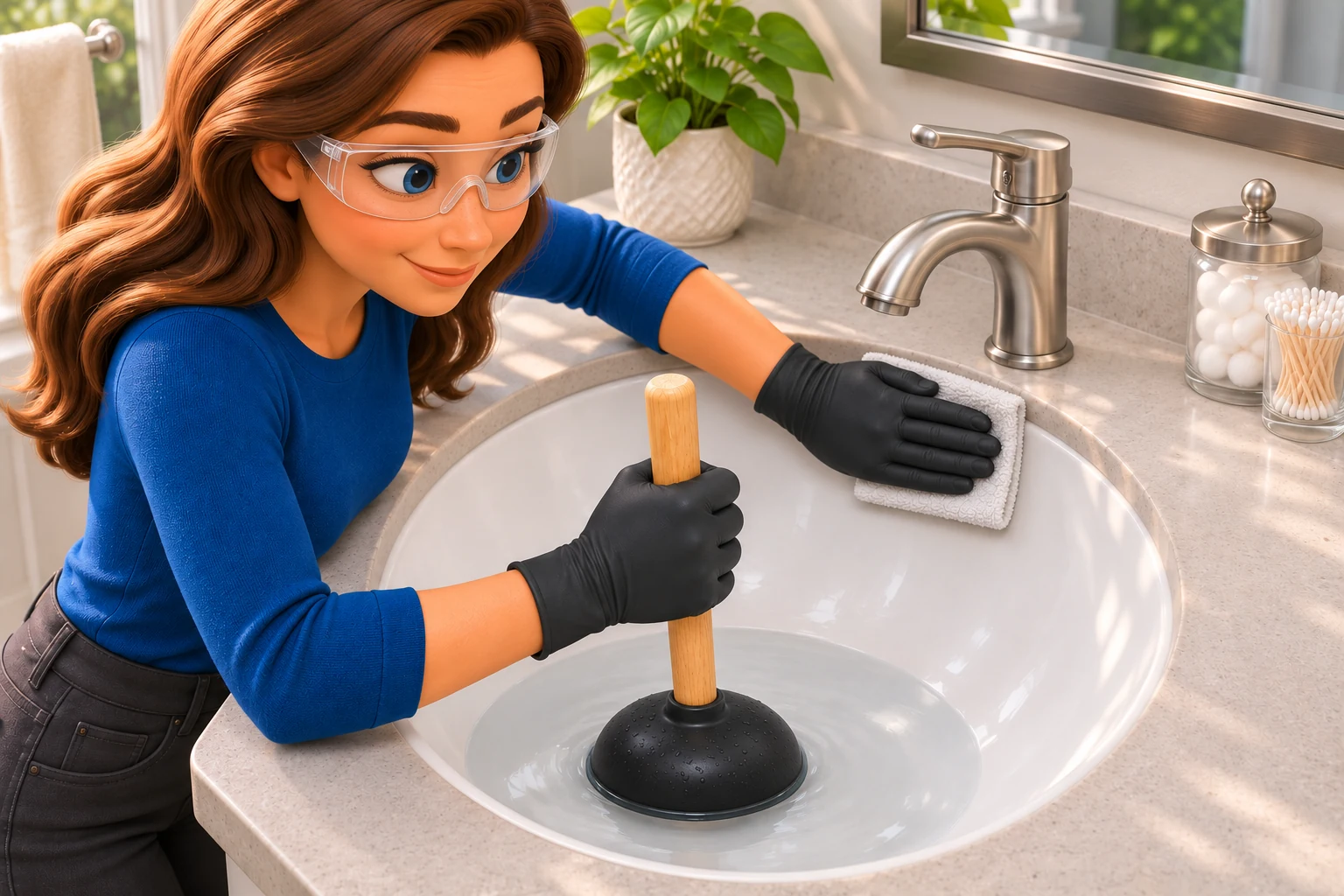
If the sink is still slow and the cup can sit flat over the drain, try a short round of plunging. Keep the stopper open or remove it as directed for your model. If the stopper blocks the cup from sealing, skip this step.
- Press a damp cloth over the overflow opening if your sink has one. It’s the small opening high on the inside of the bowl.
- Center the cup over the drain. Use just enough clean water to cover the cup’s lower edge and keep water well below the rim.
- Move the handle steadily up and down while keeping the cup sealed. Tilt the cup to break the seal and see if the water level drops. Stop and arrange help if it stays high after a brief attempt.
Korky’s sink plunging instructions show how sealing the overflow directs pressure toward the clog.
4. Refit the stopper and test the flow
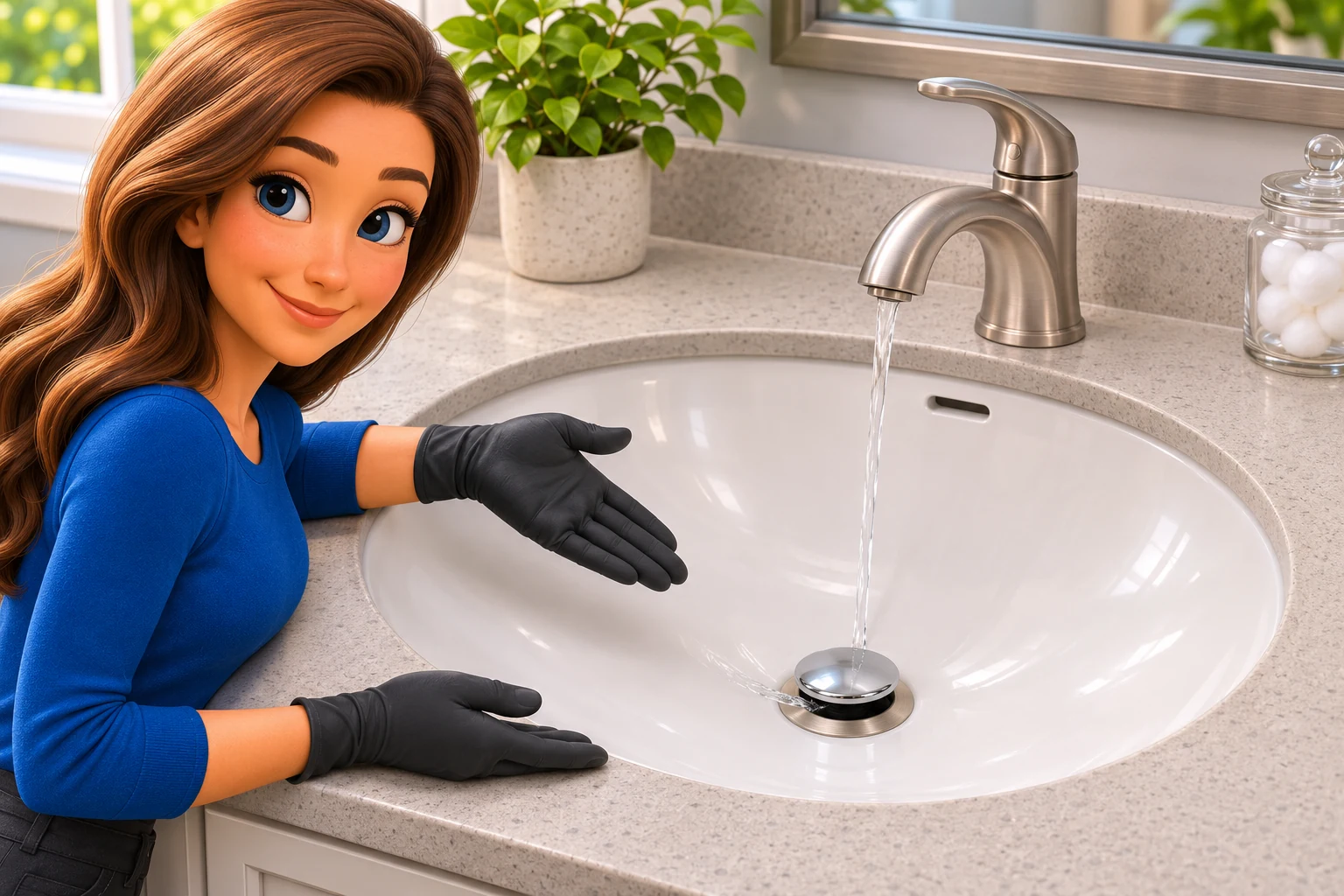
Return the stopper to its original position and open it fully. Remove the overflow cloth. Run the faucet at low flow for a few seconds. The water should drain as it arrives, and the bowl should empty when you turn the faucet off. If the water level starts rising, turn the faucet off and arrange help.
When to call and how to prevent a repeat
Call a plumber if the sink stays slow after the parts you can reach are clear, the clog keeps returning, or you find a drip under the vanity. The blockage may be in the P-trap, the curved pipe under the sink, or farther along the drain. Tell the plumber which fixtures are affected and whether any cleaner was used.
- Put hair, floss and cotton swabs in the trash.
- Wipe the stopper when you see buildup, and use a compatible hair catcher if it lets the stopper and drain work normally.
- If the sink drains freely and odor is the main symptom, follow the smelly drain checks.
For a shower that drains slowly on its own, use the shower drain guide.
Conclusion
Start with the stopper, clear the hair you can reach and test with a small stream. If water still pools or other drains are affected, arrange help locating the blockage.
Explore more plumbing guides for common fixture problems.