How to Unclog a Shower Drain
Clear visible hair, use a plastic drain tool under a removable cover, and test the flow. Three close-ups show what each step looks like.
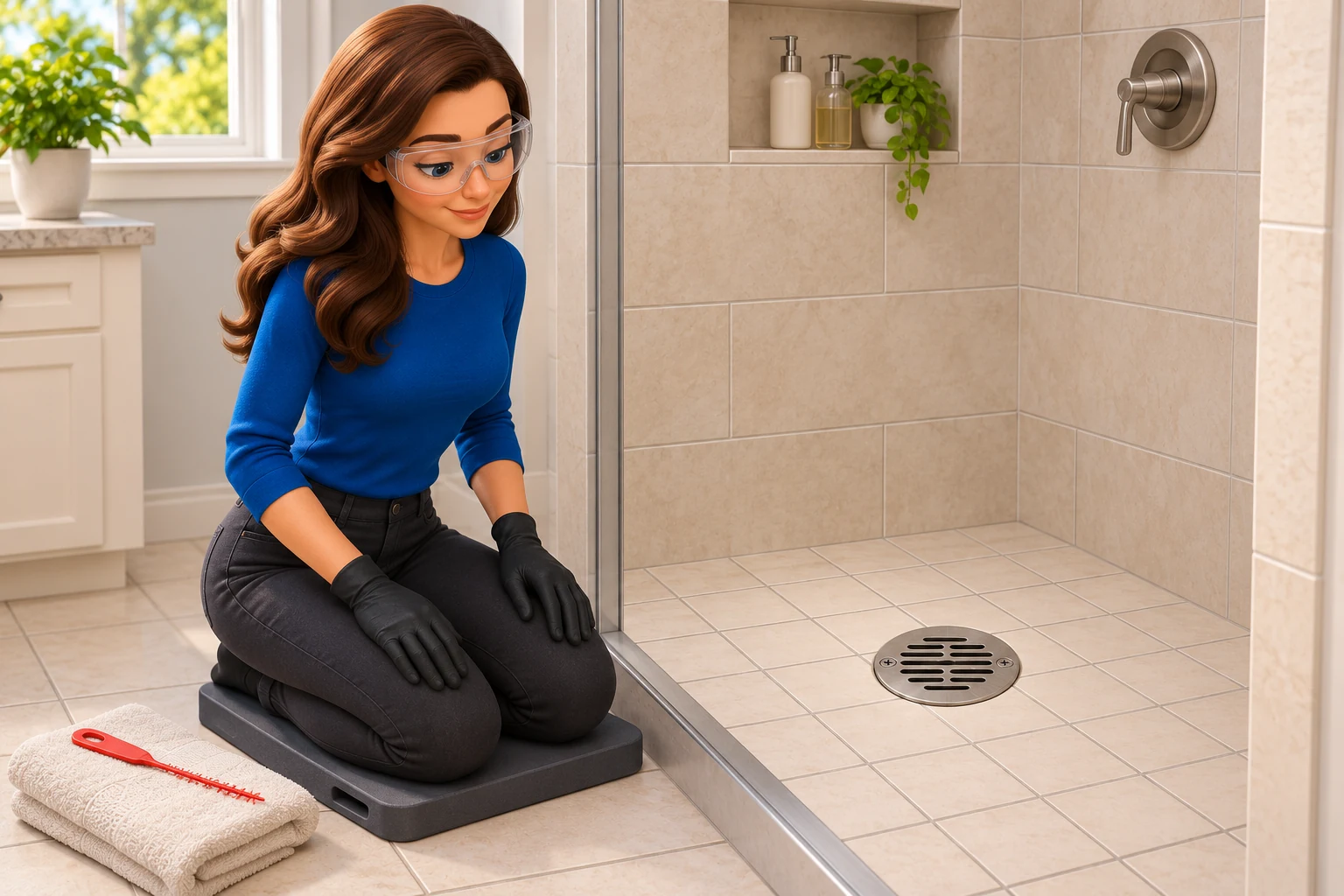
To unclog a shower drain that’s slow on its own, pull visible hair off the cover first. If the shower still drains slowly and the cover is designed to come off, check just below it with a flexible plastic hair removal tool. Refit the cover and test with a little water before you turn the shower back on.
🛑 If wastewater comes up into the shower, stop using water elsewhere in the home and arrange help. If drain cleaner may still be present, stop work and tell the plumber what was used. The liquid can splash and burn skin or eyes.
Check whether the shower is the only slow drain
Think about what happened the last time you used the nearby sink and toilet. If the shower fills when you flush or other drains are slow too, skip the steps below. Use the clogged drains guide to decide who to call. A steady puddle that forms only while you shower is a reason to look at the cover first.
Set out household gloves, eye protection, a flashlight, a paper towel and a trash bag. If you need to go below the cover, use a flexible barbed plastic tool labeled for hair removal. Have the correct screwdriver handy only if the fixture instructions call for one. Work from dry footing. If clean shower water is standing over the grate and you’re sure no chemicals were added, wait for it to drain or scoop enough into a bucket to see the opening.
1. Lift visible hair off the cover
Turn the shower off. With gloves on, lift the hair you can see from the top of the grate and put it in the trash. Wipe the slots you can reach. Keep your fingers above the opening, where you can see them.
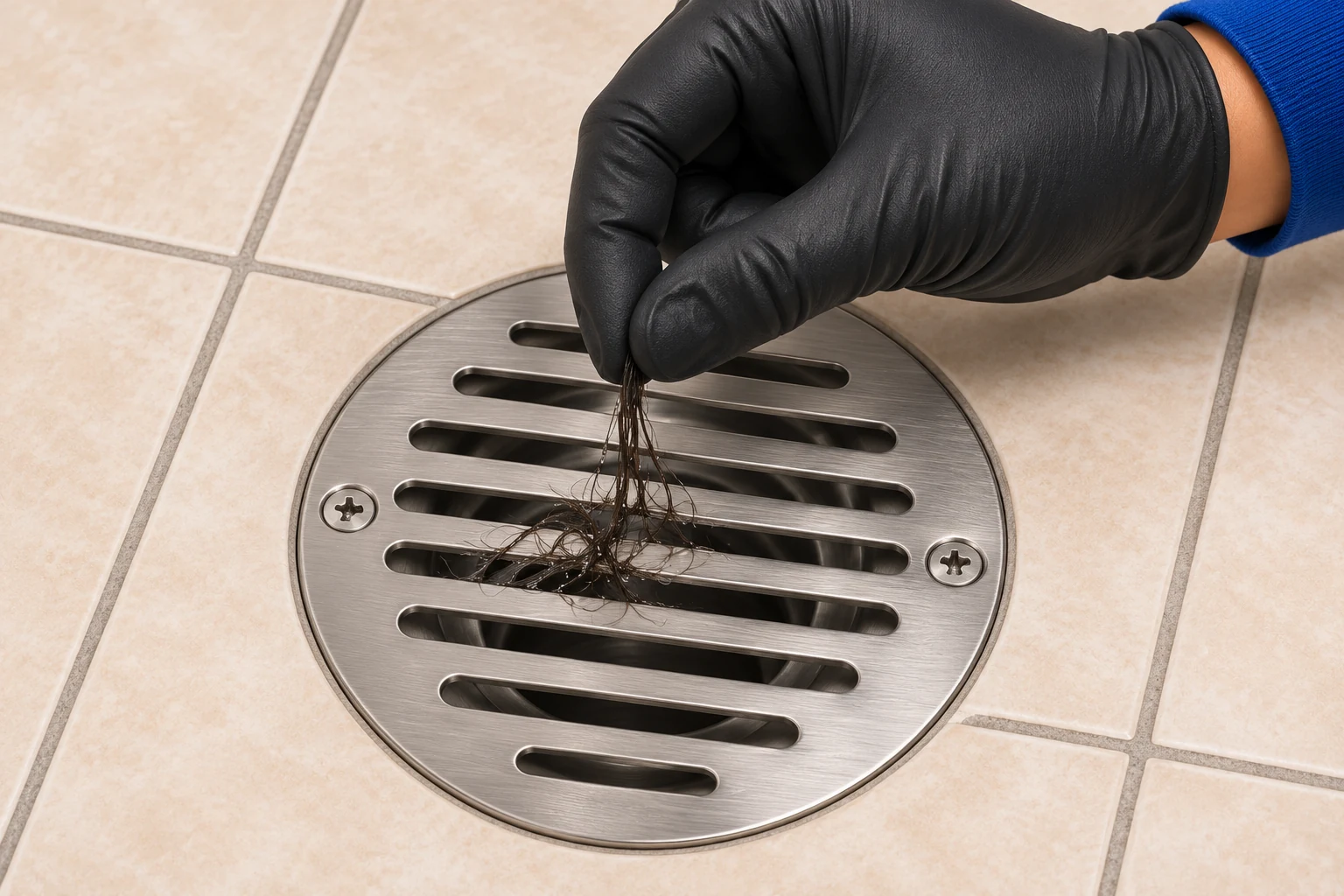
If a small pour of clean water now drains freely, skip to the final check. If water still pools, look up how your cover attaches before you try to lift it.
2. Use a plastic hair tool below a removable cover
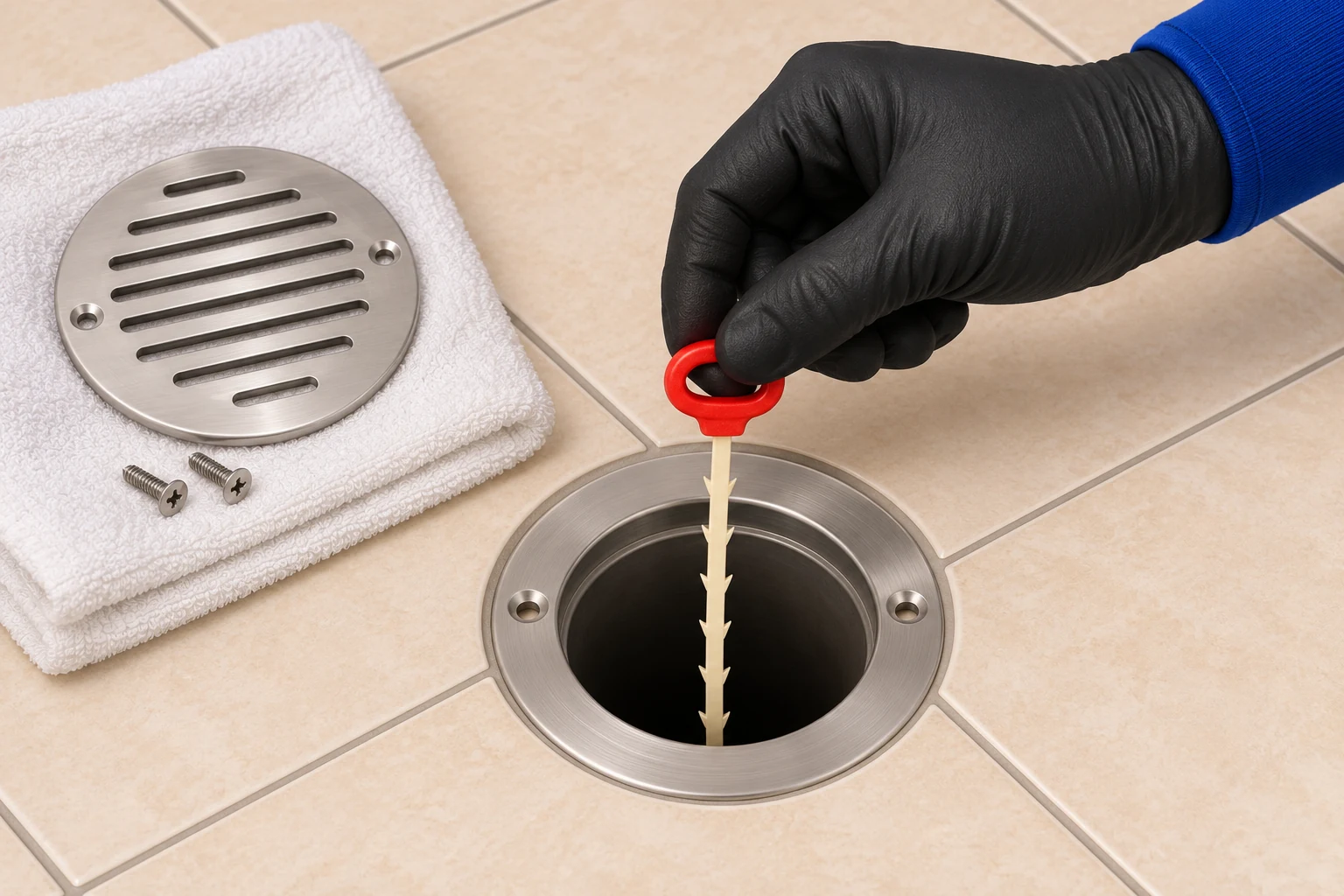
Follow the fixture instructions for the cover you have. Some round grates use small screws, others snap in, and a tub-shower may use a stopper. Our shower drain cover guide can help you identify the type. If a screw won’t turn or the cover stays put, stop. The fixed rim where the drain meets the shower floor stays in place.
- Set the cover and any screws on a towel. Check the underside of the grate for hair you can lift off.
- Feed the end of the plastic strip into the open drain. Keep hold of the handle and guide the strip by hand. Pull it back out if it catches or takes force to move.
- Pull the strip back out slowly. The small barbs catch debris, as shown in this example from BrassCraft. Wipe the debris into the trash. If the strip comes out smoothly and brings up more hair, make another gentle pass. Follow the instructions on your tool’s packaging.
3. Put the cover back and test with a little water
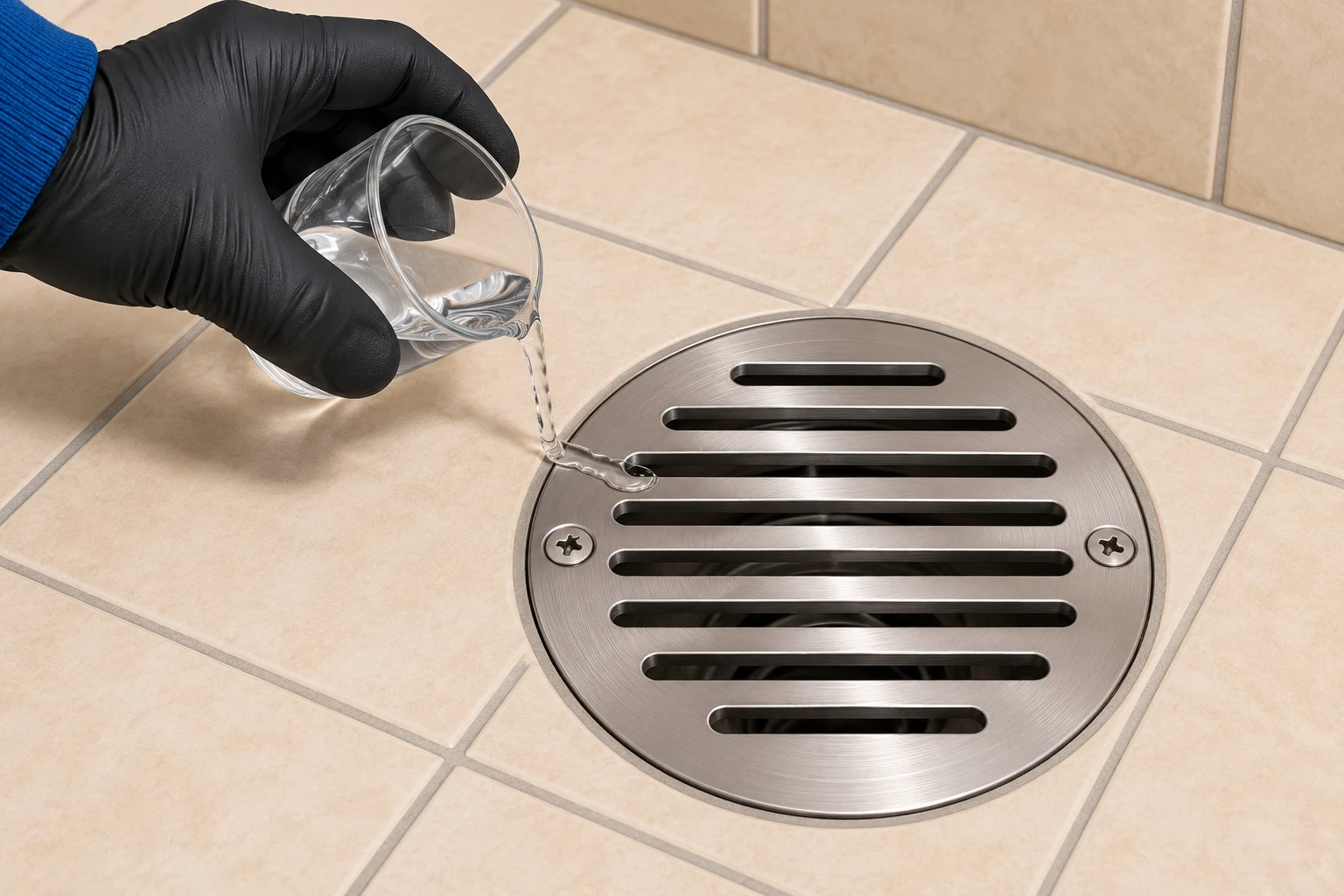
Reinstall the clean cover the way it came off and make sure it sits flat. Pour a little clean water at the edge of the grate. If the water runs into the slots without pooling, run the shower briefly at low flow and watch what happens. If water builds around the drain again, turn the shower off. A small pour is a useful first check. The brief shower test tells you how the drain handles running water.
What to do if water still pools
If the cover is clean and the strip didn’t restore flow, check whether the cover, stopper or hair catcher sits the way the manufacturer shows. If the fixture still drains poorly, the blockage may be farther down than the short strip can reach. Oatey’s shower drain guide also recommends calling a plumber for a persistent clog.
Call a plumber if the drain stays blocked, the clog returns soon after clearing or the cover won’t come off for routine cleaning. Mention any bubbling in nearby fixtures and whether you used drain cleaner. If the shower now drains at its usual speed but still smells, check the smelly drain guide.
Keep hair from collecting again
- Choose a hair catcher that fits the grate or stopper and lets water flow freely.
- Lift the hair out after showering and empty the catcher into the trash.
- Clean the cover as directed for its finish and notice whether the drain is slowing down again.
Conclusion
Start with the hair you can reach, move to a plastic strip only when the cover comes off safely, then refit the cover and test. If another drain backs up with the shower or the problem keeps coming back, arrange a plumbing check.
Explore more plumbing guides for everyday repairs and checks.