Worms in Toilet: What to Check and How to Respond
Found worms or larvae in your toilet? Compare the bowl, tank and nearby drains, clean accessible surfaces safely, and know when to get help.
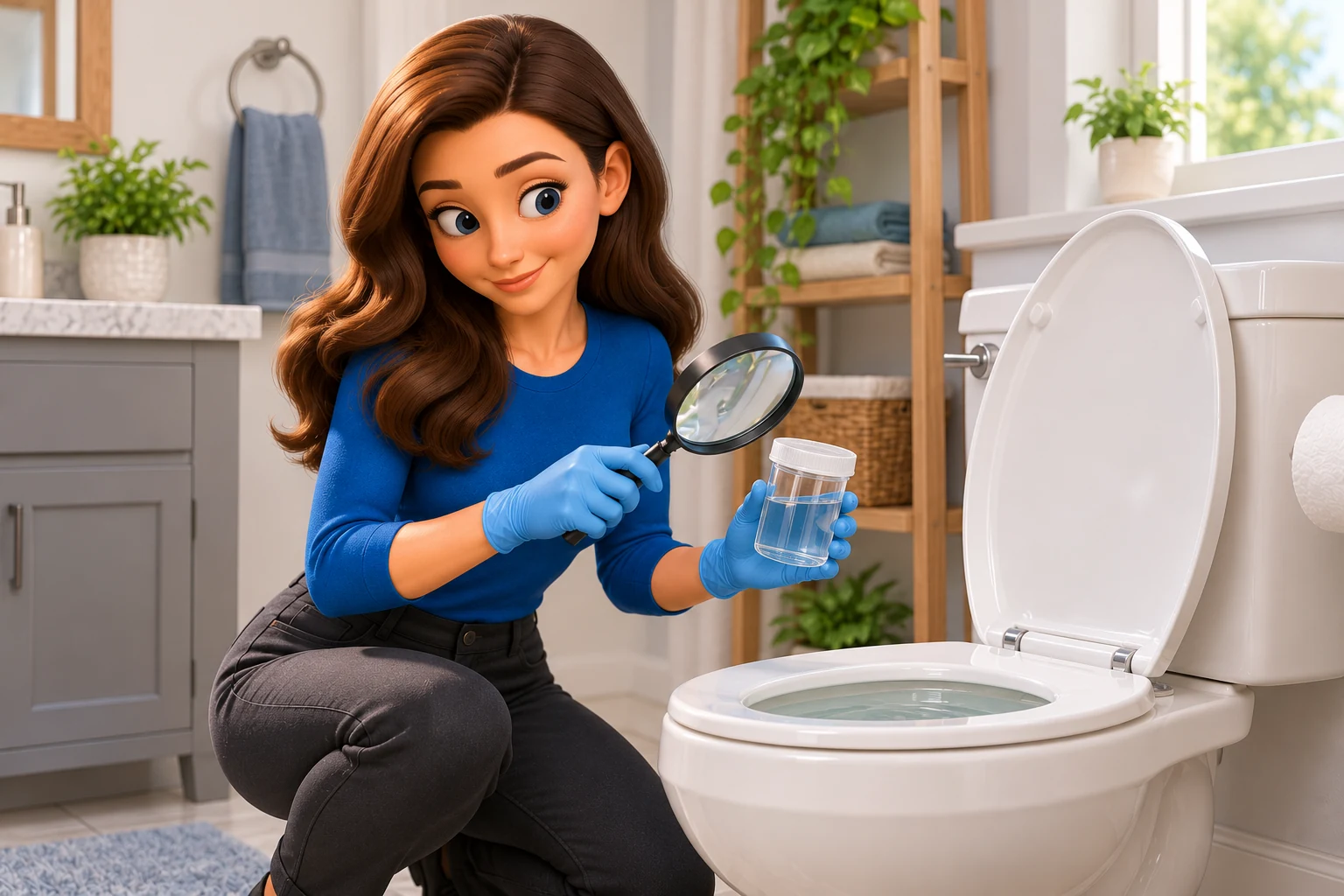
If you find worms in your toilet, try to identify them before choosing a treatment. They may be insect larvae, especially if there is damp buildup nearby. Finding them does not, by itself, mean you have a broken sewer pipe or a septic problem.
Start by noting where you found them: in the bowl, inside the tank or near another drain. Take a photo before cleaning, then check whether they return. If you also see small, fuzzy flies, our drain flies guide can help you look for a breeding site.
Check where you found them
Before you clean, make a few notes:
- Were they in the bowl before anyone used the toilet, inside the tank or on the floor?
- Is the toilet used every day, or has the bathroom been unused for a while?
- Are small flies resting on nearby walls, sinks or showers?
- Have you noticed slow drains, leaks or wastewater backing up?
| What you notice | What to check next | Keep in mind |
|---|---|---|
| A few small larvae, but the toilet drains normally | Take a photo and look for damp buildup around the toilet and nearby drains. | Larvae alone do not mean a sewer pipe is broken. |
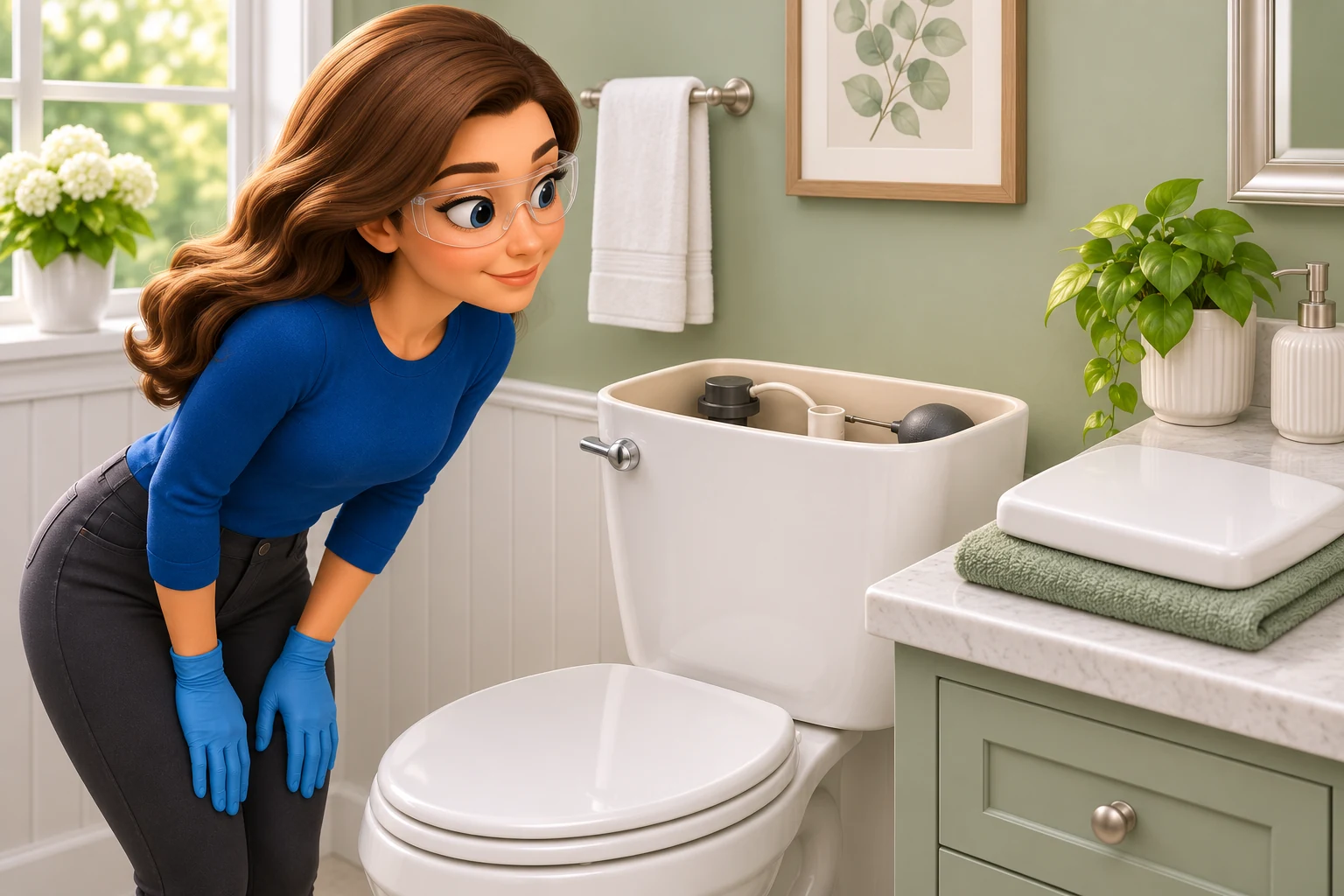
| Worm-like creatures only inside the tank | Check the toilet manufacturer's tank-care instructions and ask for help identifying them. | A bowl cleaner may damage parts inside the tank. |
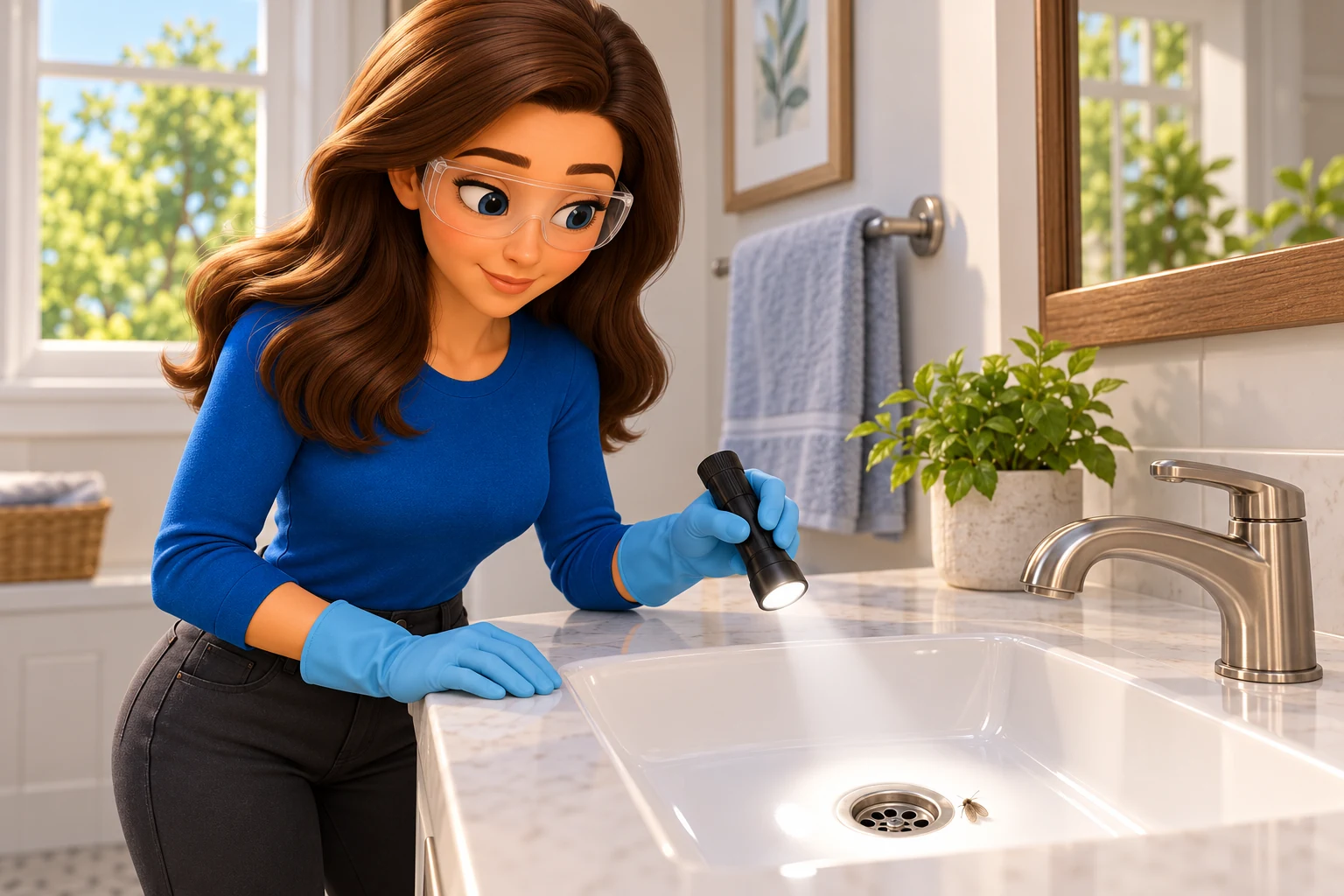
| Small flies and larvae near a sink or shower | Check the drain for wet buildup where insects could breed. | Several kinds of small flies can appear in bathrooms. |
| Dirty water rising or several fixtures backing up | 🛑 Stop using the affected fixtures and contact a plumber. | Cleaning the toilet will not resolve a wastewater backup. |
Compare their shape, not just their color
Take a clear close-up photo with a size reference, such as a ruler beside the specimen. Note its length, how it moves and exactly where you found it. Your county Extension office or a pest professional may be able to help identify it.
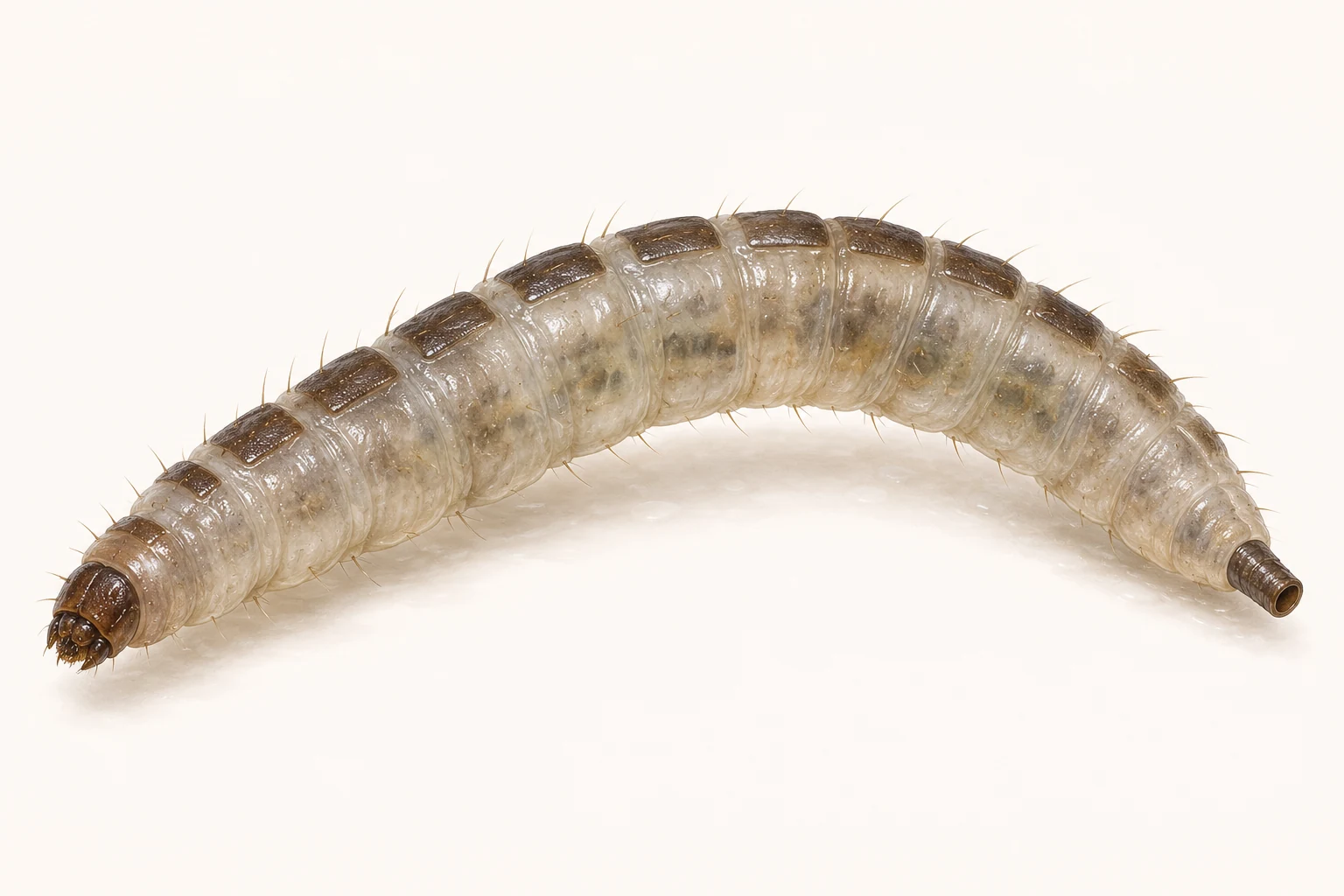
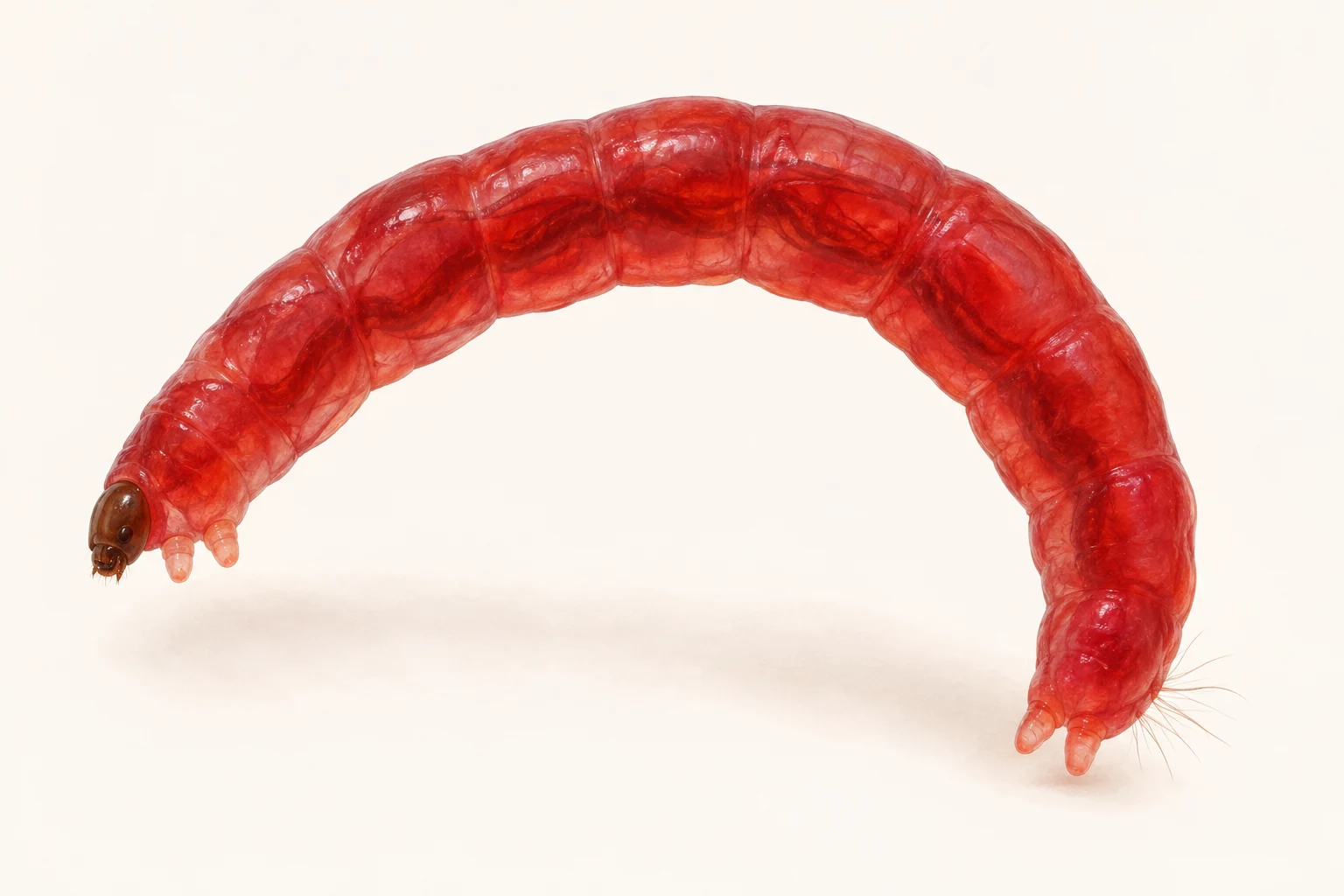
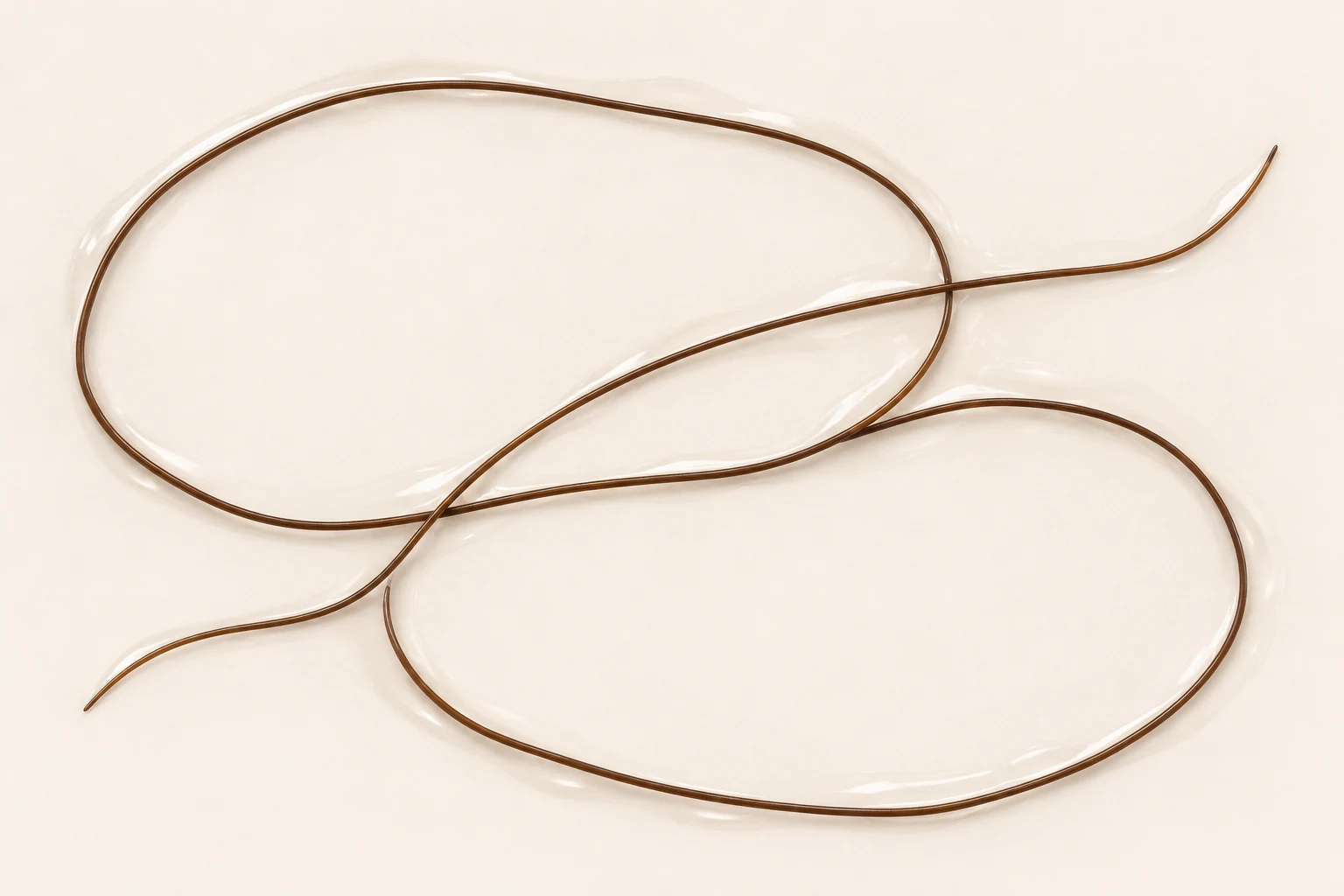
The three illustrations below show different body shapes to compare. They are enlarged and are not drawn to the same scale. They do not cover every possibility, and color alone is not enough to identify what you found.
If you found something in freshly passed stool, or you have symptoms, ask a healthcare professional for advice.
Drain fly larvae: small, slender and legless
Drain fly larvae look like tiny worms. They grow in wet organic buildup, including the slimy film inside drains. The fuzzy, moth-like flies you may see nearby are the adults. Their presence is a clue to investigate, but it does not confirm that every larva you find is a drain fly.
University of Minnesota Extension describes these larvae as small, slender and legless. Removing the material where they breed is the key to controlling them.
Red midge larvae, also called bloodworms
Some non-biting midge larvae are red and are called bloodworms. They have a segmented body, a darker head and tiny fleshy appendages near the front and rear. These appendages, called prolegs, may be hard to see without magnification.
Red color is only one clue. As the Missouri Department of Conservation explains, some aquatic worms are also red and share the name bloodworm.
Horsehair worms: long, thin and often curled
Horsehair worms have very long, thin bodies that can curl into loose loops. This makes them look quite different from short insect larvae. Iowa State University Extension notes that they sometimes turn up in toilets and other water containers.
They develop inside insects and do not infest people or pets. If you think you have found one, ask an identification service to confirm it.
Clean the bowl and nearby surfaces safely
If the toilet drains normally, put on gloves and use a toilet brush and a cleaner approved for the bowl. Follow the cleaner's label and the toilet manufacturer's care instructions.
- Take a photo first. Record what you found and where it was before cleaning.
- Clean the bowl and under the rim. Brush away buildup you can reach without taking the toilet apart.
- 🛑 Never mix cleaning products. Follow the label's directions for rinsing or flushing. If you do not know which cleaner is already in the bowl, do not add another product.
- Clean nearby washable surfaces. Remove wet waste and dry the floor. Keep toilet-cleaning tools separate from your other cleaning tools.
- Check again later. Look in the bowl before anyone uses the toilet, and note whether the creatures or nearby flies return.
🛑 Do not add bowl cleaner, bleach tablets or drain treatments to the tank to try to kill worms or larvae. Sterling's toilet-care instructions, for example, warn that in-tank cleaners can damage working parts. Always follow the care instructions for your specific toilet.
If they return, check nearby drains and damp areas
If worms or larvae keep appearing, there may be a breeding site you have not found yet. Check drain openings, sink overflows, wet cleaning tools and any leaks. Our smelly-drain cleaning guide explains how to clean accessible buildup.
🛑 Do not push tools deep into the pipes while looking for the source.
If the small flies look smooth-bodied rather than fuzzy, compare them with the examples in our bathroom fruit-fly guide. Fruit flies can breed in moist, fermenting material, so identifying the fly can help you find the right place to clean.
Know when to get help
- Call a plumber if wastewater backs up, the toilet leaks or drainage problems continue.
- Contact a pest professional or your county Extension office if you cannot identify what you found or insects keep returning after you remove accessible buildup.
- To help prevent another problem, fix leaks, clean buildup you can reach, let cleaning tools dry and check bathrooms that are rarely used.
Finding worms or larvae alone is not a reason to dig up a sewer line, pump a septic tank or repeatedly add chemicals to the toilet.
Conclusion
When you find worms in your toilet, start with a photo and note where they appeared. Compare their shape, clean the bowl safely and check nearby damp areas if they return. Ask for identification help when you are unsure, and contact a plumber if you also have leaks or drainage problems.
Explore our Plumbing guides for more practical checks and cleaning advice.

Scott Harding
Scott is the main author of DIY Home Comfort. He's also an experienced HVAC technician that enjoys home renovation and spending time with his family. You can find out more about him here.