Fruit Flies in Bathroom: Identify the Fly and Remove Its Source
Small flies in your bathroom? Distinguish fruit flies from drain flies, find the breeding material, and use a simple source-removal checklist.

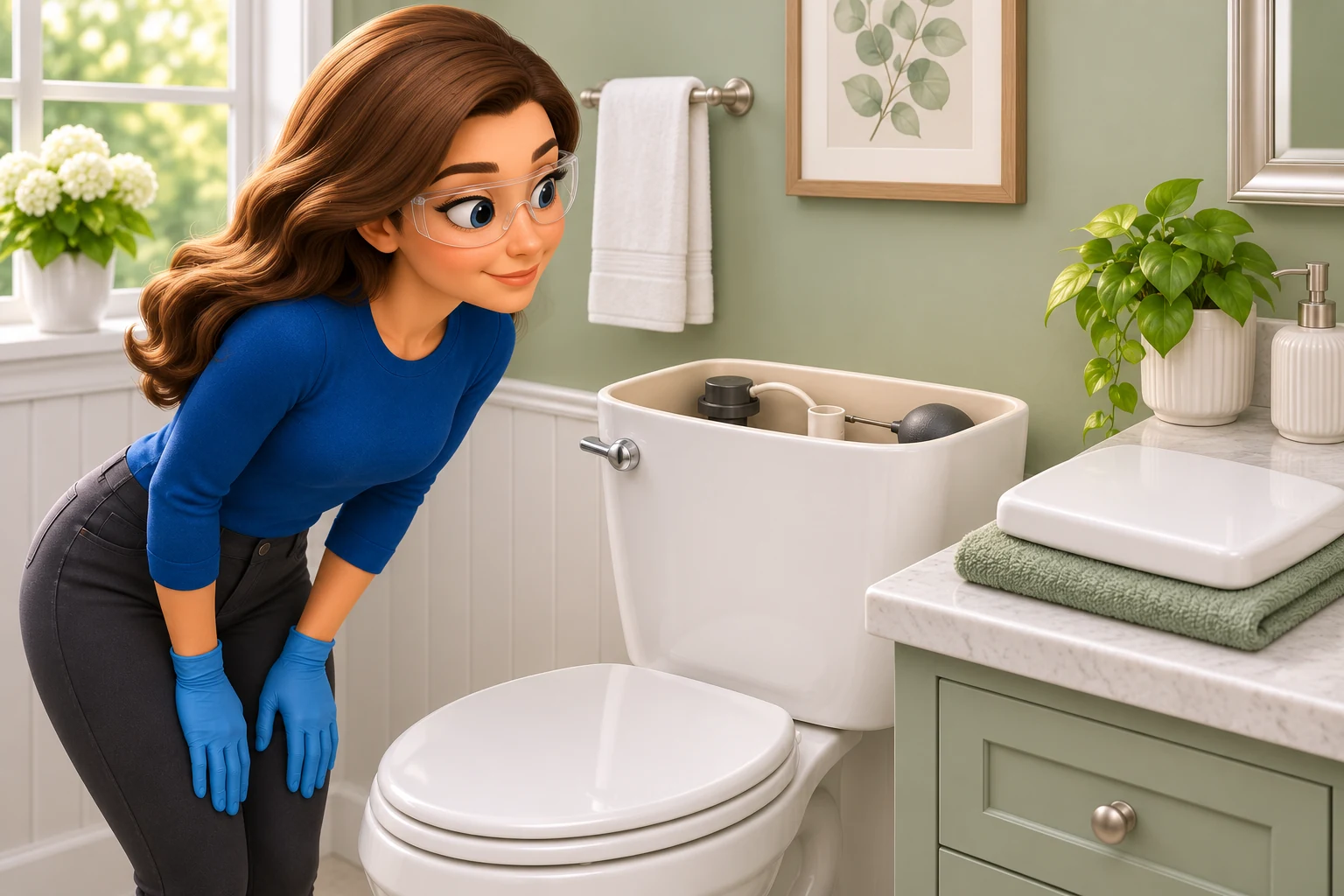
Small flies in a bathroom may be fruit flies, drain flies or another insect. Identify what you are seeing, then remove the material where it is breeding. Catching adults can help, but it won't remove breeding material left in a drain, trash can or wet cleaning tool.
Use this guide for suspected fruit flies in a bathroom. For fuzzy, moth-like flies, the drain flies hub is a better place to start.
Compare the flies before treating the room
| Appearance or activity | Possible explanation | Where to investigate |
|---|---|---|
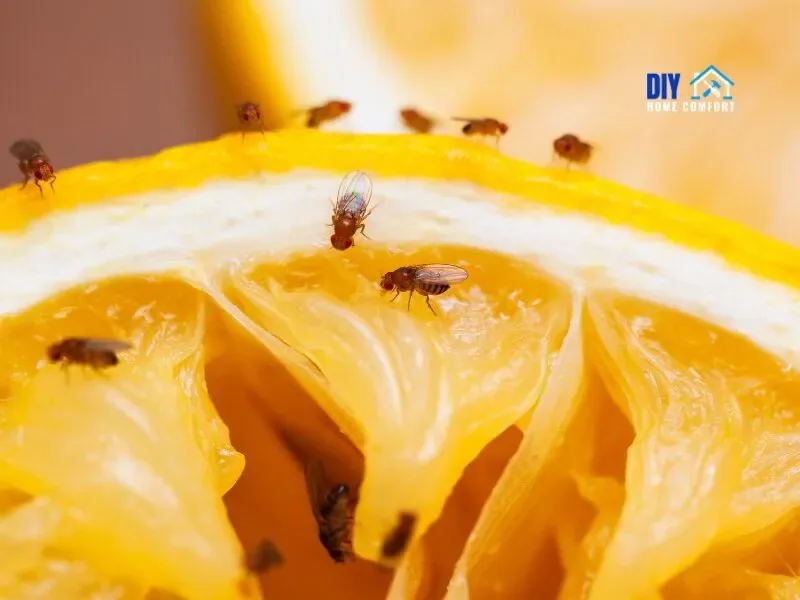
| Small, relatively smooth-bodied flies, often tan with noticeable eyes | Fruit flies are a possibility. | Fermenting residue, waste, recycling, wet mops and dirty drains. |
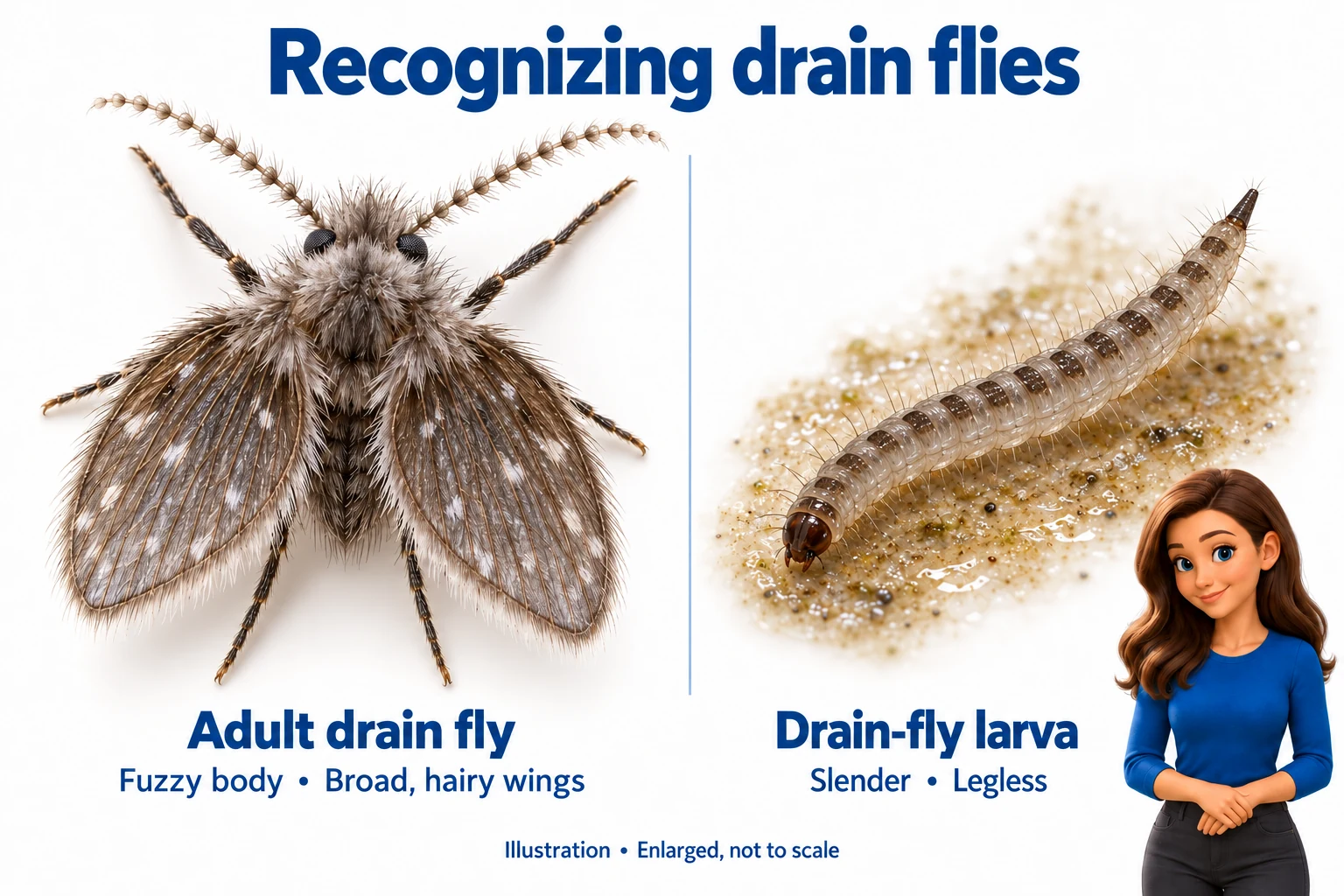
| Fuzzy, moth-like flies resting near drains or on walls | Drain flies are a possibility. | Wet organic film in drain openings, overflows and other damp sites. |
| The appearance is unclear or the flies behave differently | Another small fly may be involved. | Get an identification before selecting a treatment. |
These are sorting clues, not a definitive identification. A photograph with a size reference is useful when asking an Extension office or pest professional for help.
University of Kentucky Extension's fruit-fly guidance explains that fruit flies breed in fermenting foods and other moist organic material, including drains, waste containers and cleaning rags. Finding them in a bathroom does not rule fruit flies in or out.
Find the breeding material
Start with what can be inspected without dismantling plumbing:
- Empty the waste bin and check residue under its liner and lid.
- Remove forgotten drinks, food, bottles or recycling nearby.
- Inspect damp mops, cloths, buckets and stored cleaning items.
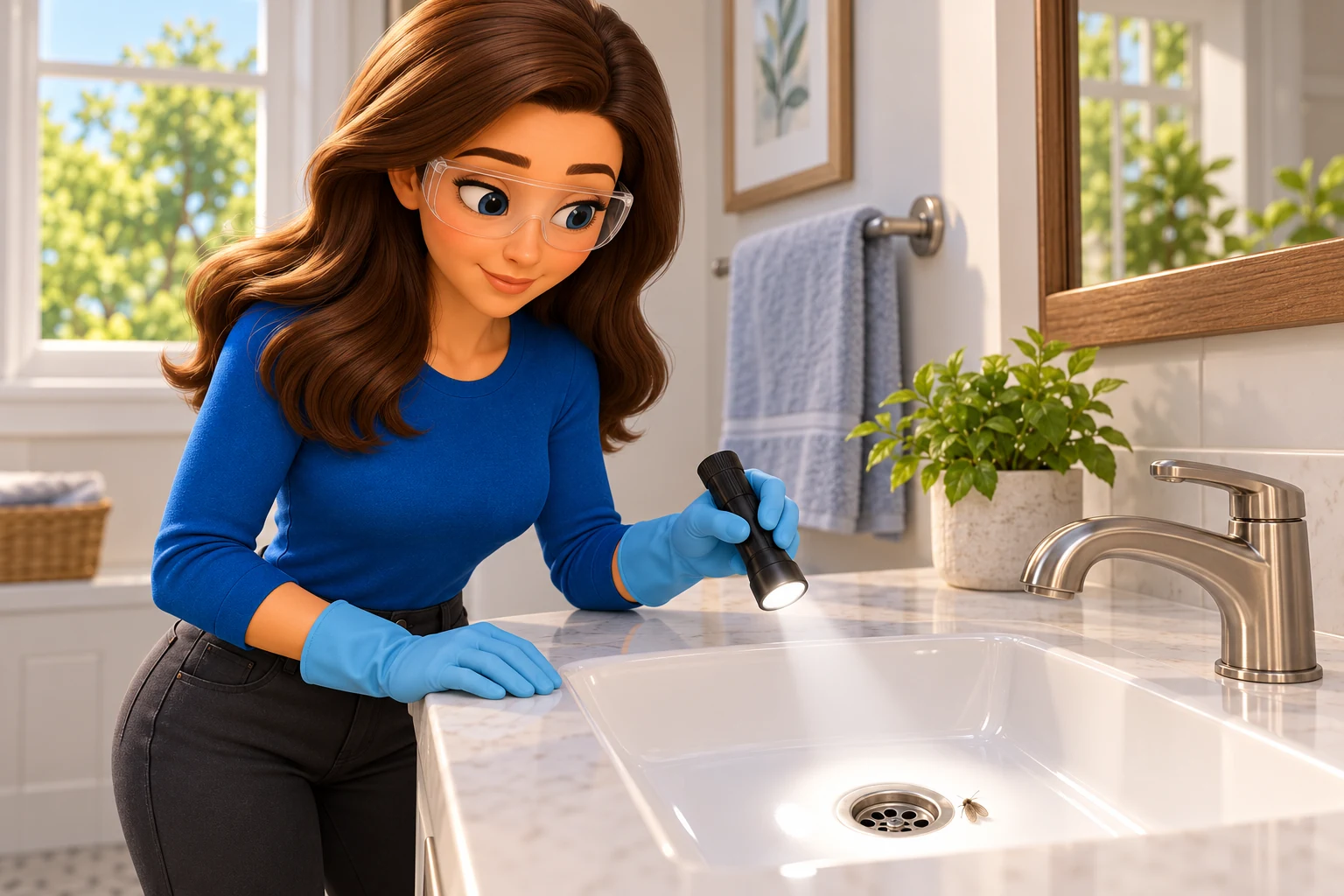
- Look for accessible slime around the sink drain and overflow.
- Check adjoining rooms, rather than assuming the source is where adults collect.
Water alone is not the complete explanation: look for the wet organic material that supports breeding. A vinegar trap catching a fly does not establish which drain, if any, produced it.
Remove the source in a practical order
- Discard or contain the attractant. Empty waste, rinse containers and remove decaying material.
- Wash reusable items. Clean compatible bins, buckets and tools, then let them dry.
- Clean the drain opening that appears to be the source. Follow our drain-cleaning steps and the fixture's instructions. Remove accessible film rather than relying on a poured-in recipe.
- Correct persistent dampness. Arrange repair of a leaking pipe or faucet; do not cover wet materials or ignore a slow drain.
- Recheck the same sites. Note whether activity decreases and whether a different source remains.
🛑 Do not pour boiling water into a fixture as a universal insect treatment. For moth flies specifically, Minnesota Extension advises removing the organic breeding material and notes that boiling water, bleach and chemical drain cleaners are not effective control methods.
Use traps as support, not the whole solution
A covered vinegar-baited trap designed to catch fruit flies can help reduce remaining adults while you remove the source. Keep it stable and away from children and pets, and follow any commercial trap's directions.
- Use catches to track activity, not to prove a species or a hidden pipe defect.
- Keep looking for breeding material if adults continue to appear.
- 🛑 Do not add pesticides to drains unless the product is specifically labeled for that site and use.
If you are also seeing worm-like larvae in the toilet, use the separate toilet-worm checklist to document their location rather than treating them as another name for adult fruit flies.
Get help with a persistent fly problem
Ask a pest professional to identify continuing small-fly activity when you cannot find or reach the source. Ask a plumber about leaks, wastewater backup or unresolved drainage faults. Insects alone do not prove a broken sewer line.
For damp or musty conditions without an obvious insect source, the bathroom-smells hub separates moisture, drain and plumbing checks.
Conclusion
Fruit flies in a bathroom call for identification and source removal. Clean or discard the breeding material, correct moisture problems and use adult traps only as a supporting measure.
Explore our Plumbing articles for related bathroom and drainage checks.

Scott Harding
Scott is the main author of DIY Home Comfort. He's also an experienced HVAC technician that enjoys home renovation and spending time with his family. You can find out more about him here.