Toilet Keeps Running? How to Find the Cause
See whether your toilet tank is overfilling or leaking into the bowl. Learn what to check, when to use a dye test, and when to get help.
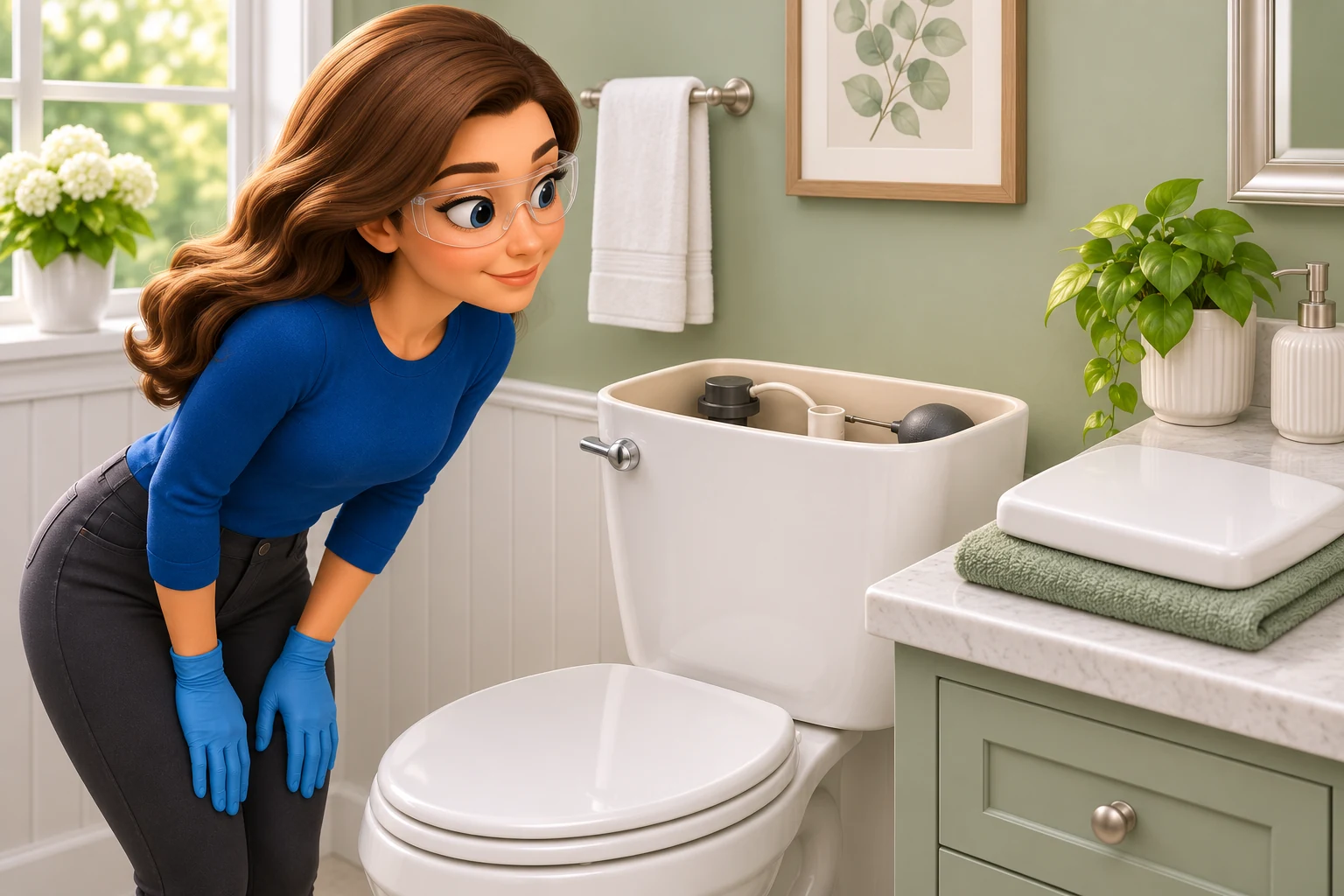
If your toilet keeps running, watch what happens after the tank should have finished refilling. Water spilling over the top of the overflow tube points you toward the fill system. A tank that goes quiet and then refills on its own may be slowly losing water into the bowl. That short refill is often called a phantom flush.
🛑 Stop using the toilet if you see a crack, water leaking onto the floor, or a bowl that's rising. Close the toilet's shutoff valve if it is easy to reach and turns freely. Get plumbing help if the valve is stuck or leaking. For a leak that appears at the floor, see our toilet base leak guide.
These checks are for a conventional gravity toilet with a visible tank. For a pressure-assisted, concealed-tank or electronic model, use its manual or ask for service.
Watch where the water goes
Lift the ceramic tank lid carefully with both hands and set it flat on a towel. The fill valve lets water into the tank. A float rises with the water and tells the valve when to stop. The overflow tube gives excess tank water a route into the bowl. A persistent ripple or trickle in the bowl can be a clue even when the toilet is quiet.
| What you notice | What to check next |
|---|---|
| Tank water spills over the top of the overflow tube | Check whether the float moves freely and where the water level sits relative to your model's fill mark. The float setting or fill valve may need attention. |
| The tank goes quiet, then refills without a flush | Look for a slow tank-to-bowl leak. Check the handle linkage and the flapper or canister seal. |
| The tank keeps filling and stays below the overflow | Look for a flush seal held open by the handle or chain. Use the model instructions to check how it should sit. |
| Jiggling the handle stops the running | Watch whether the handle arm or chain catches and holds the seal open. Check how your model's linkage is supposed to move. |
A small refill hose can send water into the overflow tube while the tank is refilling. That flow should stop when the refill ends. Look for tank water spilling over the rim of the tube or a refill that never ends. Kohler's constant-running guide shows how overflow and fill-valve problems can look on its models.
If the tank overfills, check the float and fill valve
Watch a normal refill from the side when the toilet is safe to use. Some floats slide up the valve body. Others sit on the end of an arm. Either type needs room to move. Check for contact with the tank wall, refill hose or handle arm.
- Find the model's fill mark. Look inside the tank or in the manual. If the water shuts off above the mark or spills into the overflow, check the float position and setting.
- Follow the matching instructions. Use the adjustment the maker shows for your valve. The screw, clip or other control varies by model.
- Check for a valve that can't close. If the float moves freely and the setting is right but the inlet keeps flowing, the fill valve may be dirty, worn or damaged. Follow its service instructions or have it checked before replacing parts.
The Fluidmaster 400A instructions show how its float and refill clip are set up. Check the instructions for the exact valve you have.
Check the seal if the tank refills by itself
A flapper is a hinged seal at the bottom of many tanks. Other toilets use a seal under a lift-up canister. Either style closes the opening that sends tank water into the bowl. A stuck handle or caught chain can hold that opening slightly ajar. Kohler's intermittent-running guide shows examples of both styles.
With the handle released, see whether it returns freely and whether the chain lets the seal settle flat. A tight chain can keep a flapper lifted. A dangling chain can catch underneath it. Once the water supply is safely shut off, check the seal and the surface it presses against for visible grit, wear or damage. Use the maker's cleaning and adjustment instructions.
Check where the refill hose ends
Look at the small hose that sends water to the bowl during refill. On some flapper-style tanks it clips to the overflow opening. On some canister models it connects to a port. If the hose has slipped and its end sits under the tank water, it can draw water out between flushes and trigger another refill. Compare it with the diagram for your model. Kohler's hose-position guide illustrates both arrangements.
Use a dye test for a silent leak
Use this test if the toilet drains normally, the tank has settled below the overflow, and your toilet's care instructions allow it.
- Add dye to the tank. Use a few drops of food coloring or a toilet leak-test tablet.
- Wait 10 minutes without flushing. Color in the bowl shows that tank water is reaching it. The test alone can't tell you which part failed.
- Clear the dye. Flush afterward to avoid staining. EPA WaterSense gives the timing for the check.
If you hear a refill later but the first test shows no color, note how long it takes the sound to return. A brief test can miss a leak that happens only intermittently. You can also compare the tank level at the end of the refill and just before the sound returns. A falling level while nobody flushes tells you to look for where the tank is losing water.
Make one change and recheck
Keep a towel and sponge handy. Take a picture of the original setup, including the refill hose and chain. Look up the compatible seal or valve by model number before buying it. If the manufacturer gives a simple replacement procedure for your gravity tank, change one part at a time so you can tell what helped.
🛑 Before removing parts, make sure the local shutoff closes and stops the refill. Leave a stuck or leaking valve alone and call a plumber.
- Isolate the supply and empty the tank. Once you know the toilet drains safely, close the local valve, flush and sponge out the water if your model's procedure calls for it.
- Fit the matched part. A flapper attaches to its hinge points and reconnects to the handle chain. A canister seal fits into its own holder. Follow your model's directions for the part and linkage.
- Restore the water and watch a cycle. The fill valve should stop at the model's waterline. Check for fresh moisture at the tank and supply connection, then listen again after the toilet has sat unused. Repeat the dye check if it helped identify the leak.
If it still runs after a new flapper
- Water spills over the overflow. Go back to the fill side. A new flapper can't correct a float setting or a fill valve that keeps admitting water.
- The tank refills between uses. Verify the part fits, the linkage has the correct slack and the hose sits where it belongs. If water still reaches the bowl, the surface the seal closes against or the gasket below the flush valve may need attention.
- Water appears outside the tank. Follow the stop-use guidance at the top. Have the tank, connections and seals checked before using the toilet again.
Call a plumber if the shutoff can't isolate the tank, parts are inaccessible, or the leak returns after a correctly matched repair. Share the model number, a photo and what you observed. Ask whether the quote includes the trip, parts and labor, and whether the work involves a seal, a complete valve or the fixture itself. If you rent, report the problem to building maintenance before replacing parts.
Check the water use and prevent repeat leaks
A quiet leak can show up on a water bill before you notice a sound. EPA WaterSense suggests comparing meter readings across two hours of no household water use. Movement can flag a leak somewhere in the home. Use your utility's meter instructions and the toilet checks above to narrow it down.
For scale, suppose a confirmed toilet leak accounted for 5 gallons over two hours. At that same rate it would use 60 gallons in 24 hours, or 1,800 gallons in 30 days. That example assumes the leak rate stays steady. For an intermittent leak, use readings taken over a period that captures its refill pattern.
Listen for new refills between uses and check for drips at the supply connection. Some in-tank bleach or chlorine tablets can damage seals. Check the toilet and replacement part instructions before using tank cleaners. If a toilet starts running again soon after repair, recheck the cause before buying another part.
🛑 Keep toilet cleaning products separate. Mixing bleach with an acidic toilet cleaner can release toxic gas.
Conclusion
When a toilet keeps running, start by seeing whether the tank overfills or loses water after the refill. Match the fix to your model and confirm that the tank stays quiet afterward. For a weak flush, a rising bowl or gurgling, return to our toilet problems guide.
Browse our Plumbing guides for more fixture checks.

Scott Harding
Scott is the main author of DIY Home Comfort. Learn more about the team and our approach on the About page.