Why Is My Toilet Leaking From the Bottom When I Flush?
Stop using a leaking toilet and identify where moisture starts. Compare possible supply, tank, seal and bowl faults before arranging the right repair.
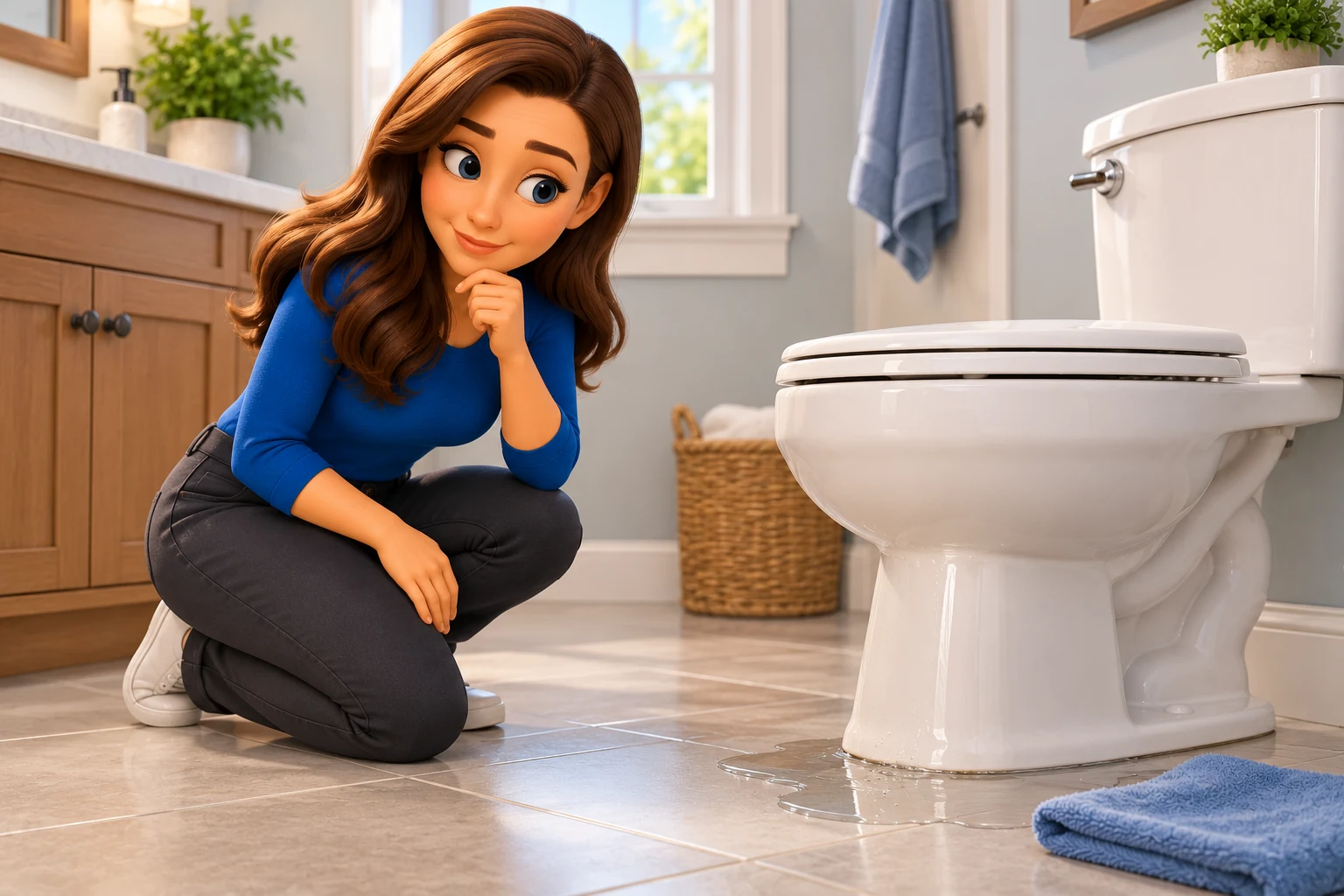
🛑 If your toilet is leaking from the bottom when you flush, stop using it until you know where the water is coming from. A failed outlet seal is one possibility, but water can also run down from the tank or supply connection. Treat water at the base as potentially contaminated until you know its source.
🛑 Do not keep flushing to reproduce the leak, tighten bolts hard or patch a cracked bowl with household epoxy. If water is reaching electrical equipment or access is unsafe, keep clear and get professional help.
Separate the possible sources
| What you see | Possible source | Useful next step |
|---|---|---|
| Water appears at the base during discharge | Outlet seal, flange, support or drainage problem. | 🛑 Stop use; arrange inspection of the connection. |
| Water tracks down the outside of the bowl | Tank connection, supply leak or condensation. | Photograph the highest visible wet point without dismantling. |
| Rocking or movement | Support, fasteners or flange issues, possibly a disturbed seal. | A stable-looking toilet after tightening is not proof the leak is repaired. |
| A crack, soft floor or ongoing leakage | Damage needing more than a simple adjustment. | 🛑 Keep the fixture out of use and get qualified assessment. |
🛑 For a bowl that rises or multiple drains backing up, stop affected plumbing use and tell the plumber. That pattern needs a drainage investigation rather than just a new wax ring.
If the floor is dry and your main clue is a weak flush or a running sound, start with our toilet problems guide.
Make limited observations
- 🛑 Stop further use. If needed, use the accessible supply shutoff only when it can be operated safely; do not force a stuck valve.
- Note the timing. Did the leak begin after installation, movement, cleaning or a blockage?
- Look above the base. Record visible moisture at the supply connector, tank or tank-to-bowl joint.
- Check the surroundings. Report damp or soft flooring and any ceiling damage below.
- 🛑 Arrange the appropriate repair. Keep children and pets away from wet areas and avoid spreading wastewater with household cleaning tools.
Our toilet-plunging guide covers a controlled approach to a simple clog; a leaking base or cracked fixture is a stop condition for that task.
Why tightening may not fix the seal
Bolts secure the fixture, while the outlet seal makes a different connection. Movement can disturb that seal, and tightening an already leaking installation does not establish that it has resealed. Excess force can crack ceramic or damage the flange.
A reset needs assessment of the flange condition and height, floor support, fixture fit and correct seal. A broken flange or damaged subfloor should not be concealed by a new ring. Appropriate shims, fastening and sealing follow the actual fixture and installation requirements.
Removing and lifting a toilet also involves weight, breakable ceramic and contaminated surfaces. Have a plumber handle the work if those conditions or the required repair are beyond your equipment or experience.
Do not patch a cracked bowl
🛑 A structural crack in a bowl or tank is not an ordinary surface-cleaning problem. Stop use and have the damaged component assessed for replacement. A cosmetic mark and a structural crack can be difficult to distinguish without examination.
TOTO's safety instructions, for example, require stopping use for a cracked or leaking product. They do not establish a household-epoxy repair for load-bearing or water-retaining ceramic.
Check the completed repair
- Ask which component failed and whether the flange/floor support was sound.
- Have the installation checked for stability and leakage under its normal operating sequence.
- Address wet building materials and cleanup appropriately, rather than covering damage with trim or sealant.
- Report renewed moisture, odor or movement promptly.
Conclusion
🛑 A toilet leaking at the base needs source identification and a sound fixture connection. Stop repeated test flushing, avoid structural patching or forceful tightening, and repair the seal, support or damaged fixture as the diagnosis requires.
Explore our Plumbing articles for related bathroom troubleshooting.

Scott Harding
Scott is the main author of DIY Home Comfort. Learn more about the team and our approach on the About page.