How to Properly Plunge a Toilet Without Making a Spill
Check for overflow and drain chemicals, choose a toilet plunger, and use controlled strokes. Know when to stop and call for drain service.
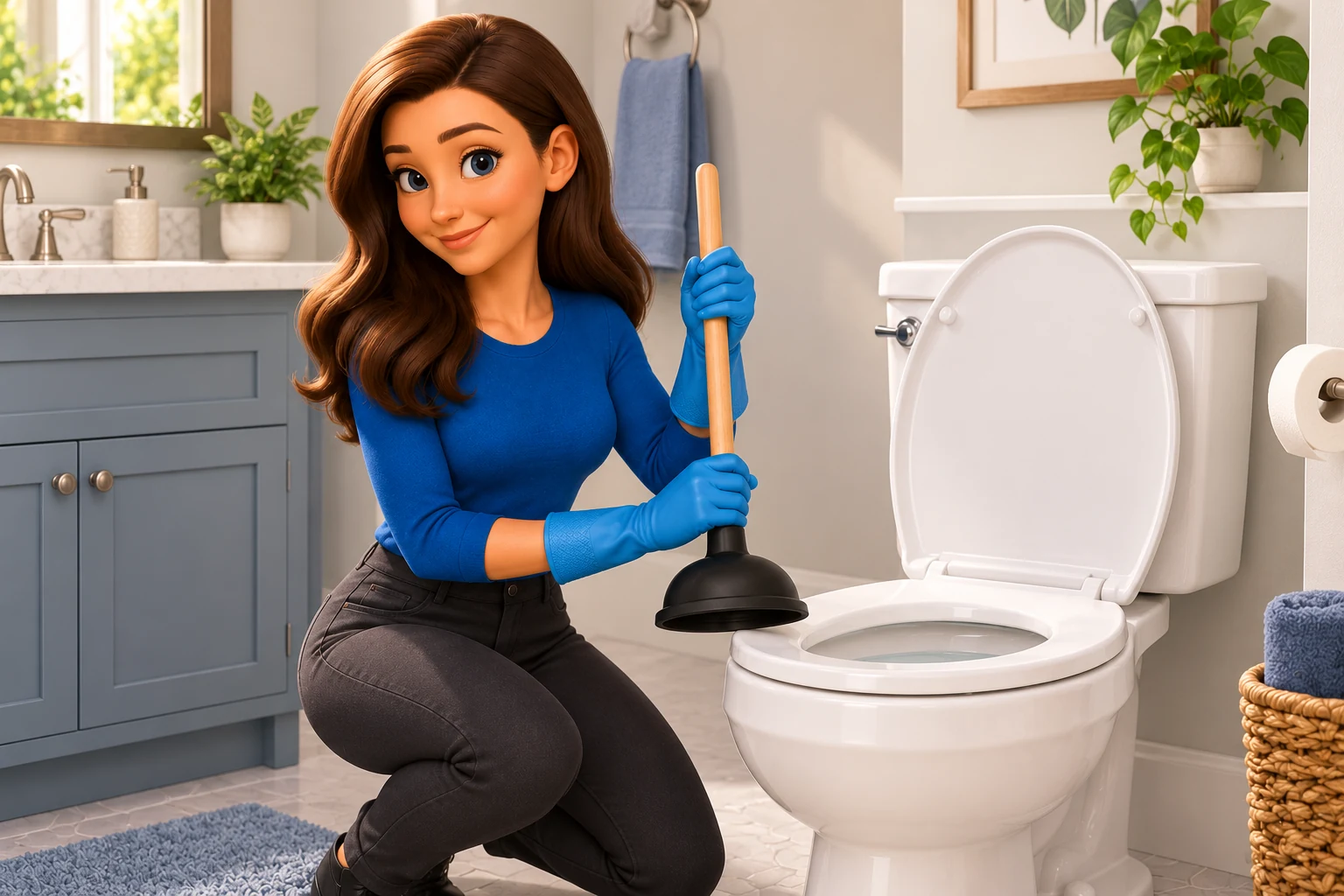
🛑 To properly plunge a toilet, use a toilet plunger that seals the bowl outlet, control the water level and use steady pushes and pulls. Check for overflow risk and chemical treatment before starting. A rising bowl is a reason to stop adding water, not to keep test flushing.
Check before you plunge
- Drain cleaner already added? Follow its label and keep tools, hands and other products out until the situation can be handled safely.
- 🛑 Water close to the rim? Do not lift the flapper or flush again. Prevent another refill using an accessible owner-permitted control if safe.
- 🛑 Several fixtures backing up? Stop affected water use and call a plumber.
- 🛑 A cracked bowl or leaking base? Stop using the toilet and arrange assessment.
🛑 Drano Max Gel's precautions, for example, prohibit toilet use and plunging during or after application. A product labeled for one drain is not automatically suitable for a toilet. Do not add bleach, vinegar or another cleaner to an unknown mixture.
Choose a suitable tool
| Tool or symptom | Useful distinction | Next step |
|---|---|---|
| Toilet plunger with a flange or toilet-shaped cup | Can seal a toilet outlet better than a flat sink cup. | Follow its instructions and seat it gently. |
| A visible solid object | May need retrieval rather than forcing farther into the pipe. | 🛑 Stop and consider professional removal. |
| Persistent single-toilet clog | A suitable closet auger may help with some obstructions. | Use only within its instructions and your ability. |
| Multiple affected drains or repeated clogs | The fault may extend beyond the toilet trap. | Get a plumbing diagnosis. |
🛑 Wear suitable gloves and splash eye protection, protect the floor, and keep children and pets away. Use dedicated toilet-cleaning equipment.
Use a controlled plunging sequence
- 🛑 Assess the level. Leave room for displacement by the plunger. Do not release tank water into a high bowl. If safe handling of excess water is uncertain, stop.
- Seat the plunger. Cover the outlet with the appropriate flange/cup and follow the tool's directions. Begin gently to limit trapped-air splashing.
- Keep the seal. Use steady, controlled strokes. There is no fixed stroke count that guarantees a clear pipe.
- Watch for drainage. Remove the tool carefully and allow the level to settle. Repeat only while the situation remains controlled.
- 🛑 Test cautiously. Confirm that water drains before a limited test, watching the level and being ready to stop refill. Do not repeatedly flush a bowl that rises.
If the obstruction does not clear after limited attempts, change the plan rather than increasing force or adding chemical remedies. A plumber can distinguish a lodged object, toilet fault and downstream blockage.
Avoid unproven shortcuts
🛑 A fizzing baking-soda/vinegar mixture does not establish that a clog has been removed. A bucket of hot or boiling water is not a universal toilet treatment and can add volume to an already blocked bowl. Do not use unspecified chemical drain cleaners monthly as routine prevention.
An expressly labeled biological maintenance product is a different product category from a caustic clog opener. Neither replaces identifying a recurring blockage, and the product and toilet instructions still apply.
Reduce recurring clogs
- Flush only human waste and suitable toilet paper; put wipes and hygiene products in the trash.
- Keep toys and other objects away from the bowl.
- Report weak or changed flushing performance and recurring slow drainage.
- Do not assume that low water use alone explains a clog.
EPA WaterSense explains that modern efficient toilets are tested for flushing performance as well as water use. For leakage, use our toilet-base leak guide; for a supply outage, use the separate manual-flushing guide.
If the bowl drains but the flush still feels weak, use our toilet problems guide to distinguish a weak flush from a slow tank refill.
Conclusion
🛑 A suitable plunger and controlled technique can clear some toilet clogs. Chemical presence, a high bowl, leakage or wider backups change the next step. Stop before repeated flushing makes the problem larger.
Read more Plumbing guides for practical fixture checks and service decisions.

Scott Harding
Scott is the main author of DIY Home Comfort. Learn more about the team and our approach on the About page.