How to Flush a Toilet When Water Is Off
Check toilet type, drainage and suitable water before a manual flush. Learn safe options for an ordinary gravity toilet during a water outage.
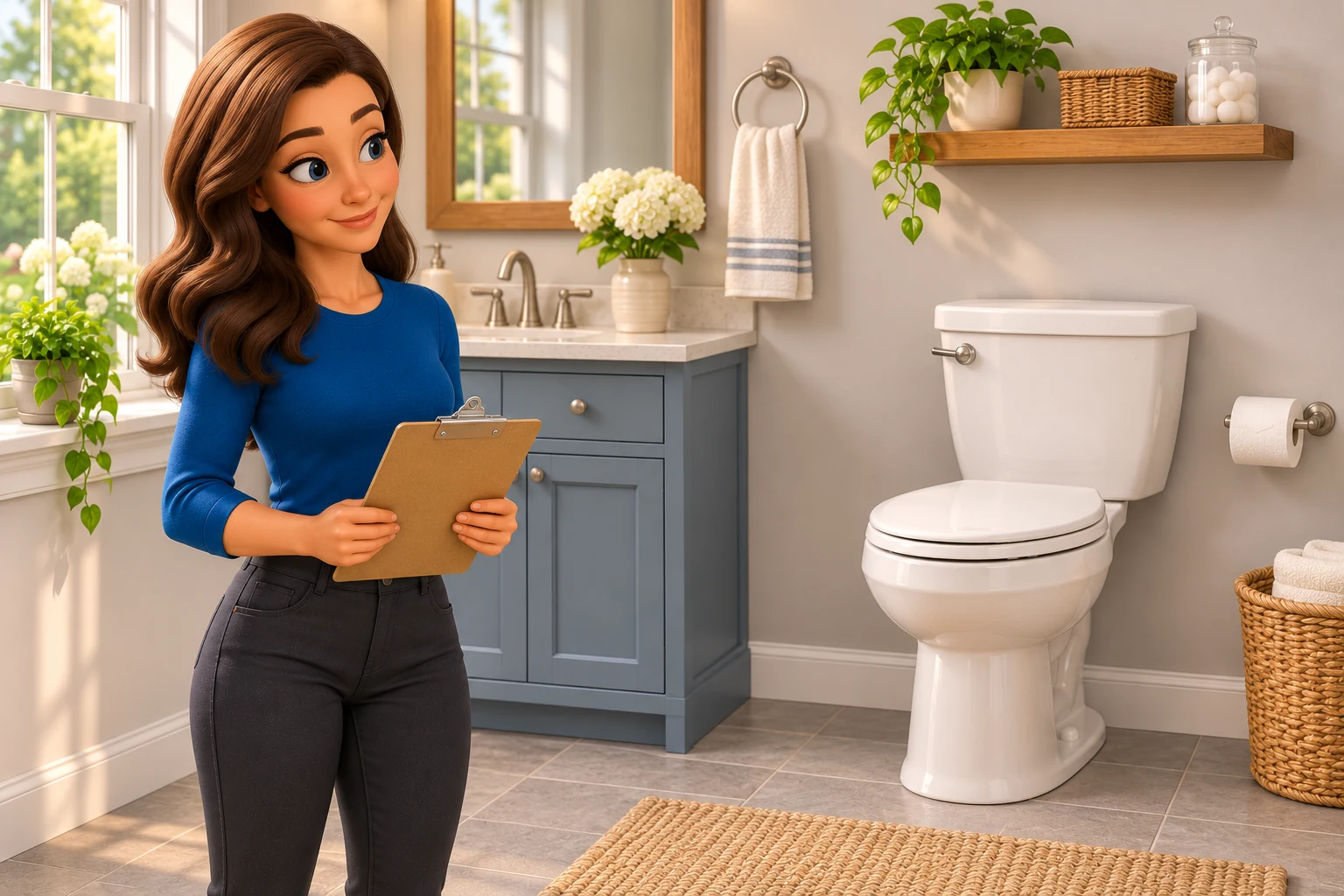
Knowing how to flush a toilet when water is off starts with two checks: is it an ordinary gravity toilet, and is its drainage system still usable? A full tank may allow one normal flush. Further flushing may be possible with suitable water, but not during a sewer backup or when a required pump is unavailable.
🛑 Stop if water rises or other fixtures back up. Follow utility or emergency instructions about wastewater use before trying an outage workaround.
Check the toilet and drainage
| Situation | What to establish | Next step |
|---|---|---|
| Ordinary gravity toilet; tank still full | No clog, backup or drainage restriction. | One normal flush may remain available. |
| Gravity tank has emptied | Owner instructions and a suitable water source. | Consider a permitted manual method below. |
| Pressure-assisted, powered or specialized toilet | Model-specific operating requirements. | 🛑 Do not open a pressure vessel or use generic tank instructions. |
| Septic/ejector pump or sewer service is disrupted | Whether wastewater can still be accepted safely. | Get service guidance before adding water. |
Gravity toilets use stored water and their bowl/trapway design to move waste. They are not all dependent on continuous incoming supply pressure for the flush itself. The supply normally refills the tank afterward.
If the water supply is on and the toilet still will not flush normally, use our toilet problems guide to narrow down what is happening.
Choose suitable water
🛑 Do not interpret “non-drinking use” as permission to use contaminated water, floodwater or an unknown chemical mixture. Check the toilet's instructions and local emergency advice. Keep water containers separate from drinking-water storage and prevent cross-connections.
Rainwater, pool water and household graywater are different sources. EPA's water-reuse definitions distinguish collected rainwater from wastewater streams. A permanent graywater-toilet system needs an approved design; an improvised bucket method does not authorize one.
🛑 Some specialized toilets require potable water and functioning electricity. Do not assume that every alternative source is suitable for their tanks, pumps, washing features or seals.
Option one: refill an ordinary gravity tank
- 🛑 Confirm normal drainage. Do not use this method for a clogged, leaking or backing-up fixture.
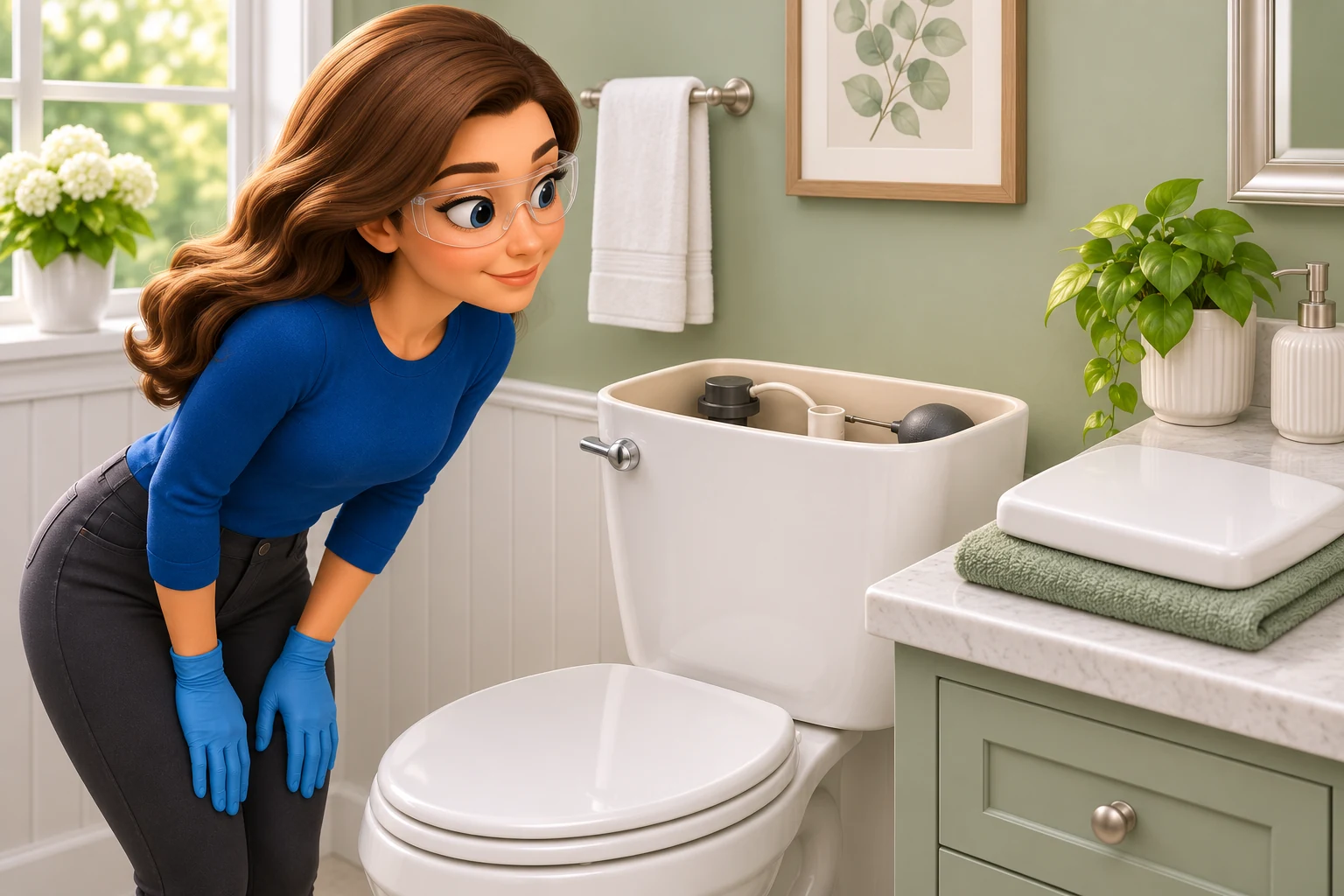
- Check the owner instructions. Confirm that the tank is ordinary and accessible; handle the lid carefully.
- 🛑 Add suitable water to the marked operating waterline. Do not fill to the rim of the overflow tube. Avoid spilling water or submerging a hose connection.
- 🛑 Refit the lid and use the normal control. Watch for abnormal drainage and stop if the level rises.
Fluidmaster's water-level diagram shows an operating waterline below the overflow top. The exact setting follows the installed toilet; a fill-valve critical-level mark is a different measurement.
Option two: a permitted bowl pour
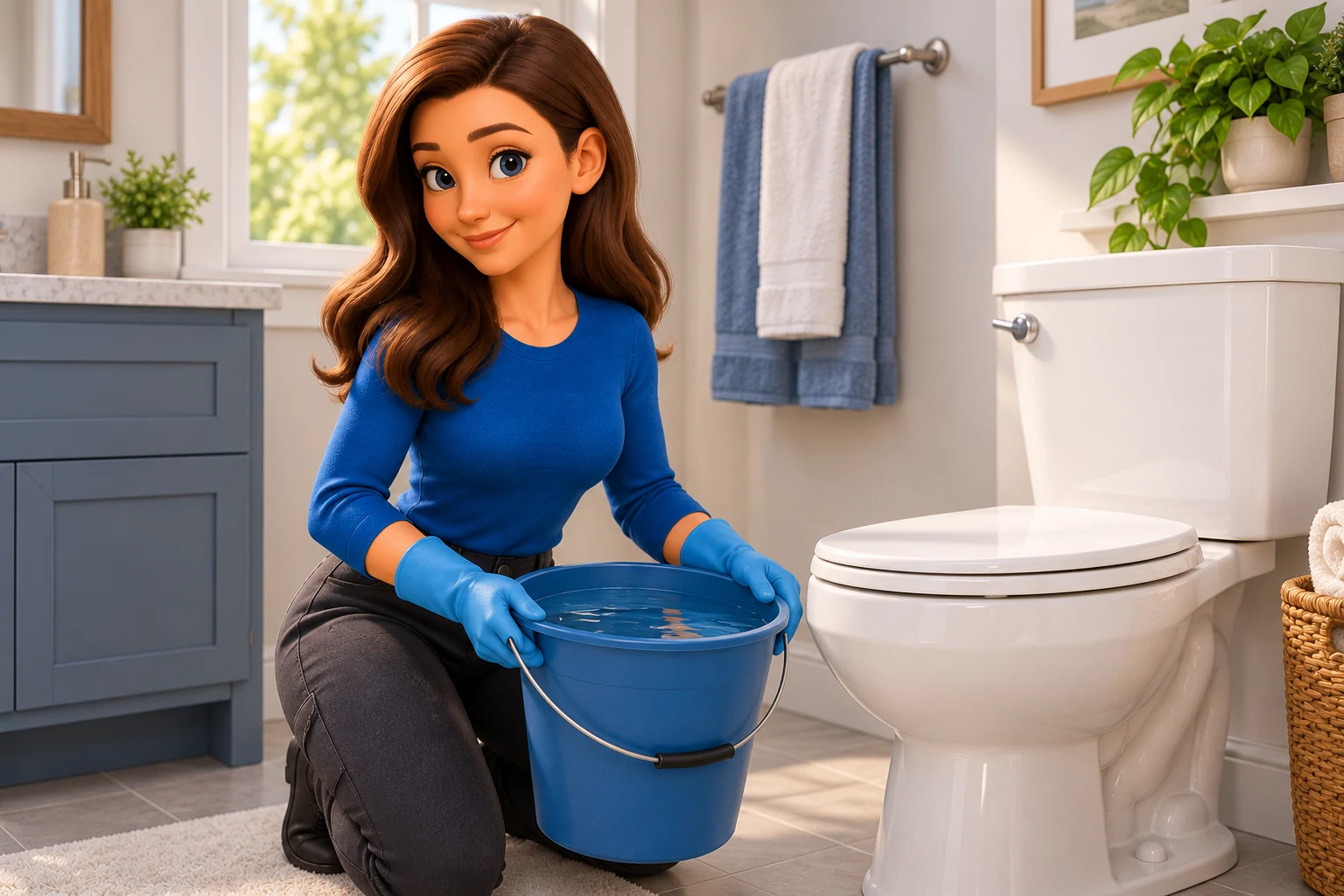
🛑 On a suitable gravity toilet, adding water to the bowl at the appropriate rate may start a flush. This is an alternative to refilling the tank, not an extra step. Check the model's instructions and local guidance first. The water volume and pouring rate must suit the toilet; there is no single bucket volume or force for every model.
- Leave room in the bowl for the added water.
- Use a manageable container and control the pour to limit splashing.
- 🛑 Stop if the level rises without draining.
- 🛑 Do not keep adding water to force an obstruction through.
If the correct method or volume is unknown, tank refilling to an approved marked line or professional advice is more useful than repeatedly guessing.
Plan water from the actual toilet
Flush volumes vary, and older toilets can use substantially more water than modern models. A single bucket-volume rule is not a dependable plan for every toilet.
EPA WaterSense distinguishes efficient modern toilets from older high-use models. Use your toilet's specifications and the permitted outage method to plan supply, leaving drinking water for its intended use.
For a blockage, read how to properly plunge a toilet. For private-system questions, use septic records and service guidance rather than assuming the tank can accept more wastewater.
Conclusion
During a water outage, confirm the toilet type and usable drainage before adding water. Follow the actual operating waterline or permitted manual method, use a suitable source and stop immediately for rising water or backup.
Continue through our Plumbing guides for related household checks.

Scott Harding
Scott is the main author of DIY Home Comfort. Learn more about the team and our approach on the About page.