How to Find a Septic Tank Safely
Start with septic records and safe surface observations. Learn when to call a locator, why not to open a tank, and how inspection differs from pumping.
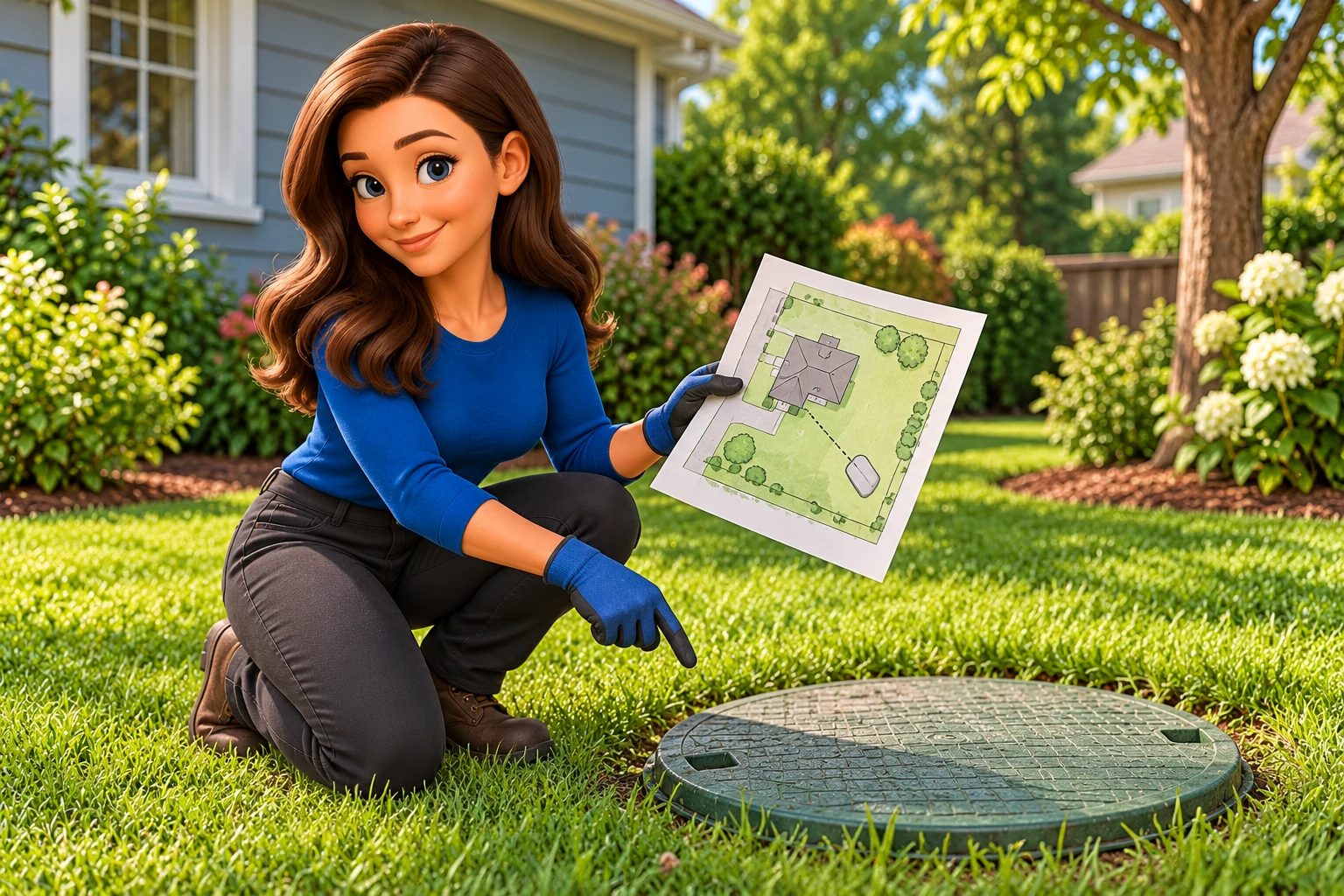
To find a septic tank, start with permit records, an as-built drawing and past service reports. Visible lids or risers can help confirm the location. Use a septic professional when records are missing or the system is not readily identifiable; resistance from a metal probe is not proof of a tank or its condition.
🛑 Do not open or enter a septic tank, stand on a questionable cover or walk over suspect ground. Keep children and pets away from openings, damaged lids and wet areas that may contain sewage.
Start with records
- Ask the local health, environmental or permitting authority for the system record.
- Check purchase documents, inspection reports, pumping receipts and the installer's drawing.
- Ask the previous owner or service company for a documented location.
- Look for the tank, drainfield and any pump/control equipment as separate parts of the system.
A sketch can be approximate. Property alterations, multiple tanks and replacement systems make a guessed straight line or fixed distance from the house unreliable.
Use visual clues without opening the system
| Clue | What it can tell you | Limit |
|---|---|---|
| A visible riser or marked access point | May identify service access. | 🛑 Do not remove the cover to confirm it. |
| A record showing the house sewer outlet | Provides a starting direction. | The route may turn or serve more than one component. |
| Unusually green, wet or spongy ground | May indicate moisture or a wastewater problem. | Not proof that the tank is directly underneath. |
| A metal-detector or locator response | Can support a professional location survey. | Buried objects and system materials affect the result. |
🛑 Report sewage odor, backup or persistent wetness to the service provider. Avoid using a suspicious wet patch as a convenient place to begin digging.
Why probing needs precautions
A rod can strike utilities, a pipe, rock or a weakened cover. It cannot establish the tank's structural condition, solids level or need for pumping.
University of Georgia Extension puts utility-location precautions before probing and notes that private lines may not be included in the public marking service. In the U.S., contact 811 before ground penetration and arrange any additional private-line locating needed. Local requirements and response periods apply.
🛑 For most homeowners, giving the records and observations to a qualified septic locator is the more useful next step. Never enter a tank or attempt a rescue inside it; confined wastewater spaces can be fatal.
Separate inspection from pumping
EPA's septic-care guidance recommends inspection at least every three years for a typical household system and generally annually for alternative systems with pumps or mechanical components. Household tanks are commonly pumped every three to five years, depending on use, tank size and measured condition.
Those are general maintenance guidelines, not permission to ignore a local rule, service contract or an earlier warning. Inspection and pumping are different tasks; a calendar interval alone does not tell you how much sludge or scum is present.
Save a useful location record
- Have the professional confirm the tank and other system components.
- Keep a dated sketch referenced to durable features, with service-access locations.
- Save the inspection findings, service history and next maintenance recommendation.
- Keep access available without parking, building or placing heavy loads over the system.
For an unexplained indoor smell, use our sewer-smell guide before assuming the tank must be pumped. For an outage, confirm the system remains usable before following manual toilet-flushing advice.
Conclusion
🛑 Records and professional confirmation are the foundation of finding a septic tank safely. Treat wet ground and uncertain covers as warning signs, keep probing separate from inspection, and maintain the system according to its actual design and service findings.
Read more Plumbing guides for household drainage and fixture decisions.

Scott Harding
Scott is the main author of DIY Home Comfort. Learn more about the team and our approach on the About page.