Why Is My Toilet Water Brown? Check the Tank, Bowl and Supply
Compare the toilet tank, bowl and other cold-water fixtures to narrow down brown water. Separate stains, supply sediment and drainage problems.

Brown toilet water can reflect sediment in the cold-water supply, debris inside the tank, a stained bowl or a drainage problem. Start by checking whether the discoloration is in the tank, the bowl or water from other cold-water fixtures. A normal toilet is supplied with cold water, so flushing the water heater is not the default solution.
🛑 If the bowl is rising, overflowing or receiving wastewater from another fixture, stop using the affected plumbing and call a plumber. That is different from freely draining toilet water that looks discolored.
Separate brown water from staining
- Is the water visibly discolored, or is a fixed stain showing through clear water?
- Does the tank also contain discolored water or loose residue?
- Is cold water from a nearby faucet discolored in a clean, clear glass?
- Did the problem begin after a water outage, hydrant use or plumbing work?
- Are drainage, water level or odor also abnormal?
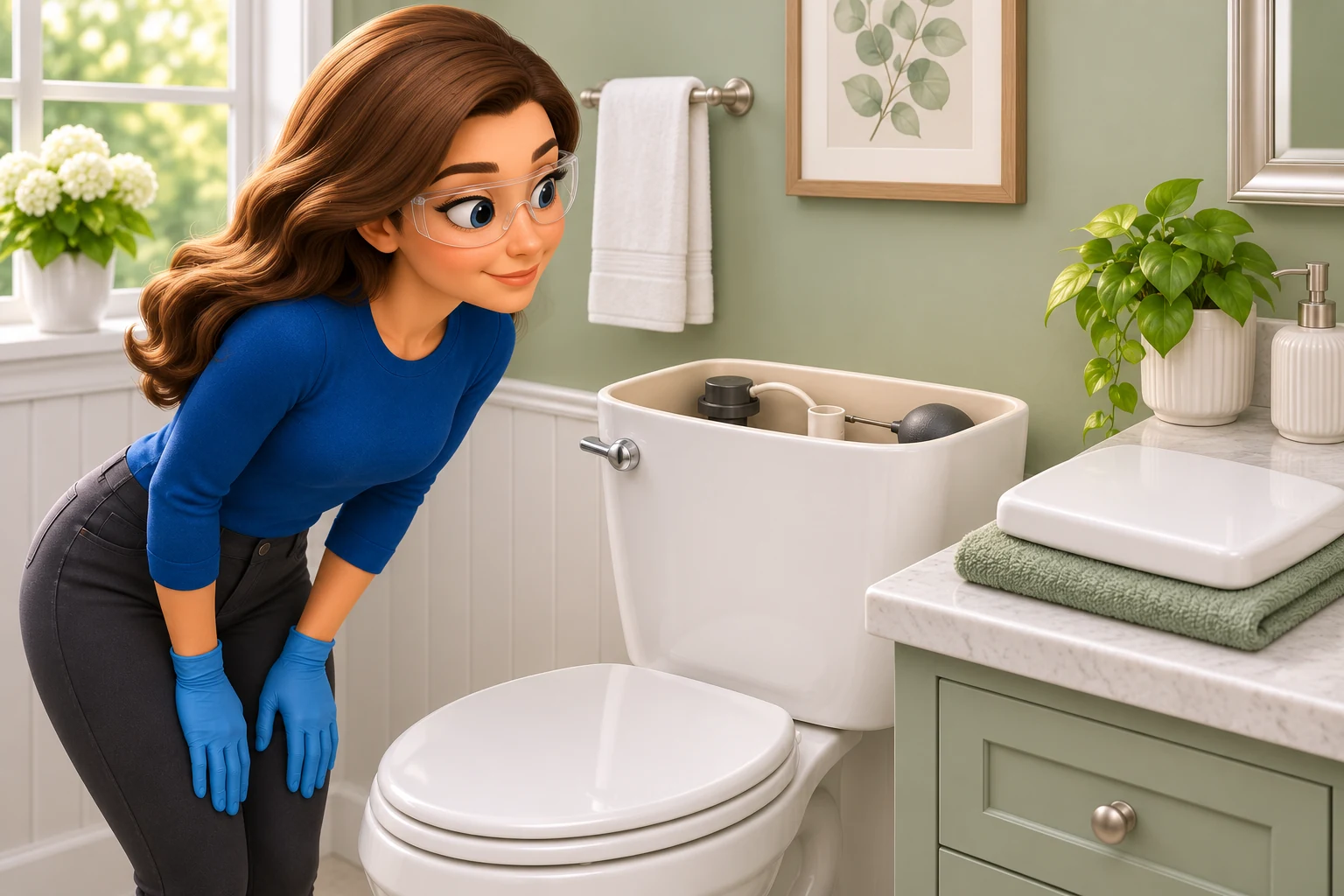
🛑 If your toilet has an ordinary accessible tank and its manual allows inspection, lift the lid carefully and set it securely aside. Do not open a pressure vessel, dismantle valves or add chemicals to investigate the color.
Use the pattern to narrow the cause
| What you find | Possible explanation | Next step |
|---|---|---|
| Tank and other cold-water fixtures are discolored | Supply sediment or another cold-water quality issue. | Check utility notices and ask for local guidance. |
| Nearby cold taps are clear, but the tank has residue | A local supply branch, tank deposit or deteriorating component may be involved. | Check the toilet's care instructions; arrange inspection if it persists. |
| The water is clear but the bowl remains brown | A surface stain or deposit may be showing through. | Use only a cleaner approved for the bowl and deposit. |
| Tank water is clear but bowl water stays dirty or rises | Contents, deposits or drainage problems need to be distinguished. | 🛑 Stop repeated test flushing; get help for backup or abnormal drainage. |
These observations narrow the investigation; they do not identify a contaminant or establish whether drinking water is safe. Avoid buying a filter or arranging pipe replacement solely from the color.
Understand the cold-water connection
Denver Water's discolored-water guidance explicitly uses a toilet's cold-water supply to help distinguish hot- and cold-water problems. Distribution work, disturbed deposits and private plumbing can produce different patterns.
Water-heater sediment can affect hot water. It does not normally explain discoloration in a cold-fed toilet. If the actual connections are unusual or you suspect a cross-connection, have a plumber investigate instead of applying a generic heater-flushing remedy.
If yellow or brown discoloration is showing up in the bath as well, our yellow-bathwater guide covers that related fixture. Keep the hot/cold distinction clear when describing either problem.
Respond to supply discoloration
- Check current notices. Look for a local water advisory or recent utility work. Follow any advisory before a general article's flushing suggestion.
- Contact the supplier if the cause is unknown. Describe which cold-water fixtures are affected and when it began.
- Follow the supplier's flushing instructions. There is no single time or fixture choice that applies to every water system.
- Avoid drawing affected cold water into hot-water equipment unnecessarily. Ask the supplier what use to pause while the problem is investigated.
- Recheck and report persistence. If other taps clear but the toilet does not, the remaining problem may be local to that fixture or branch.
Do not treat toilet-water appearance as a drinking-water test. If other tap water is unexpectedly discolored, obtain the supplier's advice before consuming it rather than assuming a clear-looking result proves safety.
If you have a private well
If your home uses a private well, ask about water testing rather than following flushing instructions meant for a municipal water system. CDC recommends testing when taste, color or smell changes, using a state-certified laboratory and local health-department advice about appropriate tests.
Rust-colored material does not establish that iron is the only issue or that a particular softener or filter will solve it. Choose treatment after the cause and test results are understood.
Prevent repeats and get help
- Use the toilet manufacturer's cleaning instructions; keep bowl products out of the tank unless expressly approved.
- Report recurrent residue, leaks or deteriorating parts rather than scraping or dosing indiscriminately.
- Ask a plumber about repeated fixture-specific discoloration or abnormal drainage.
- If an odor accompanies the discoloration, use the bathroom-smells selector to describe that separate symptom.
Conclusion
To understand brown toilet water, compare the bowl, tank and other cold-water fixtures. Follow utility or well-testing guidance for supply changes, use appropriate fixture care for deposits and get plumbing help for persistent or backed-up water.
Continue reading our Plumbing articles for practical household troubleshooting.

Scott Harding
Scott is the main author of DIY Home Comfort. He's also an experienced HVAC technician that enjoys home renovation and spending time with his family. You can find out more about him here.