How Does a Heat Pump Work? Heating and Cooling Explained
Follow the heat-pump refrigerant cycle in heating and cooling, distinguish common system types, and understand capacity, efficiency and backup.
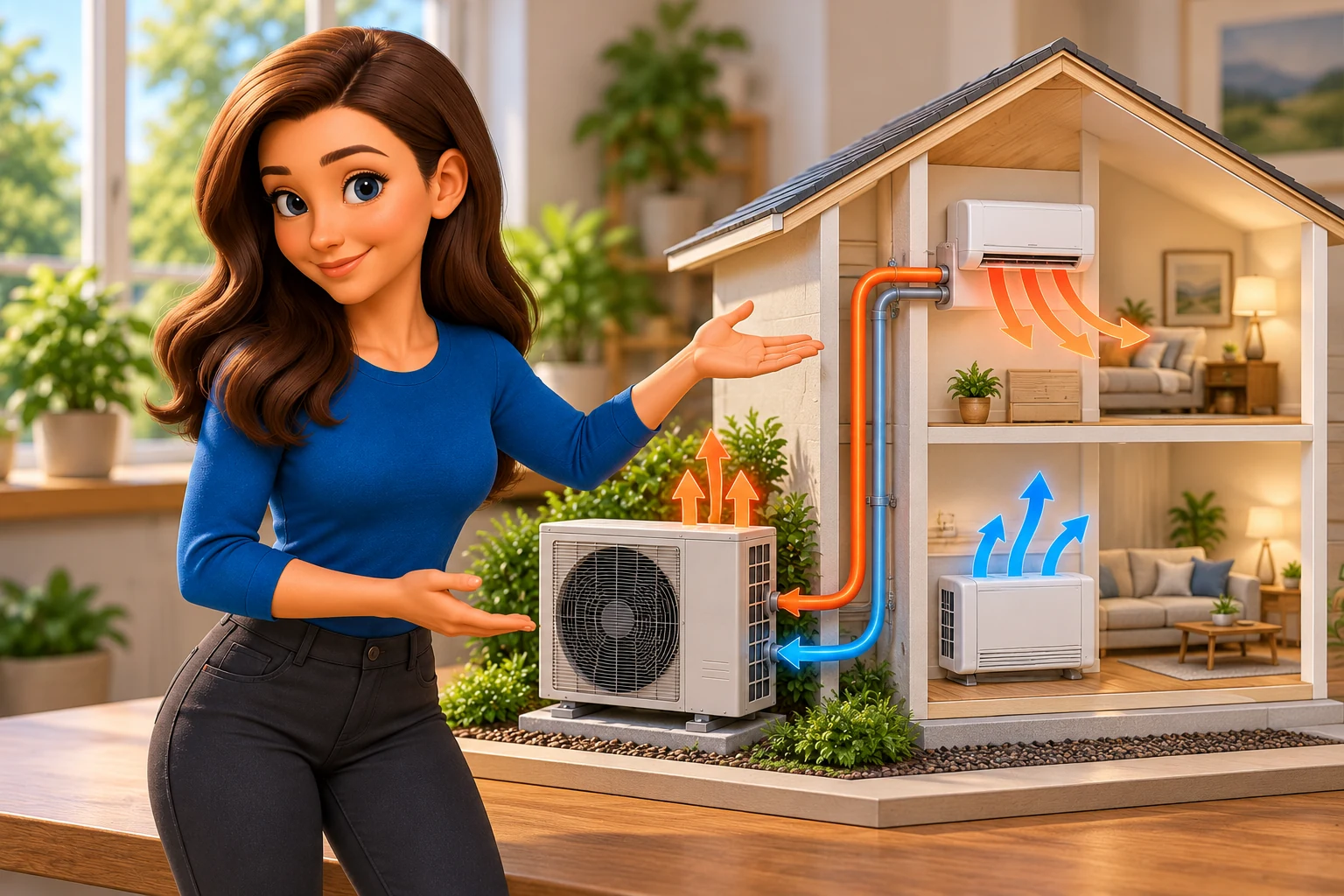
A heat pump uses electricity to move heat from a cooler place to a warmer one. In winter it delivers heat indoors; a reversible system can remove indoor heat in summer. It does not create free energy: the delivered heat includes energy taken from the source plus the energy used to operate the equipment.
The four main parts of the cycle
| Component | Function |
|---|---|
| Compressor | Raises the pressure and temperature of refrigerant vapor |
| Condenser | Releases heat as refrigerant condenses |
| Metering device | Reduces refrigerant pressure before the evaporator |
| Evaporator | Absorbs heat as refrigerant evaporates |
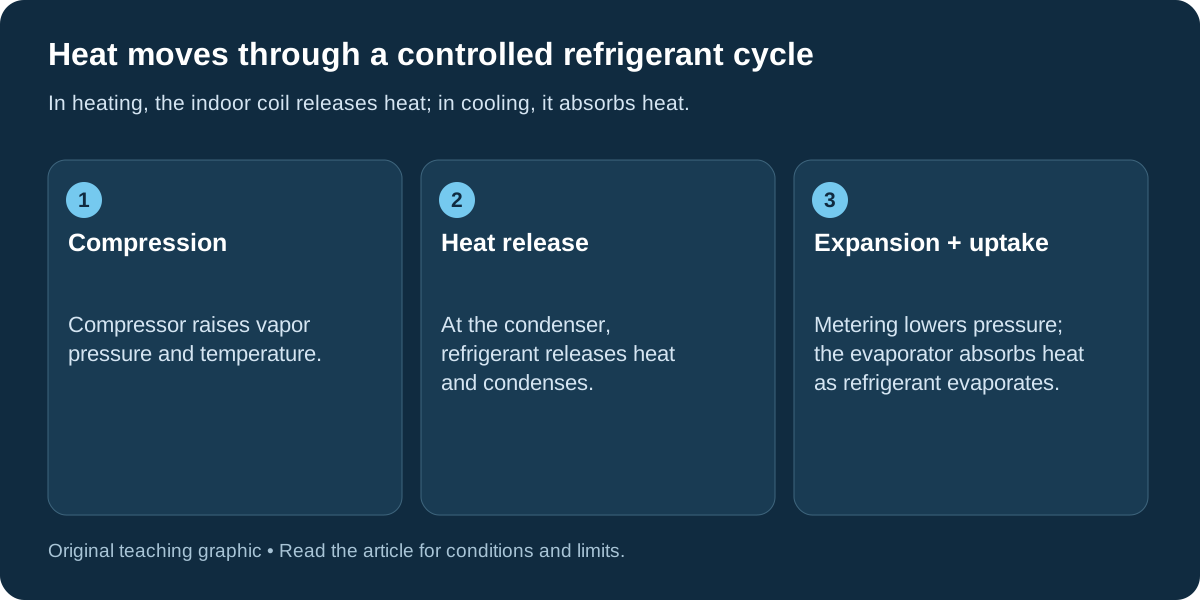
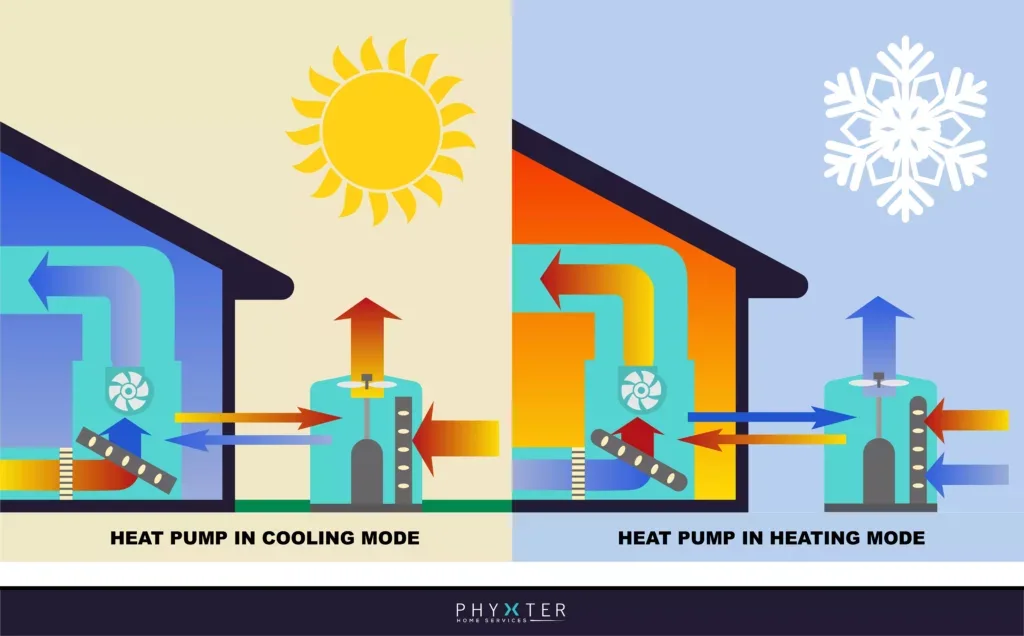
In cooling mode the indoor coil is the evaporator and the outdoor coil is the condenser. In heating mode their roles reverse. The compressor, metering devices, fans and reversing valve must operate as designed; expansion alone is not the heat-release step. The IEA cycle explanation provides the underlying energy-flow model.
Heating, cooling and moisture removal
During heating, the outdoor source transfers energy to refrigerant and the indoor side releases heat to air or water. An air-source outdoor coil may need defrost in winter. Automatic backup can meet additional load or support an approved operating sequence.
During cooling, indoor air passing over a sufficiently cold coil loses heat and can lose moisture through condensation. That water needs a correctly designed drain. Humidity performance depends on capacity, airflow, controls, runtime and the building's moisture load; the heat-pump label alone does not guarantee it. Compare heat-pump and AC cooling.
Different sources and distribution systems
Air-source equipment exchanges heat with outdoor air. Ground-source systems exchange heat through ground or water loops. Water-source equipment may connect to a building water loop supported by pumps, a boiler and a cooling tower, rather than to a naturally constant-temperature lake.
Ducted systems move conditioned air through ducts. Ductless heads serve the spaces they are designed to heat or cool. Hydronic systems deliver heated or chilled water to suitable emitters—the components that transfer heat to or from the room. A wall-mounted head does not automatically serve bedrooms behind closed doors. Choose the source, distribution and controls as separate parts of the design.
Some heat pumps use absorption cycles driven mainly by heat, with a generator, absorber and solution circulation. They should not be assumed to run through an outage: pumps, fans, controls and other accessories may still need electricity. See DOE's overview of heat-pump types.
Read performance numbers correctly
Capacity describes the rate of heat moved, commonly Btu/h or kW. COP compares heat output with electrical input at stated conditions. Seasonal heating and cooling ratings use different test procedures and are not interchangeable with one operating-point COP.
The practical question is whether the selected equipment can meet the home's calculated load at design conditions, including distribution losses and backup. Use our heat-pump sizing guide and request matched-model performance data.
What a heat pump does not automatically provide
Ordinary space-conditioning equipment does not generate emergency electricity, purify drinking water or provide outdoor ventilation merely because it heats and cools. Recycling and end-of-life requirements depend on the materials and refrigerant; the system is not inherently biodegradable.
Conclusion
A heat pump moves heat using a controlled thermodynamic cycle. Choose its source, distribution, capacity and controls around the home, then verify installation and operation with a commissioning checklist.
Continue with our heat-pump guides for related homeowner decisions.

Scott Harding
Scott is the main author of DIY Home Comfort. Learn more about the team and our approach on the About page.