How Does a Heat Pump Work in Winter?
Learn how heat pumps move outdoor heat indoors, what defrost does, and why cold-weather capacity, efficiency and backup must be assessed separately.
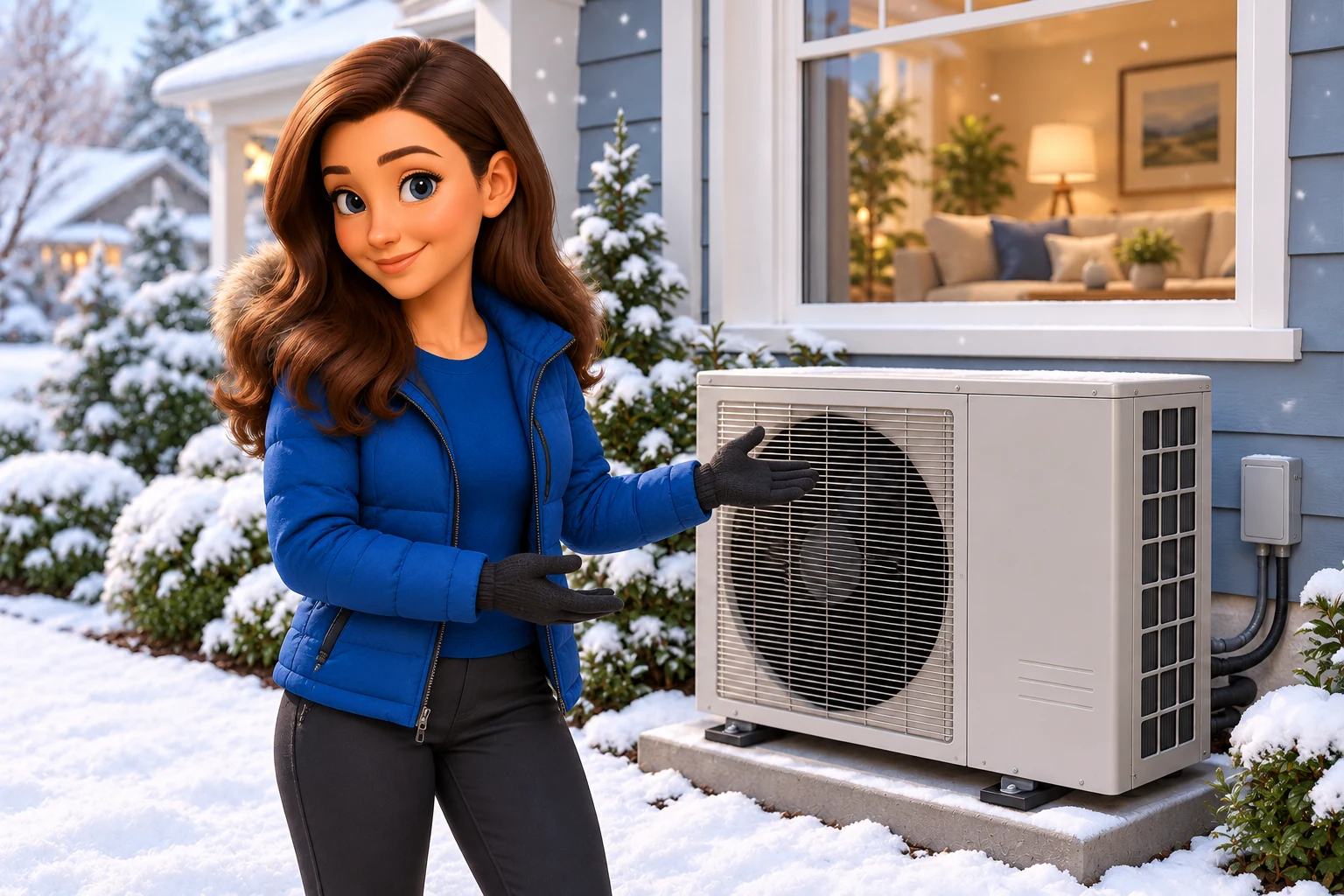
A heat pump works in winter by absorbing heat outdoors and releasing it indoors through a refrigerant cycle. Outdoor air contains thermal energy even below freezing. As conditions become colder, the available heating capacity and efficiency depend on the exact equipment and operating conditions.
The winter refrigerant cycle
In heating mode, the outdoor coil acts as the evaporator and absorbs heat as refrigerant evaporates. The compressor raises the refrigerant's pressure and temperature. At the indoor coil, refrigerant releases heat and condenses. A metering device reduces its pressure before it returns to absorb more heat outdoors.
The reversing valve changes refrigerant routing between heating and cooling. Expansion does not itself release the heat that warms the house. The IEA heat-pump explanation describes the energy transfer; electricity drives the compressor and associated equipment.
Capacity and efficiency are different
Capacity is the rate of heat delivered. Coefficient of performance, or COP, is heat output divided by electrical input at stated conditions. A heat pump can operate at a low outdoor temperature while still needing backup because the home's load exceeds its output.
Key Fact
Cold-Climate Test Criteria
COP At Least 1.75For example, ENERGY STAR's cold-climate criteria include a COP of at least 1.75 at 5°F [−15°C] and at least 70% capacity retention relative to the specified 47°F [8°C] rating condition, along with other requirements. Those are defined product tests, not proof that the equipment meets every home's load. Check the current program criteria and matched-model data.
There is no universal 25–30°F [−4 to −1°C] performance cliff. Use the home's design temperature and load with the manufacturer's capacity, input-power and operating-limit data. Our cold-climate performance guide explains the comparison.
Why defrost happens
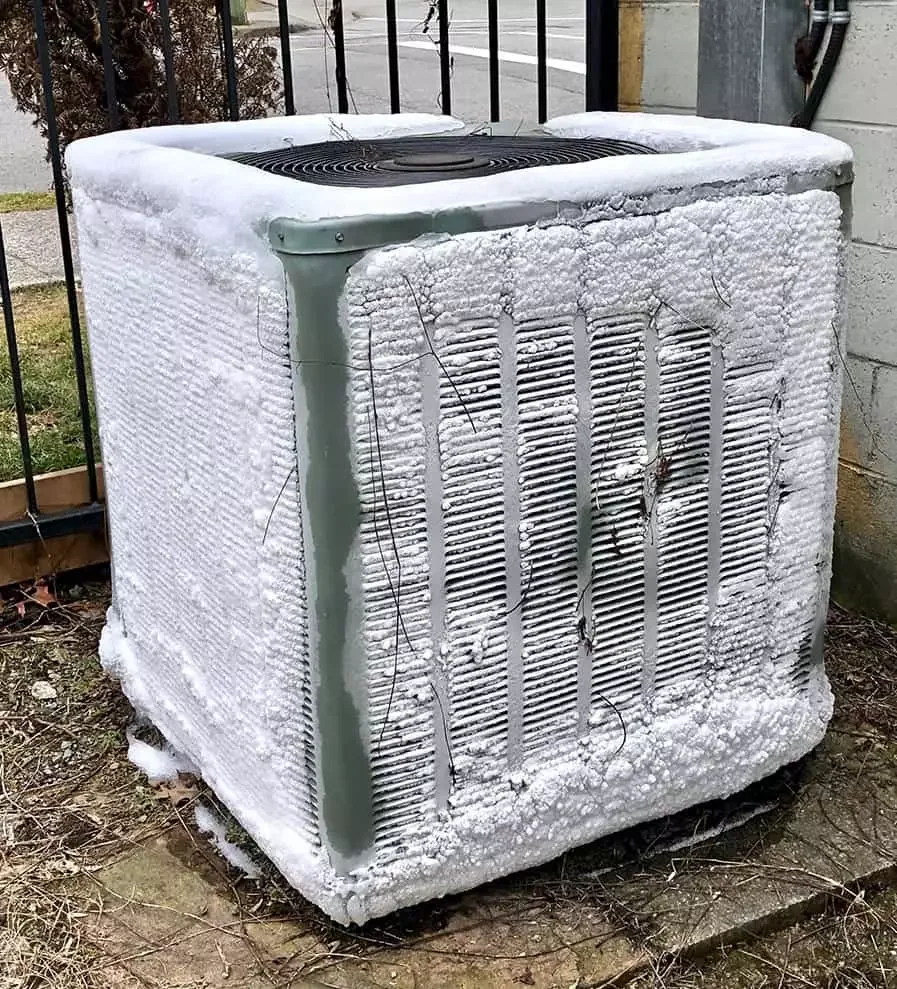
Moisture can freeze on the outdoor coil in heating mode. When its control logic calls for defrost, many systems temporarily reverse the cycle to warm that coil. Outdoor fan operation and backup heat vary by equipment. Water vapor or a temporary change in sound can be normal.
🛑 Do not chip ice, pour hot water on the equipment or force repeated resets. Thick ice that persists, ice blocking the fan, drainage problems or repeated loss of heat needs service. Follow the installed snow-clearance and drainage instructions.
When backup is needed
Automatic auxiliary heat can meet additional load, assist recovery or support defrost. Manual Emergency Heat commonly locks out the compressor and uses the configured backup. Dual-fuel controls may operate a furnace instead of the compressor according to an approved sequence.
Sizing, backup capacity and control settings should be commissioned together. A thermal balance point is not automatically the cheapest fuel-changeover point. See dual-fuel balance points.
Help the system operate well
Keep the approved filter serviced, clear indoor air paths and maintain the manufacturer's outdoor clearances. Use an appropriate schedule; setbacks and recovery should be considered together rather than declaring every setback wasteful. Address verified drafts, insulation gaps and duct losses before expecting a thermostat adjustment to solve a load problem.
Conclusion
Winter performance depends on the matched heat pump, building load, outdoor conditions and control sequence. Ask for capacity and efficiency data at the relevant temperatures, plus a documented backup and defrost plan, before judging a system by one temperature threshold.
Continue with our heat-pump guides for related homeowner decisions.

Scott Harding
Scott is the main author of DIY Home Comfort. Learn more about the team and our approach on the About page.