Outside AC Unit Not Turning On? Safe Checks and Next Steps
Check thermostat settings, accessible airflow and visible symptoms before arranging service for an outdoor AC unit that will not start.
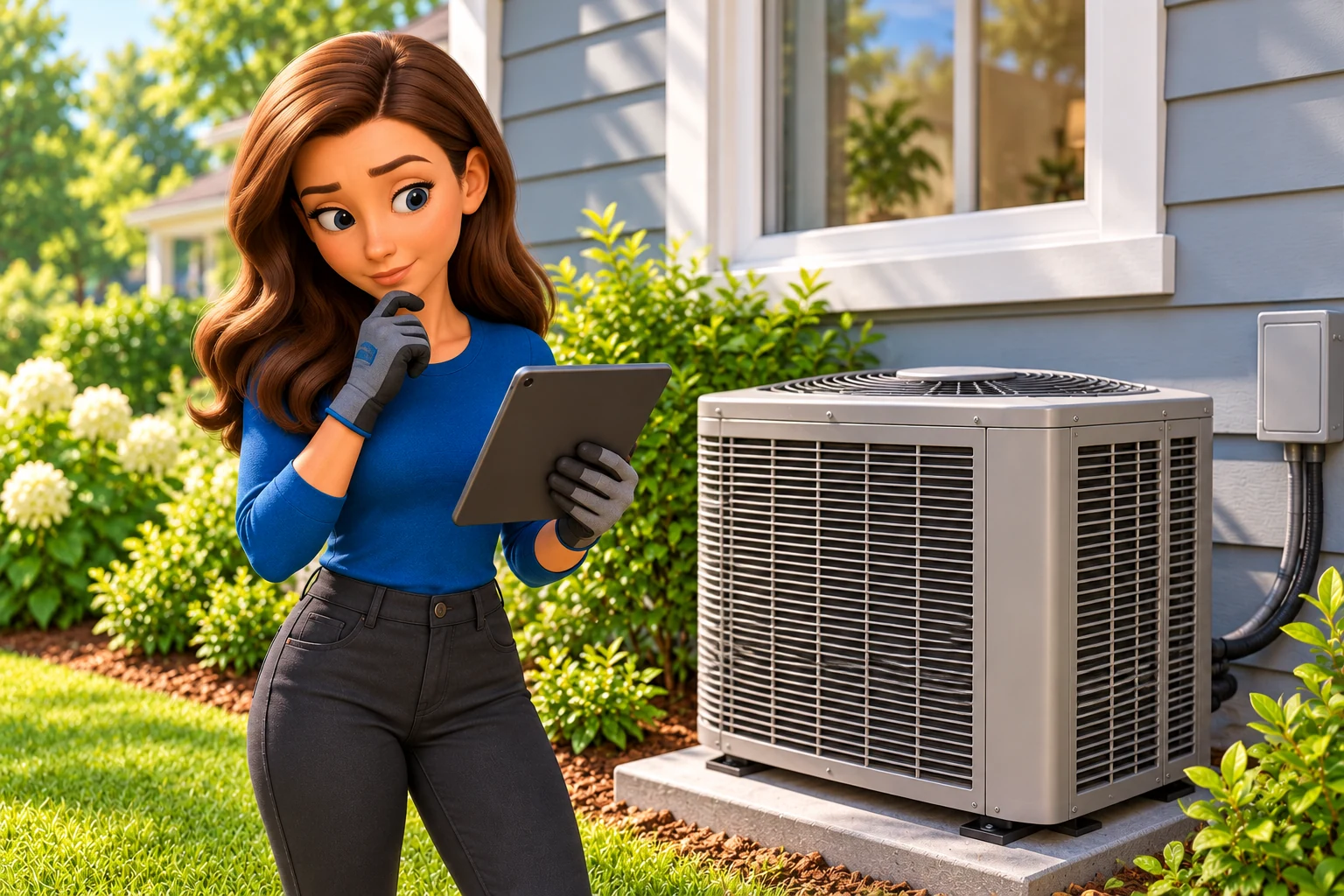
An outside AC unit that will not turn on may have a control, power or equipment problem. Start with the thermostat and observations from outside the cabinet. A silent unit does not identify a failed capacitor, and a humming unit does not prove which part is faulty.
🛑 If there is smoke, arcing, a burning smell, damaged wiring or water around electrical equipment, keep away and arrange urgent assistance. Do not open the cabinet or keep trying to start the system.
Check the thermostat first
- Confirm the system is set to Cool and the target is below the room temperature.
- Check the schedule, batteries where applicable and any displayed message. Photograph a fault code before changing settings.
- Allow the manufacturer's normal restart delay. Rapidly cycling the thermostat or breaker can interfere with compressor protection.
- Note whether indoor air is moving and whether the outdoor unit is silent, humming or attempting to start.
On some systems the indoor blower can run even when the outdoor equipment cannot. Air at the vents therefore does not establish that cooling is working.
Interpret the symptoms without opening panels
| Observation | Possible explanation | Useful next step |
|---|---|---|
| Both indoor and outdoor equipment are quiet | Settings, power or a control interruption | Check the display and accessible owner controls described in the manual |
| Indoor blower runs but outdoor unit does not | Delay, drain safety switch, power or outdoor equipment fault | Record the sequence and request diagnosis if it persists |
| Outdoor unit hums but will not start | Several electrical or mechanical faults are possible | 🛑 Stop cooling and call for service; do not push the fan |
| Breaker trips again | An unresolved electrical problem may be present | 🛑 Leave it off and arrange qualified service |
| Ice is visible | Airflow, refrigerant or control trouble | Follow the frozen AC line guide |
Keep owner checks outside the service compartment
Check an owner-accessible filter and replace or clean it only as its instructions allow. Keep supply and return openings unobstructed. Observe whether debris blocks the outdoor unit without reaching through the grille, removing guards or disturbing wiring.
🛑 If a breaker has tripped, follow the equipment instructions and only consider a single reset when it is safe and you are familiar with the panel. Do not reset it when there are electrical warning signs, and do not repeat a trip. Do not replace fuses, pull disconnect components or bypass a safety switch as a diagnostic experiment.
Carrier's homeowner troubleshooting guidance separates basic checks from high-voltage component work. Capacitors can retain energy after power is switched off; a breaker in the off position is not proof that internal parts are safe to touch.
What a technician needs to check
A qualified technician can establish whether the equipment is receiving the correct power and control signal, why a safety control is open, and whether a contactor, capacitor, motor or compressor has failed. These require appropriate isolation, testing and manufacturer procedures. A visual bulge, click or hum alone is not a complete diagnosis.
Send the model numbers, fault display, time the problem started and what ran before shutdown. Mention recent work, a storm or a repeated breaker trip. Ask for the diagnosis and proposed repair in writing rather than requesting a particular component from an online symptom list.
Prevent a repeat problem
- Follow the installed filter and maintenance schedule.
- Keep landscaping out of the model's required airflow and service spaces.
- Arrange repair of persistent drain problems instead of defeating the overflow switch.
- Retain commissioning and service records for future comparisons.
Conclusion
🛑 Check settings and accessible airflow, record the symptoms and stop repeated start attempts. Internal electrical diagnosis belongs with qualified service. Use our HVAC troubleshooting guide to distinguish a control problem from a wider heating or cooling complaint.
Continue with our heat-pump guides for related homeowner decisions.

Scott Harding
Scott is the main author of DIY Home Comfort. Learn more about the team and our approach on the About page.