Frozen AC Line: Why It Happens and What to Do
Turn cooling off, manage meltwater safely and learn why an iced AC line needs airflow, refrigerant or control diagnosis rather than a quick top-up.
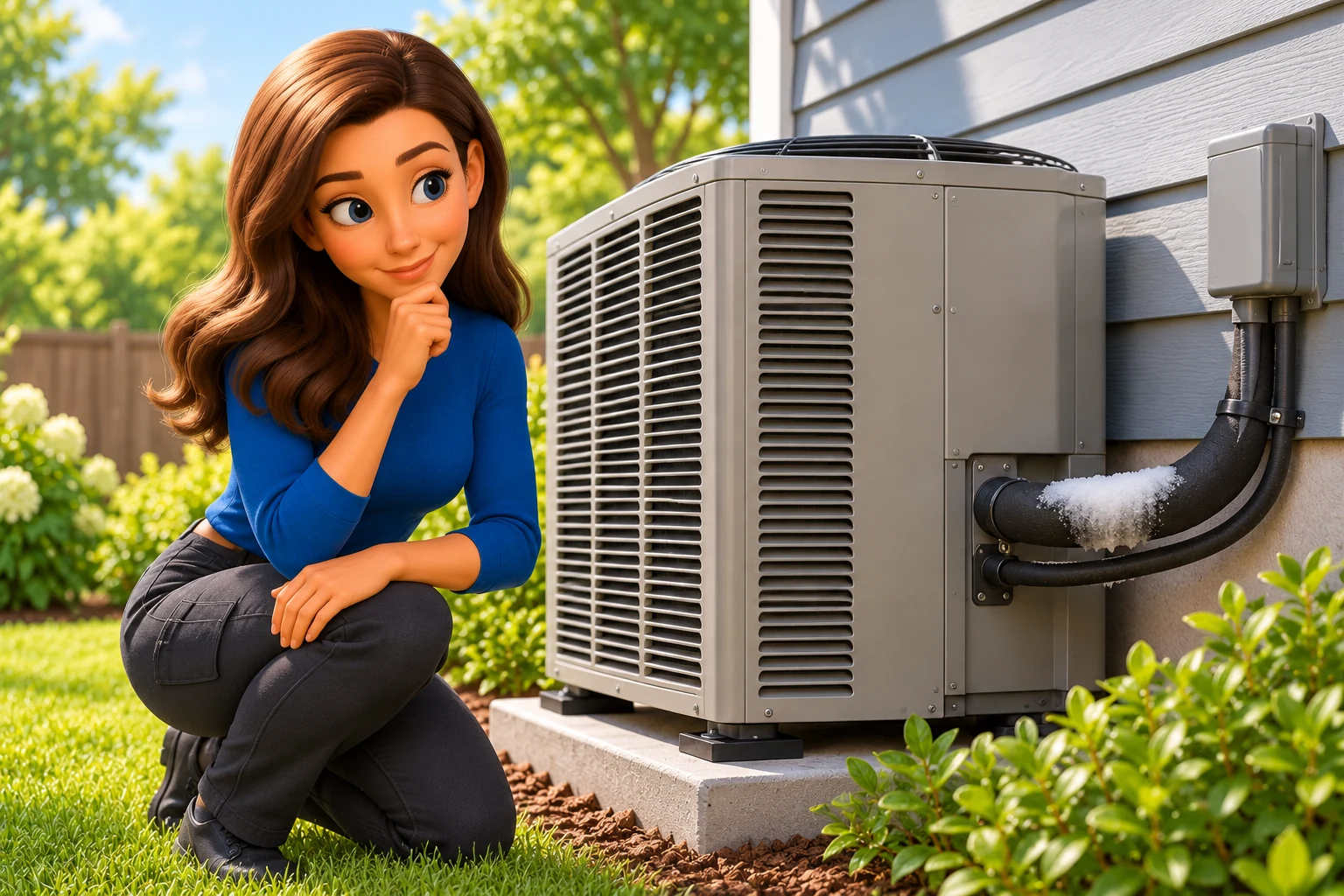
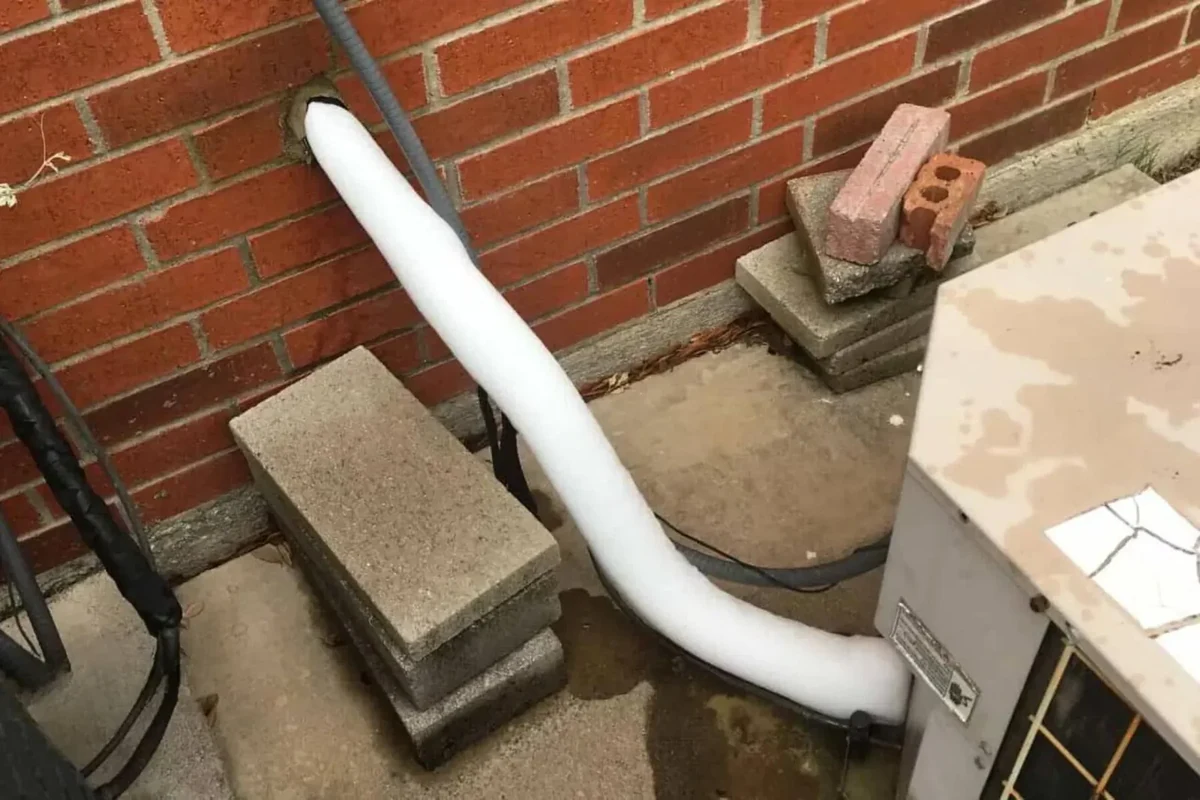
A frozen AC line usually points to an evaporator operating cold enough for moisture to freeze. Restricted airflow, refrigerant-circuit faults and control problems can all contribute. Ice location alone does not identify the cause, and thawing the ice does not complete the repair.
🛑 Turn cooling off when ice is present. Continuing to cool through an iced coil can worsen the problem. If water is near wiring or other electrical parts, keep away and arrange help before attempting any owner-accessible check.
Thaw without damaging the equipment
- 🛑 Stop cooling at the thermostat.
- Follow the installed manual's thawing instructions. Fan-only operation may help where permitted, provided the blower can operate normally and meltwater can drain safely.
- 🛑 Do not chip the ice, bend fins or refrigerant tubing, or use a torch, heat gun or hot water.
- 🛑 Protect the area from water only where it is safe to do so. Do not open a wet service compartment.
- Arrange diagnosis if the cause is unclear or ice returns after an accessible filter/airflow issue is corrected.
Thaw time varies with the amount of ice, air conditions and equipment. A fixed number of minutes or hours is not a reliable restart criterion. Carrier's frozen-AC guidance explains why thawing must be followed by attention to the underlying fault.
Understand what can make the coil too cold
The indoor coil absorbs heat as refrigerant evaporates in cooling mode. If too little heat reaches it because airflow is restricted, or the refrigerant circuit/control is not operating correctly, parts of the coil can fall below freezing. Ice then restricts airflow further.
| Possible issue | Safe observation | What needs diagnosis |
|---|---|---|
| Dirty or incompatible filter | Owner-accessible filter type, condition and installation | Actual airflow and filter resistance |
| Blocked air path | Closed/obstructed supplies or returns | Duct, blower or coil restriction |
| Refrigerant-circuit fault | Ice and loss of cooling | Leak location, charge and metering-device operation |
| Control or sensor problem | Fault display and operating sequence | Model-specific electrical/control tests |
| Operation outside approved conditions | Weather and selected mode | Whether the model is suitable for those conditions |
Check airflow without internal cleaning
🛑 Inspect a filter through the normal owner access and use the specified replacement. Keep room grilles clear. Do not close registers to force air elsewhere, remove guards or reach into the blower. Coil cleaning must use the installed manufacturer's access, chemical and water precautions; generic indoor rinsing can wet electronics or damage the unit.
Read MERV rating and airflow if a new filter preceded the problem. A higher capture rating alone does not tell you its installed pressure drop or whether the system can maintain required airflow.
Keep refrigerant and drainage faults separate
A blocked drain can cause water overflow and a safety shutdown. That is not, by itself, proof of why refrigerant tubing iced. Meltwater may reveal a second drainage problem that also needs repair.
🛑 Do not attach gauges, add refrigerant or open the sealed circuit. Refrigerant hazards include pressure, cold contact and oxygen displacement. Toxicity and flammability depend on the refrigerant. Qualified personnel must use the correct refrigerant and procedures and hold the required certification.
Restart and prevent recurrence
🛑 Restart only when the equipment instructions and conditions allow, the ice is gone, water can drain safely and the identified cause has been addressed. Stop again if ice, water or abnormal operation returns. No universal thermostat setting guarantees freeze prevention.
Maintain compatible filtration and accessible air paths, arrange professional service as instructed and keep repair records. For a heat pump, distinguish summer indoor icing from ordinary winter outdoor frost and defrost.
Conclusion
🛑 Stop cooling, thaw safely and establish the cause before treating the system as repaired. Our AC freezing response guide provides a short action sequence, while heat-pump troubleshooting covers other operating symptoms.
Continue with our heat-pump guides for related homeowner decisions.

Scott Harding
Scott is the main author of DIY Home Comfort. Learn more about the team and our approach on the About page.