Need a Quick Fix for AC Freezing Up? Start Here
Stop cooling, check safe airflow access and recognize when an iced AC needs professional diagnosis before restarting.
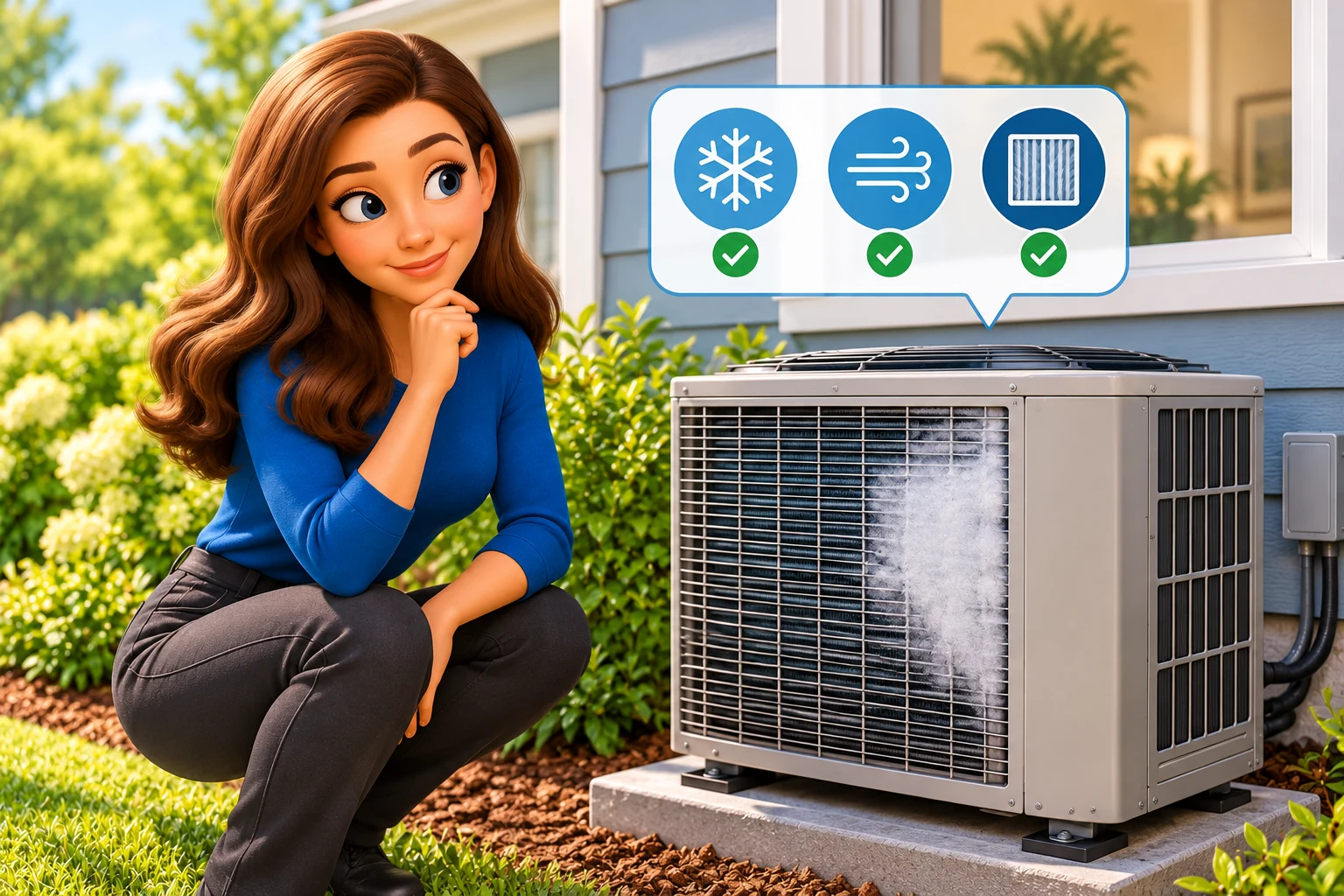
The first response to an AC freezing up is to turn cooling off. Ice must thaw safely and its cause must be addressed before normal operation resumes. Fan-only operation can help in some installations, but it is not a repair and should follow the equipment instructions and safe meltwater conditions.
🛑 If there is water near electrical parts, a burning smell, arcing or damaged wiring, keep away and arrange urgent service. Do not remove panels to investigate.
Take these first steps
- Turn cooling off at the thermostat and record any fault display.
- Follow the owner's manual for thawing. Use fan-only mode only if permitted and the blower/drain arrangement can operate safely.
- 🛑 Do not chip ice or apply direct heat. Avoid moving refrigerant tubes or bending coil fins.
- Note visible meltwater and arrange help if it cannot drain safely or is damaging the building.
- After thawing, check only an owner-accessible filter and unobstructed supply/return openings.
🛑 There is no fixed thaw duration. Ice quantity, room conditions and equipment access differ. If the system freezes again, stop cooling and request diagnosis rather than repeating the same cycle.
Check the simple airflow conditions
| Check | Appropriate owner action | Stop point |
|---|---|---|
| Filter looks loaded or was recently changed | Use the compatible type/size through its normal access | 🛑 Do not open a service compartment or improvise a filter arrangement |
| Furniture or stored items block a grille | Clear accessible room openings | 🛑 Do not rebalance the system by closing other registers |
| Outdoor unit is obstructed | Observe from outside the guards and clear only safe loose material | 🛑 Do not reach into fans or remove guards |
| Water appears as ice melts | Record where it starts | 🛑 Keep away from wet electrics; do not defeat an overflow switch |
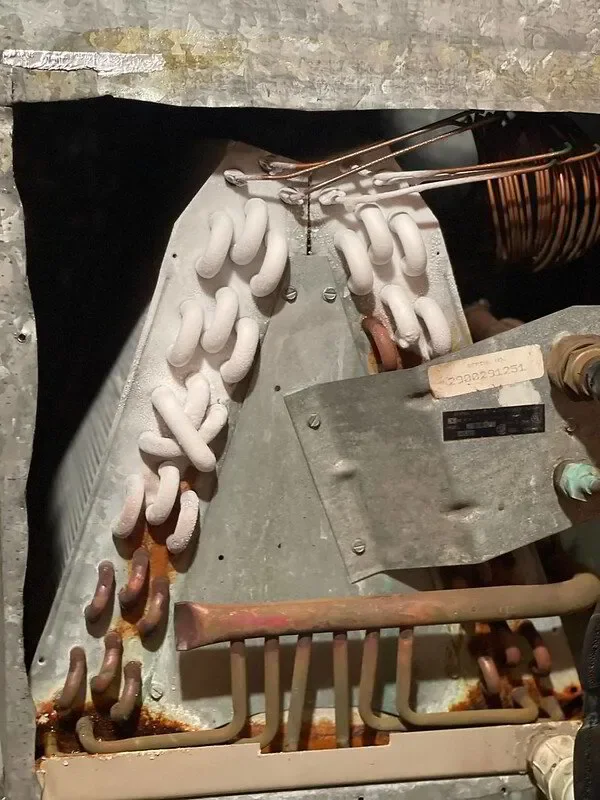
Carrier's thawing guidance pairs cooling shutdown with finding the cause. A filter check is useful, but it does not rule out a blower, coil, refrigerant or control fault.
Avoid shortcuts that miss the diagnosis
🛑 Do not add refrigerant because a line is cold or iced. Low charge can involve a leak, and other faults can produce similar symptoms. Pressure/charge work belongs with appropriately qualified and certified personnel.
A clogged condensate drain can overflow or activate a protective switch; it is not an adequate general explanation for an evaporator freezing. An oversized system may short-cycle and control humidity poorly, but its nominal size alone does not prove the cause of ice. Actual airflow, coil conditions and controls must be assessed.
🛑 Do not flush an unknown drain with bleach, vinegar, compressed gas or a snake as a first freeze remedy. Follow the condensate drain guide for the separate drainage question. Chemical and mechanical cleaning must suit the specific equipment and piping.
Decide whether to restart
🛑 Use the manufacturer's restart instructions after the ice is gone, drainage is safe and the identified accessible issue is corrected. If the cause is unknown, service may be the appropriate next step. Stop if ice returns, airflow remains weak or water continues escaping.
Send the technician the ice location, fault code, filter information, weather, operating mode and timing. Ask for the underlying diagnosis and the operating checks after repair. These details are more useful than requesting a particular replacement part.
Reduce the chance of another freeze
🛑 Keep filters and air openings maintained, use the system within its approved operating conditions and follow its professional-service schedule. Preserve necessary airflow; avoid thermostat extremes and repeated power resets as attempts to force cooling.
Conclusion
Cooling off and safe thawing are the immediate response. A lasting fix depends on addressing the cause. Read why an AC line freezes for the diagnostic background and repair versus replacement if the service finding raises a larger decision.
Continue with our HVAC guides for related homeowner decisions.

Scott Harding
Scott is the main author of DIY Home Comfort. Learn more about the team and our approach on the About page.