Heat Pump Troubleshooting: Safe Checks, Fault Codes and Service
Organize heat-pump symptoms, record model-specific fault codes and distinguish safe owner checks from electrical, refrigerant and internal service.
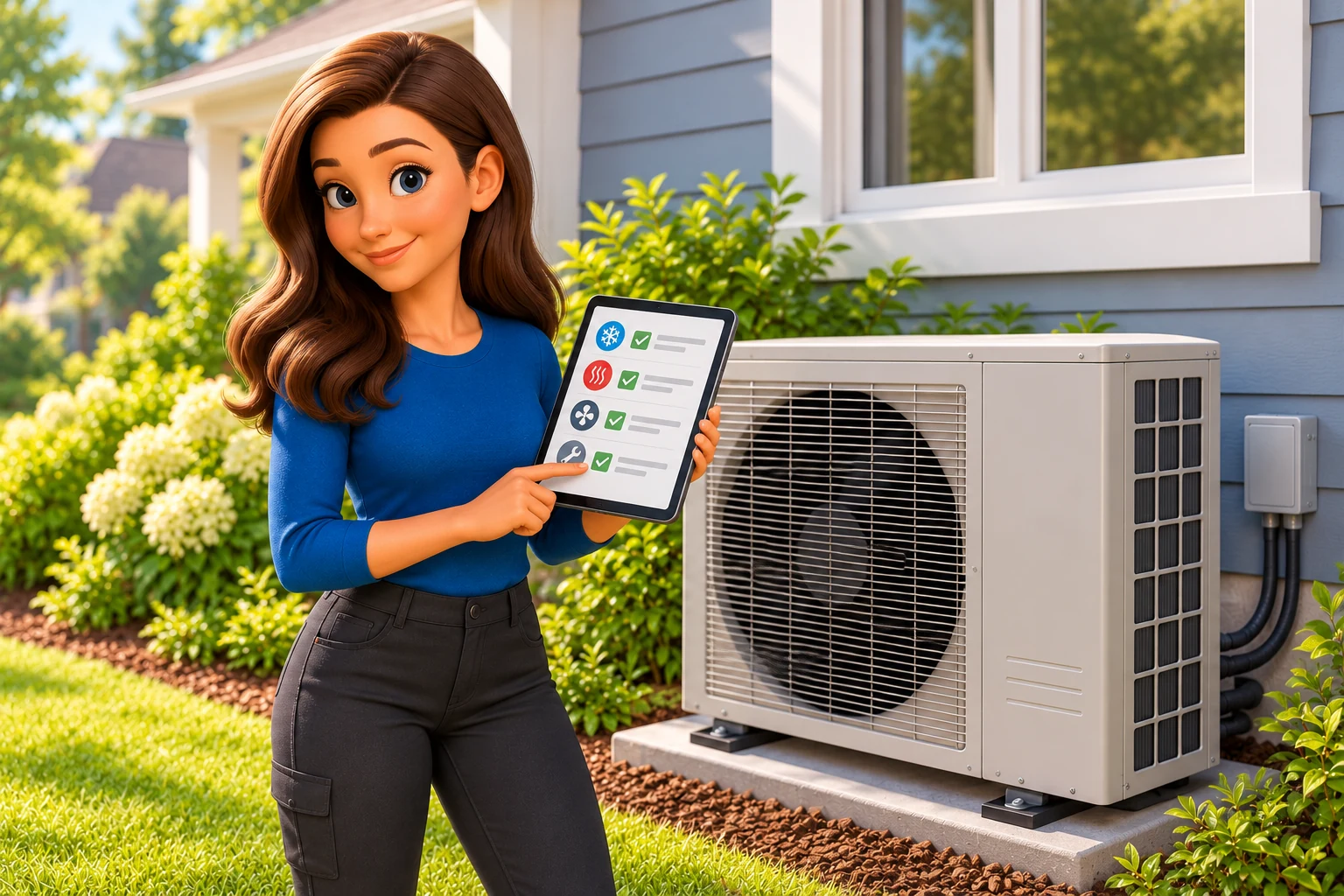
Heat pump troubleshooting is most useful when it records what the system is doing before parts are replaced. Check the mode, schedule and accessible airflow, then distinguish cooling faults, winter defrost and backup-heat behavior. A code or sound is a clue, not a complete diagnosis.
Keep away from electrical burning smells, smoke, arcing and wet electrical components. If the installation includes fuel heat and you smell gas, leave immediately and call emergency services and the gas utility from a safe location. A CO alarm also requires fresh air and an emergency call; do not troubleshoot inside first.
Start with owner-accessible checks
- Note Heat/Cool mode, target, schedule, batteries if applicable and any fault display.
- Allow the normal start delay specified in the manual.
- Inspect a filter through its owner access and check that room supply/return openings are clear.
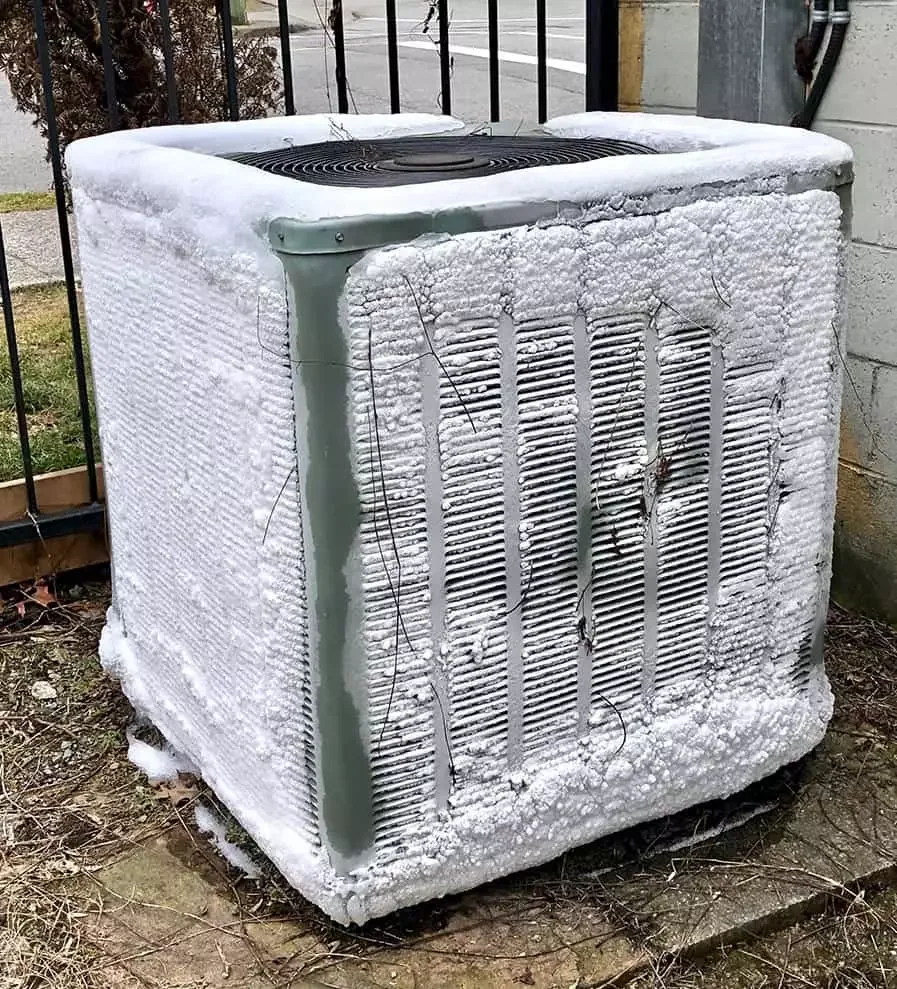
- Observe the outdoor unit from outside the guards. Record ice location, water, sound and whether a fan runs.
- Record indoor conditions, weather and when the problem occurs.
Do not remove cabinets, attach gauges, replace capacitors, lubricate motors, move wires or probe controls. Do not defeat a drain switch or repeat a breaker trip. Switched-off power does not by itself make stored-energy components safe.
Choose a symptom path
| Symptom | What to distinguish | Next step |
|---|---|---|
| Not cooling | Settings, airflow, indoor ice, outdoor operation | Heat pump not cooling |
| No outdoor start | Delay/control interruption versus equipment fault | Outside-unit checks |
| Cool air in heating | Fan-only interval, defrost or loss of heat | Heater blowing cold air |
| Frequent Aux display | Weather/load, recovery settings or an unresolved fault | Auxiliary heat guide |
| Persistent ice or leaking water | Ice location, airflow and drainage | Use the ice/water checks below |
| New grinding, screeching or severe vibration | Location and operating stage | Stop use when needed and arrange service |
Record fault codes using the exact manual
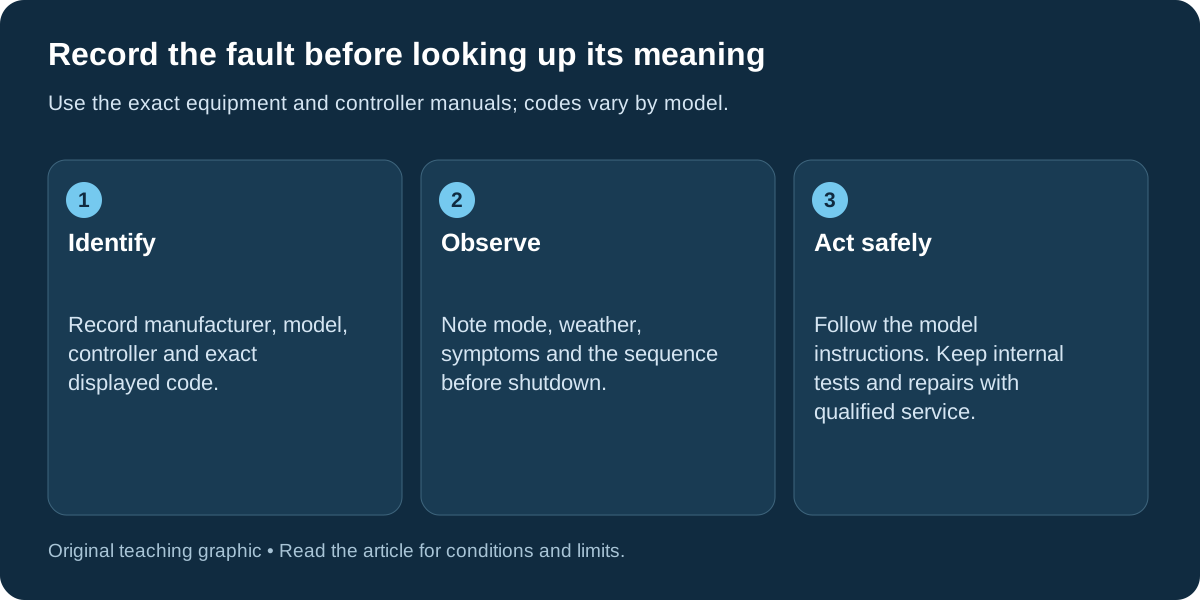
Error meanings vary by manufacturer, model and controller. There is no universal E0–H8 heat-pump chart. Record the complete code, indoor and outdoor model numbers, controller model, operating mode and what happened before the stop. Photograph the display and look up the exact installed manual or contact the manufacturer/service provider.
Do not replace a sensor or add refrigerant from a generic code list. Record the evidence before any reset, and reset only when the installed owner instructions permit. A fault that returns needs diagnosis. Use the exact installed manual rather than a cross-brand code chart.
Separate cooling ice, winter frost and drainage
In cooling mode the indoor coil evaporates refrigerant and absorbs heat; the outdoor coil rejects heat while refrigerant condenses. Heating reverses those functions. Ordinary winter outdoor frost can initiate a controlled defrost cycle. Summer indoor ice is a different fault path.
For an iced indoor coil or line, stop cooling. Use fan-only thawing only if the instructions and safe drainage conditions allow it. Do not chip ice or apply heat. Keep away from meltwater near electrics and arrange diagnosis if icing returns. For a leak, follow the condensate drain guide; do not force pressure, chemicals or tools into an unknown drain arrangement.
Carrier's heat-pump checklist distinguishes basic observations and normal defrost from persistent symptoms requiring service.
Keep Aux and emergency heat distinct
Auxiliary heat is automatic backup requested by the installed control sequence. Manual emergency heat commonly locks out the compressor and uses backup heat. They often share a heat source; emergency heat is not necessarily a third heater.
Electric backup may run with a compressor when designed to do so; a dual-fuel furnace may require the compressor to stop. Setpoints, outdoor lockouts and recovery timers vary. Do not impose a universal temperature, timer or thermostat difference. See when emergency heat is used.
Ask for evidence after professional work
The technician should use manufacturer procedures for electrical diagnosis, airflow/static pressure, controls, refrigerant leak/charge checks and any model-required service. EPA certification requirements cover specified refrigerant activities; they are separate from other trade requirements.
Ask what caused the fault, which measurements supported the repair and how operation was checked afterward. Outdoor clearances, mounting and snow/drainage protection must suit the exact manual and site. Retain the record using our commissioning handover checklist.
Conclusion
Use a repeatable observation record, model-specific fault lookup and clear service boundaries. Correct the cause of repeated ice, water or trips rather than repeatedly resetting the equipment. For longer-term decisions, start with the heat-pump buying guide.
Continue with our heat-pump guides for related homeowner decisions.

Scott Harding
Scott is the main author of DIY Home Comfort. Learn more about the team and our approach on the About page.