How Do I Stop My Auxiliary Heat From Coming On?
Find out whether auxiliary heat is expected, reduce avoidable recovery loads, and identify when backup settings or equipment need professional diagnosis.

Start by checking why auxiliary heat is running. It may be normal during cold weather, defrost or temperature recovery. Disabling it can leave the home unable to meet its heating load or protect vulnerable plumbing. If operation is unusual, correct the cause before changing backup controls.
First record what is happening
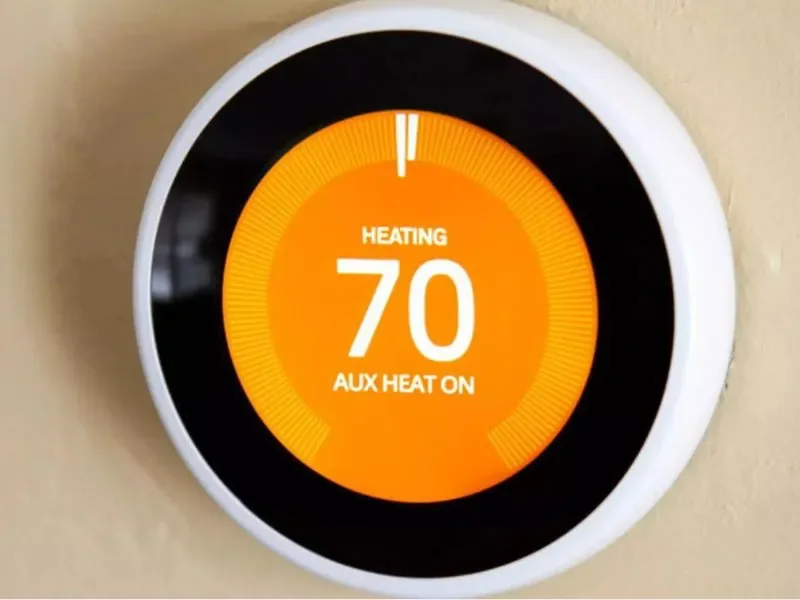
Note the outdoor temperature, indoor temperature, setpoint, displayed Aux status and how long it lasts. Record recent schedule changes and any fault message. Compare mild-weather behavior with colder days; a single brief event does not establish a fault.
🛑 An outdoor unit that is not running, heavy ice that does not clear through normal defrost, repeated tripping or a home that keeps cooling down warrants heat-pump troubleshooting. Burning electrical smells, smoke or arcing require stopping operation and arranging prompt qualified help.
Understand the control sequence
Aux is an automatic call for backup. Manual Emergency Heat commonly locks out the compressor and uses the configured backup. The same electric heat strips may serve both functions. A dual-fuel system can instead use a furnace, with an approved sequence that may stop the compressor.
The Resideo T10/T10+ installation guide shows configurable differentials, timers, outdoor lockouts and recovery logic. Those features illustrate why a fixed outdoor temperature, a fixed number of minutes or a universal setpoint jump cannot describe every thermostat.
Reduce avoidable calls for backup
- Use the correct filter and replace or clean it as the equipment instructions require.
- Keep supply and return paths open; do not close registers to force heat elsewhere.
- Review the thermostat's heat-pump schedule and recovery options. A smaller setback may reduce backup during recovery on some systems; a compatible adaptive control may handle scheduling differently.
- Check for obvious drafts and use a home energy audit to prioritize insulation and air sealing.
- Confirm the system is in its intended heating mode rather than manual Emergency Heat.
Do not assume that changing the setpoint in tiny increments guarantees savings. Compare comfort and weather-adjusted energy use after a sensible control change. A setback can reduce building heat loss while its recovery strategy changes how much backup runs.
When settings need a technician
| Observation | What to investigate |
|---|---|
| Aux runs frequently in mild weather | Compressor operation, staging, sensors, thermostat configuration and airflow |
| Indoor temperature falls in severe cold | Available capacity versus the calculated load, backup capacity and control sequence |
| High bills after a thermostat replacement | Heat-pump equipment type, wiring, staging and backup/fuel settings |
| Backup operates during brief defrost | Whether behavior matches the manufacturer's sequence |
A professional should distinguish the thermal balance point from an economic changeover temperature and from a safety or manufacturer lockout. They are different concepts. Use our dual-fuel balance-point guide before approving a change.
Conclusion
The useful goal is to reduce unnecessary auxiliary heat while keeping required backup available. Start with observations, airflow and an appropriate schedule; have unusual operation or installer settings checked against the exact equipment and home load.
Continue with our heat-pump guides for related homeowner decisions.

Scott Harding
Scott is the main author of DIY Home Comfort. Learn more about the team and our approach on the About page.