Why Is My Heat Pump Not Cooling? Checks and Next Steps
Check mode, airflow, ice and drainage symptoms safely before arranging diagnosis of a heat pump that is not cooling.
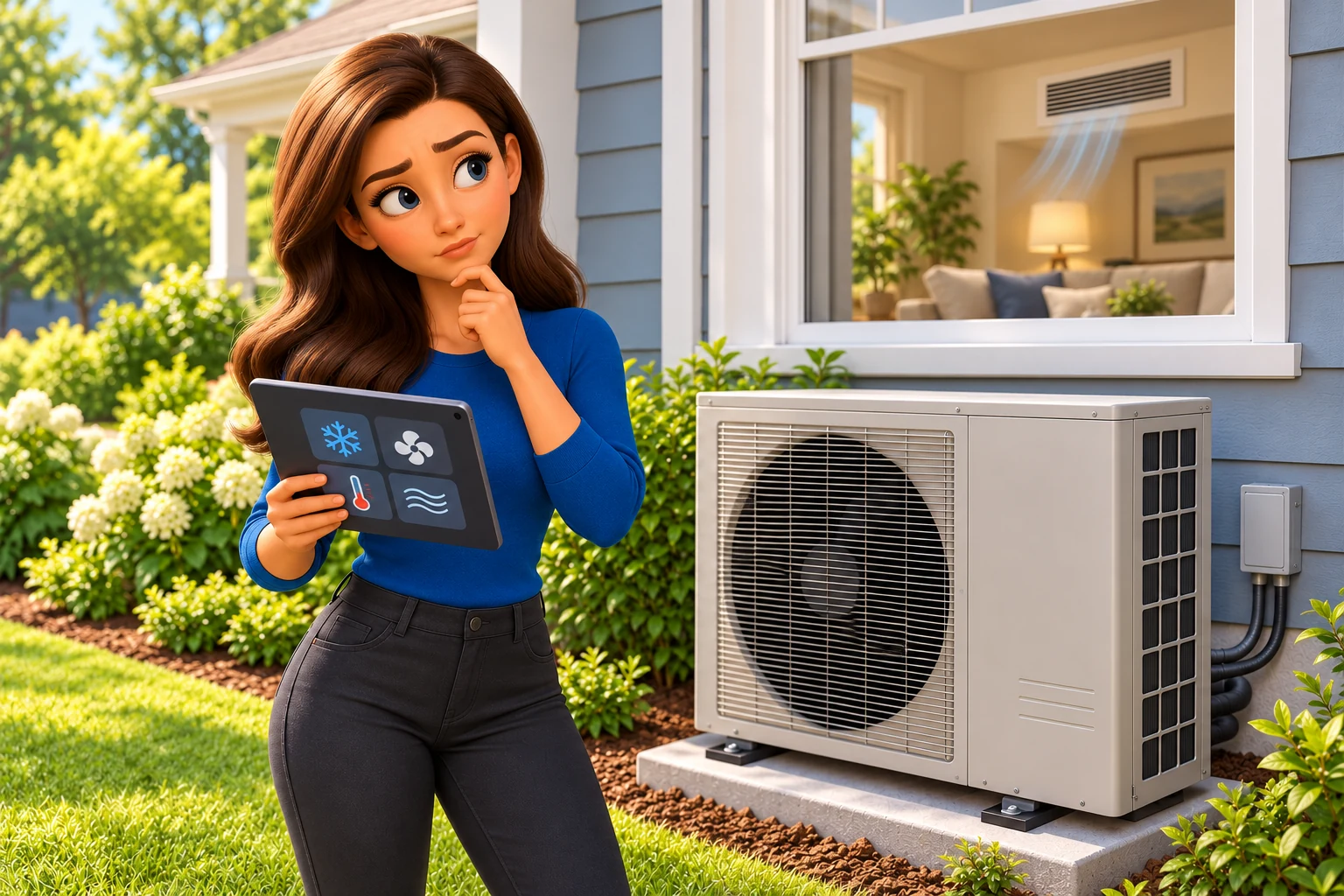
A heat pump that is not cooling may have incorrect settings, restricted airflow, an interrupted control signal or an equipment fault. Check the simple conditions first. The symptoms do not establish that refrigerant is low or that a reversing valve needs replacement.
🛑 Stop operating the system if there is smoke, an electrical burning smell, arcing, severe mechanical noise or water near electrical parts. If indoor heat becomes unsafe, use a safe cooler location while arranging help; equipment troubleshooting is not a reason to remain in dangerous heat.
Check mode and the normal start sequence
Confirm Cool mode, a target below the room temperature and the correct schedule. Fan On can circulate room air between cooling calls; it does not prove the compressor is operating. Follow the manufacturer's normal delay before interpreting a quiet outdoor unit as a failure.
🛑 Record a displayed fault before attempting any manual-permitted reset. Do not repeatedly cycle power, bypass safety switches or change installer settings. Check a filter only through its normal owner access, using the approved type and size.
Match the observation to the next check
| Observation | What it may indicate | Next step |
|---|---|---|
| Little air from several rooms | Filter, blower or duct restriction | Check accessible filters/openings; request airflow diagnosis if unresolved |
| Indoor blower runs, outdoor unit is quiet | Delay, power, control or safety interruption | Use the outside-unit checklist |
| Ice on an indoor coil or refrigerant line | Airflow, refrigerant or control problem | Turn cooling off and follow safe thawing guidance |
| Water or a drain warning | Drainage or overflow-protection problem | 🛑 Address the water and drain fault; do not bypass the switch |
| Cooling works but one room stays warm | Room load or distribution problem | Record room conditions and request a distribution assessment |
Treat summer ice separately from winter frost
🛑 During cooling, the indoor coil evaporates refrigerant and absorbs heat. Ice there can block airflow and worsen performance. Stop cooling and follow the unit's safe thawing instructions. Fan-only operation may be appropriate if the manual allows it and water can drain safely. Keep away from wet electrical parts; do not chip ice or apply direct heat.
Winter frost on the outdoor coil and the heat pump's defrost cycle are different from indoor ice during summer cooling. Winter defrost is not a general repair for an iced indoor coil in summer. Carrier's heat-pump guidance distinguishes normal defrost from persistent ice and owner observations from internal service.
What requires a qualified diagnosis
🛑 Refrigerant pressures, charge, leak location, electrical components, sensors and reversing-valve operation require qualified testing. Several faults can produce similar temperatures or sounds. Do not attach gauges, open service valves, replace a capacitor or move wiring because a symptom seems to match an online list.
A reversing valve changes which coil absorbs or rejects heat. Whether its coil is energized in heating or cooling depends on the system. A click alone does not establish correct flow. Ask the technician to document the evidence for the diagnosis and the operating checks after repair.
Check expectations after the fault is resolved
An unusually hot day can reveal a capacity or building-load limitation without a broken component. Compare actual model output at the relevant conditions with the home's load; a seasonal rating is not a high-temperature capacity test. See heat-pump performance in 100°F [38°C] weather.
Keep filters and outdoor airflow spaces clear according to the manual, maintain the drainage system, and retain service records. Repeated icing or water is a fault to resolve rather than a normal operating habit.
Conclusion
Use settings, airflow and visible symptoms to decide the next safe step. Separate summer indoor ice from winter outdoor defrost and request measurements before approving an internal repair. Our heat-pump troubleshooting guide provides a wider symptom checklist.
Continue with our heat-pump guides for related homeowner decisions.

Scott Harding
Scott is the main author of DIY Home Comfort. Learn more about the team and our approach on the About page.