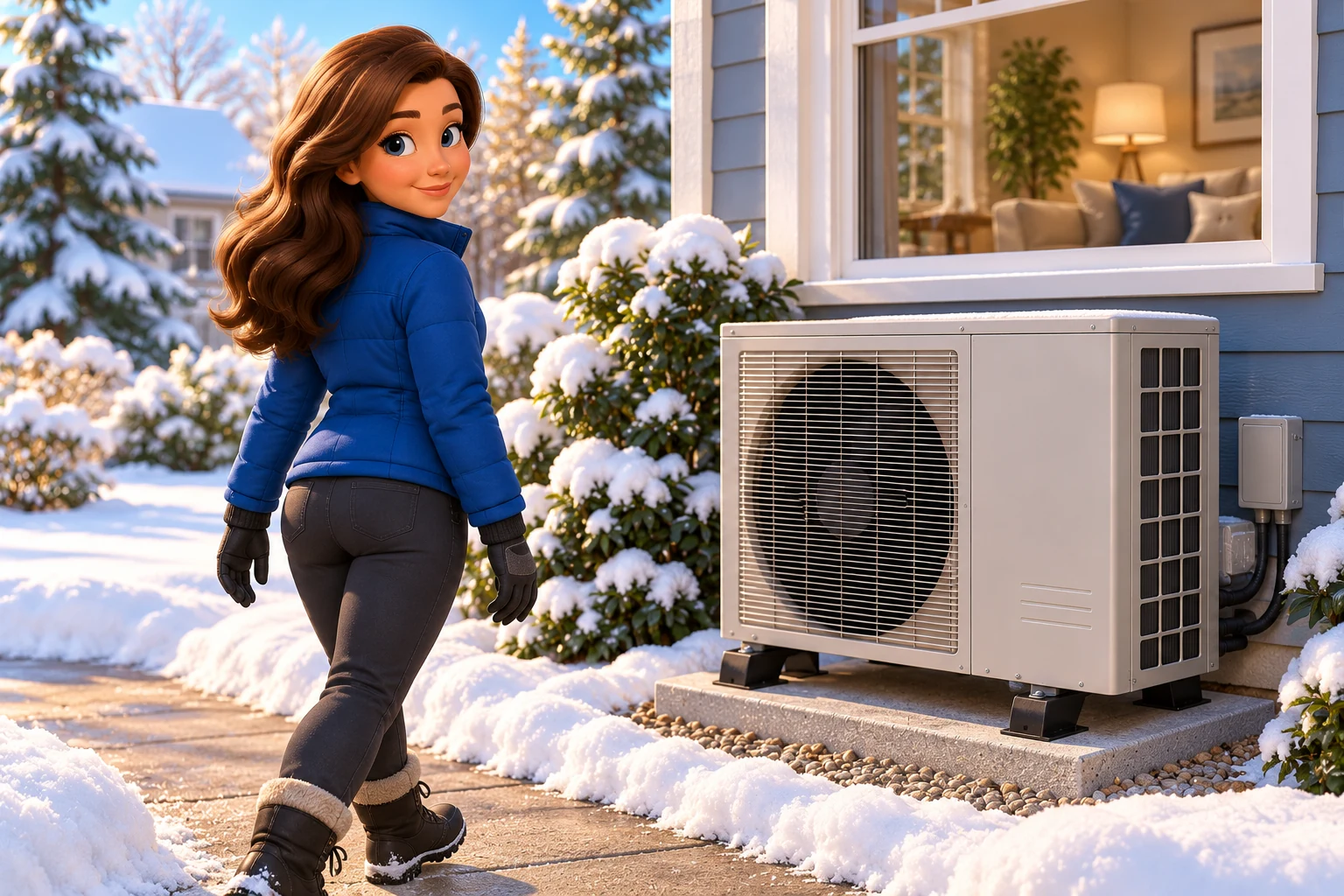
When Does a Heat Pump Switch to Emergency Heat?
Separate automatic auxiliary heat from manual Emergency Heat, understand variable backup triggers, and know when heat-pump service is needed.

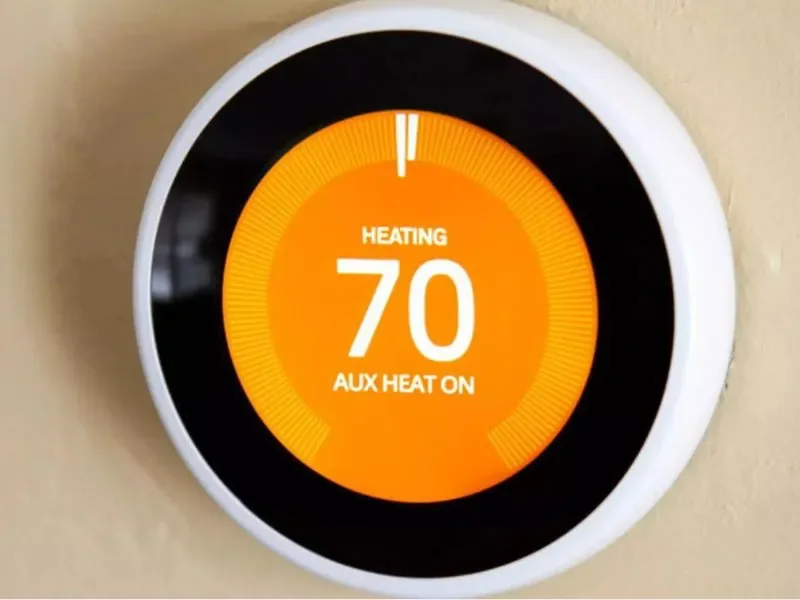
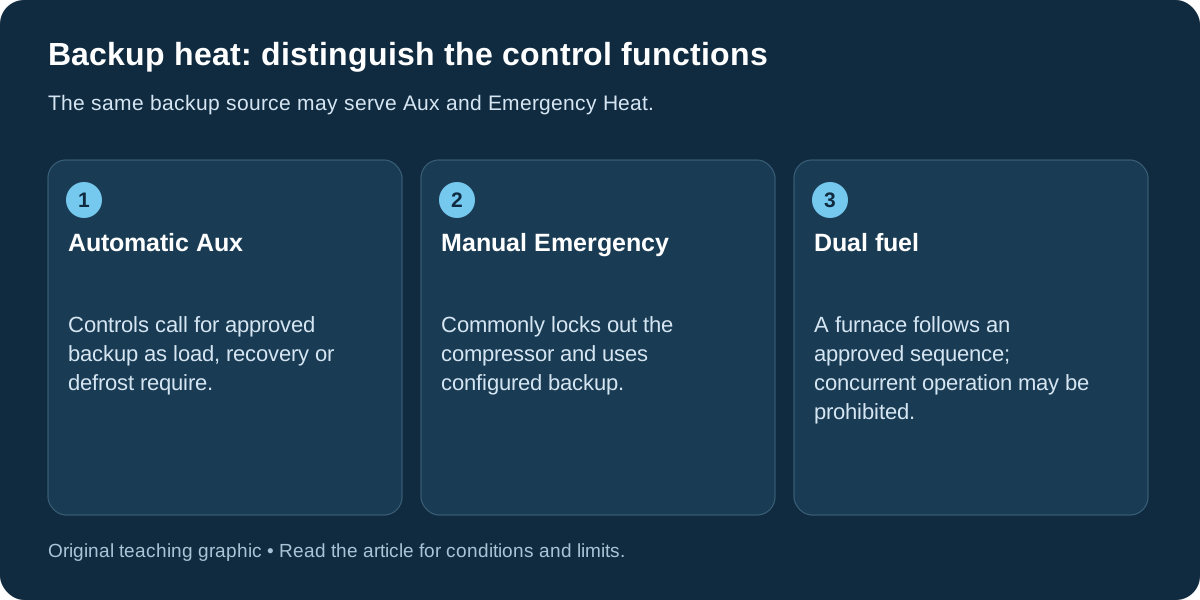
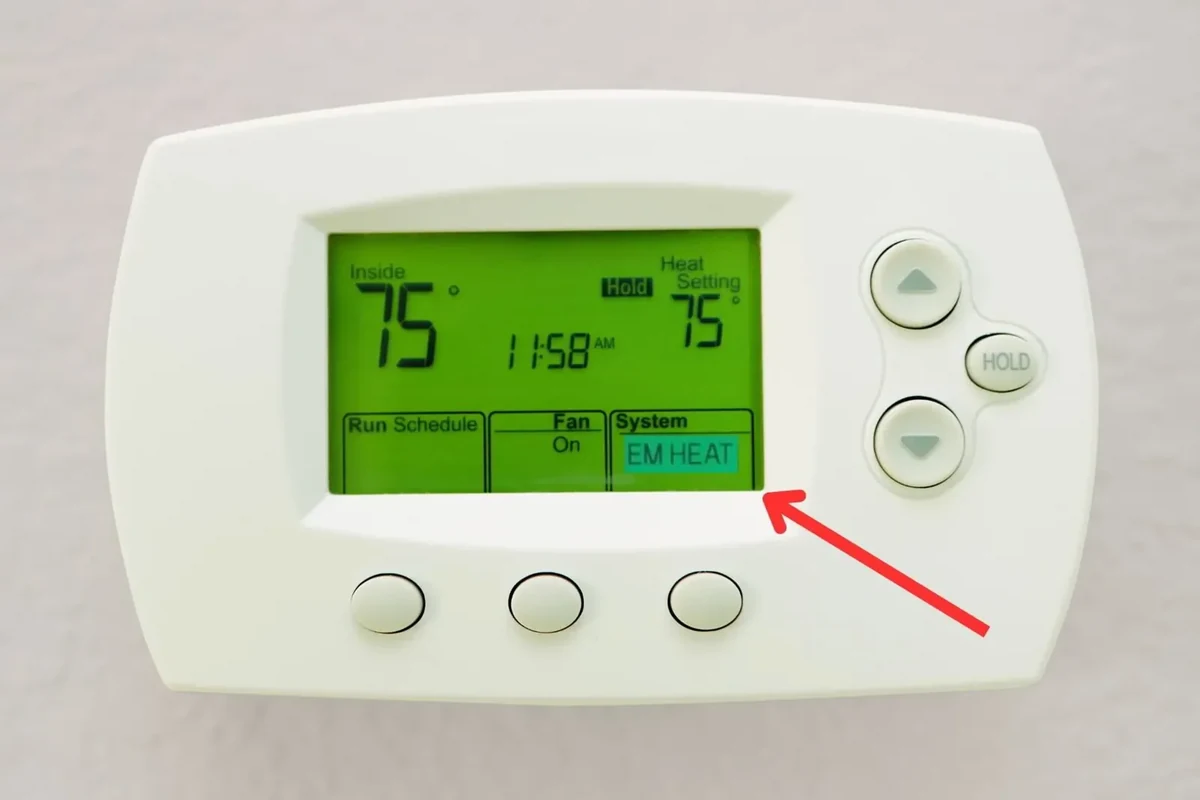
A heat pump normally calls for auxiliary heat automatically when its controls require backup. On many thermostats, Emergency Heat is a mode you select manually to operate backup while locking out the compressor. Cold weather alone does not mean the thermostat has automatically selected manual Emergency Heat.
Terminology and displays vary. Check the manual for the installed thermostat and equipment before interpreting an E, Aux or backup indicator.
Automatic auxiliary heat
Automatic backup can respond to heating demand, outdoor temperature, elapsed time, staging, recovery or defrost. These triggers depend on the design and commissioned settings. There is no universal outdoor temperature or indoor temperature difference at which every heat pump should change over.
A thermal balance point is the outdoor condition where the compressor's available heating capacity meets the home's load. An economic balance point compares operating costs. A control lockout is an equipment or configuration limit. Our dual-fuel guide explains why those values should not be substituted for one another.
Manual Emergency Heat
Manual Emergency Heat commonly disables the outdoor compressor and uses configured backup. That backup may be electric strips or a furnace. It can be appropriate when the compressor is unavailable and the installed instructions or service professional recommend it. It is not a shortcut to faster or cheaper normal heating.
The Resideo T10/T10+ guide documents this distinction for that thermostat family. Other controllers may label modes differently, so retain your own manual and commissioning record.
| Situation | Sensible response |
|---|---|
| Brief Aux indication during cold-weather recovery | Observe comfort and duration; compare with the configured sequence |
| Compressor fault and backup is available | Contact service and follow the approved temporary backup instructions |
| Outdoor coil becomes lightly frosted, then clears | Check whether this is normal defrost behavior |
| Thick ice persists or indoor temperature keeps falling | 🛑 Arrange diagnosis; do not chip ice or force repeated resets |
| Smoke, arcing or a burning electrical smell | 🛑 Stop operation and seek prompt qualified help |
🛑 For a fuel-gas odor or CO alarm, leave the building immediately and call emergency services or the gas utility from a safe location. Do not operate switches or try to repair the equipment.
Avoid unnecessary backup use
Keep the correct filter serviced and airflow paths unobstructed. Use a thermostat schedule suited to the heat pump rather than assuming a large setback or no setback is best for every system. A professional can check whether recovery, staging and outdoor lockouts are configured correctly.
🛑 Do not disconnect backup to reduce a bill. A properly selected cold-climate heat pump may operate effectively well below freezing, but its low-temperature rating does not prove it can meet this particular home's load without backup. Review cold-climate performance and ask for the actual capacity/load comparison.
Conclusion
Automatic Aux and manual Emergency Heat serve different control purposes, even when they use the same heater. Use the installed manual to interpret the display, preserve required backup and request service for persistent or unexpected operation.
Continue with our HVAC guides for related homeowner decisions.

Scott Harding
Scott is the main author of DIY Home Comfort. Learn more about the team and our approach on the About page.