Principles of Interior Design for a Room That Works
Use the principles of interior design to improve balance, rhythm, emphasis, scale and harmony. Follow a worked room example and practical checklist.
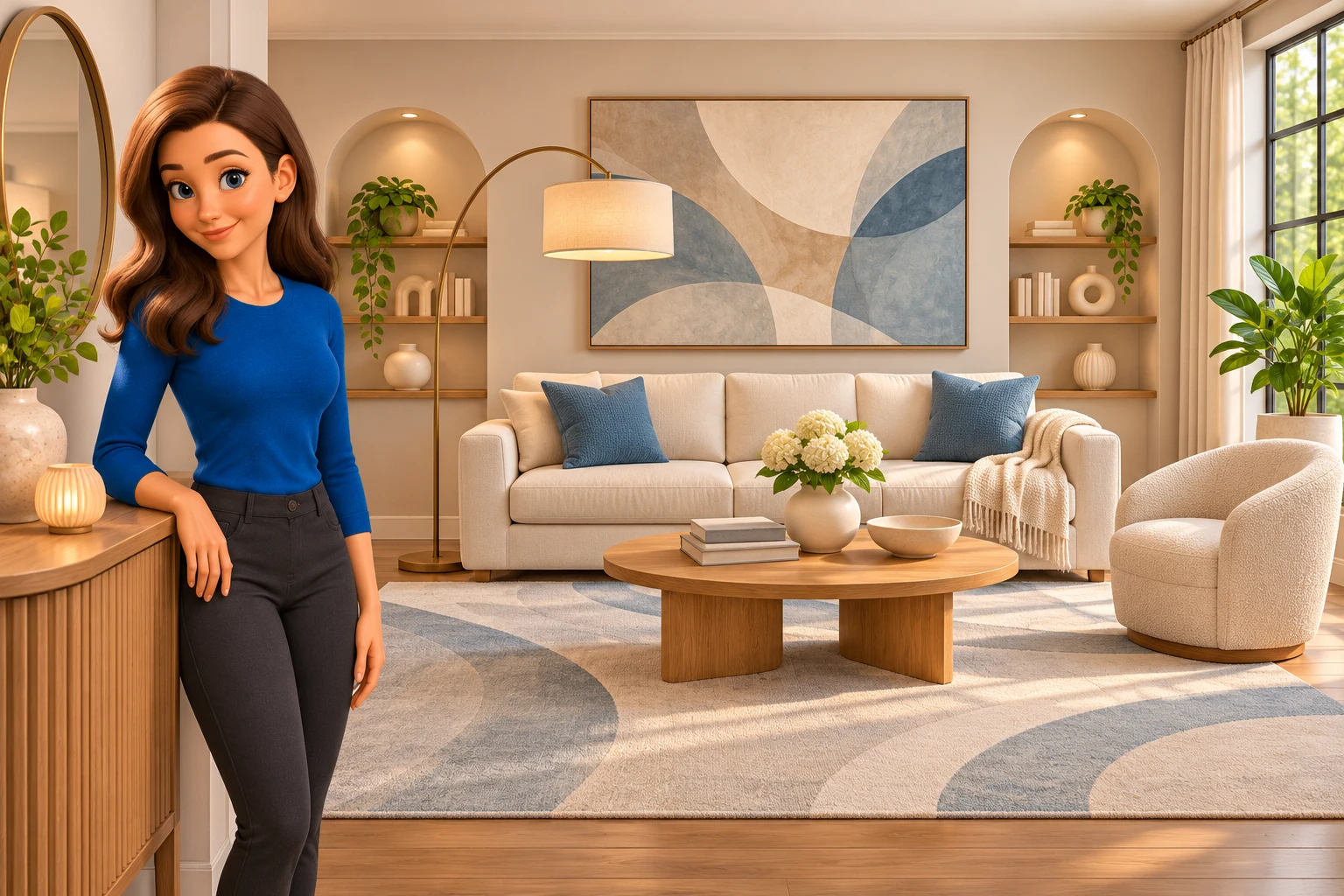
The principles of interior design help you arrange a room so its furniture, colors and details work together. They include balance, rhythm, emphasis, scale and proportion, harmony and unity, contrast, and attention to detail. Use them to answer a practical question: what feels wrong in this room, and what can I change?
You can start with the furniture you own. Choose one room, take a photo from the doorway and look at where your eye goes first. Then check how comfortably you can move through it. A room needs to work for the people using it as well as look good.
How principles differ from the elements of design
The seven elements of interior design are space, line, form, light, color, texture and pattern. They describe the ingredients you can work with. Principles describe the relationships you create between them.
For example, a blue cushion supplies color and texture. Repeating its blue in a picture creates rhythm. Putting it on an ivory sofa adds contrast. The same item can serve several principles at once.
Lists vary because authors group related ideas differently. This guide uses seven practical groups, keeping scale with proportion and harmony with unity. The Indian Institute of Art and Design’s overview also includes contrast and details. The names are useful tools for making decisions, rather than a scoring system for your home.
| Principle | Question to ask | A first adjustment |
|---|---|---|
| Balance | Does one side feel much heavier? | Move a chair or a dark accessory to the quieter side. |
| Rhythm | What connects different parts of the room? | Repeat a color, material or shape in separated places. |
| Emphasis | Where should attention go first? | Give the main feature some clear space around it. |
| Scale and proportion | Do the sizes suit the room and each other? | Measure the seating group before choosing a table or rug. |
| Harmony and unity | Do the choices feel related? | Use a shared material or color to connect different styles. |
| Contrast | Where does the room need definition? | Try one darker, smoother or more curved item. |
| Details | What interrupts comfort or makes the room feel unfinished? | Check lamp access, furniture alignment and everyday storage. |
1. Balance the visual weight
Visual weight is how strongly something attracts attention. A large dark cabinet often feels heavier than a slim pale chair. Size matters, but so do color, texture, pattern and the amount of empty space around an object.
Stand at the doorway and compare the two sides of your room. If the sofa, bookcase and bold artwork all crowd one side, try moving a smaller piece across the room before buying anything.
- Symmetrical balance uses similar arrangements on either side of a center line, such as two matching lamps around a sofa. It can make a busy room feel orderly.
- Asymmetrical balance uses different objects with a similar visual presence. A pair of light chairs might balance a heavier sofa.
- Radial balance arranges pieces around a center, such as chairs around a round table. Check that each seat still has a comfortable approach.
Choose the arrangement that suits your doors, furniture and daily routine. Matching furniture is optional. Our guide to balance in interior design explores the three approaches in more detail.
2. Create rhythm through repetition and variation
Rhythm gives your eye a path through the room. You might repeat a blue from the rug in a cushion and a small piece of art. Those connections help distant objects feel part of the same design.
Repetition can be subtle. Try an arched mirror with a round table, or an oak shelf that relates to oak chair legs. Vary the size or texture so the result still feels personal. Progression creates another kind of rhythm, such as a group of objects that increases in height.
Look for a feature you already like and repeat one part of it. If every surface carries the same strong pattern, leave some surfaces plain so the repeated detail remains easy to notice. See rhythm in interior design for more ways to use repetition, progression and visual movement.
3. Give the room a clear focal point
Emphasis establishes what you notice first. A fireplace, a view, a large picture or the main seating group can provide that focus. Start by deciding what matters when you use the room.
A television may guide the seats in a family room. In a room used mainly for conversation, facing seats can matter more than facing a wall. You can have secondary features, but several equally bold walls and oversized accessories may compete for attention.
Try removing a few objects around the feature you want to highlight. You can also use layered interior lighting to support the room’s activities and draw attention to selected areas. Our emphasis guide explains how color, placement and negative space can help.
4. Check scale and proportion before buying
Scale concerns size in relation to a person or setting. Proportion concerns the relationship between parts. A sofa can fit through the door yet feel too large for the room. A tiny coffee table can fit the floor area yet be awkward to reach from the seats around it.
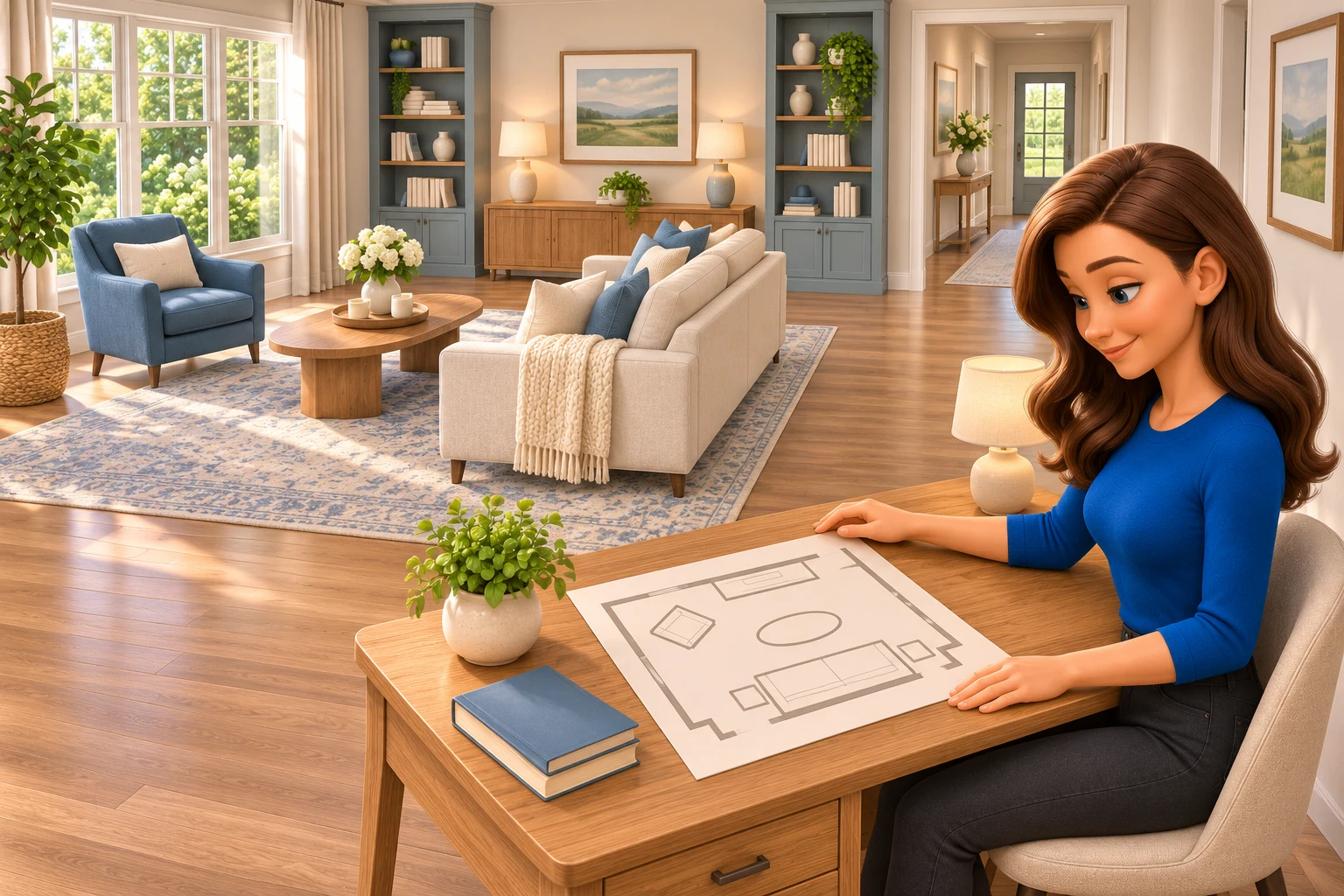
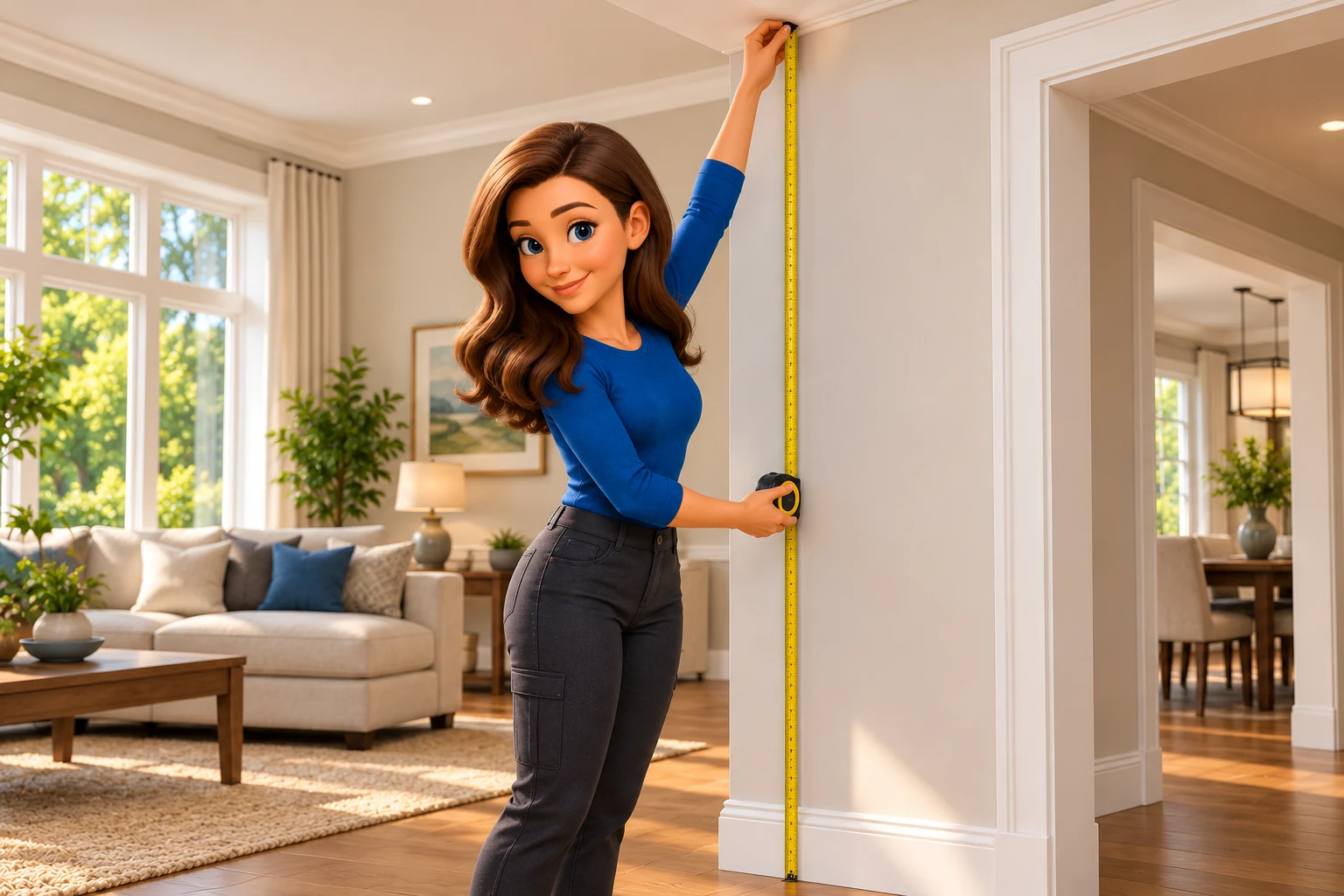
Measure width, depth and height. Then mark the footprint with removable tape that is suitable for your floor, or use paper cutouts on a measured plan. Allow for drawers, recliners and doors to open. Sit in the room and test reaching a drink, getting up and walking past someone who is seated.
For a rug, map the whole seating group. A useful starting arrangement puts the front legs of the main seats on the rug, with enough width to connect them visually. Actual furniture dimensions and the room’s routes determine whether that works.
Our scale and proportion guide covers the visual relationships. For worked furniture footprints and walking routes, use the living room layout ideas.
5. Build harmony and unity without buying a matching set
Harmony describes compatibility between choices. Unity is the sense that the room belongs together as a whole. You can create both with a few shared features while keeping plenty of variety.
Imagine you are keeping a vintage oak cabinet and a modern blue sofa. Repeat the wood in a small frame and the blue in part of a rug. A cream wall and simple curtains can provide a quiet background. The furniture can come from different periods and still feel connected.
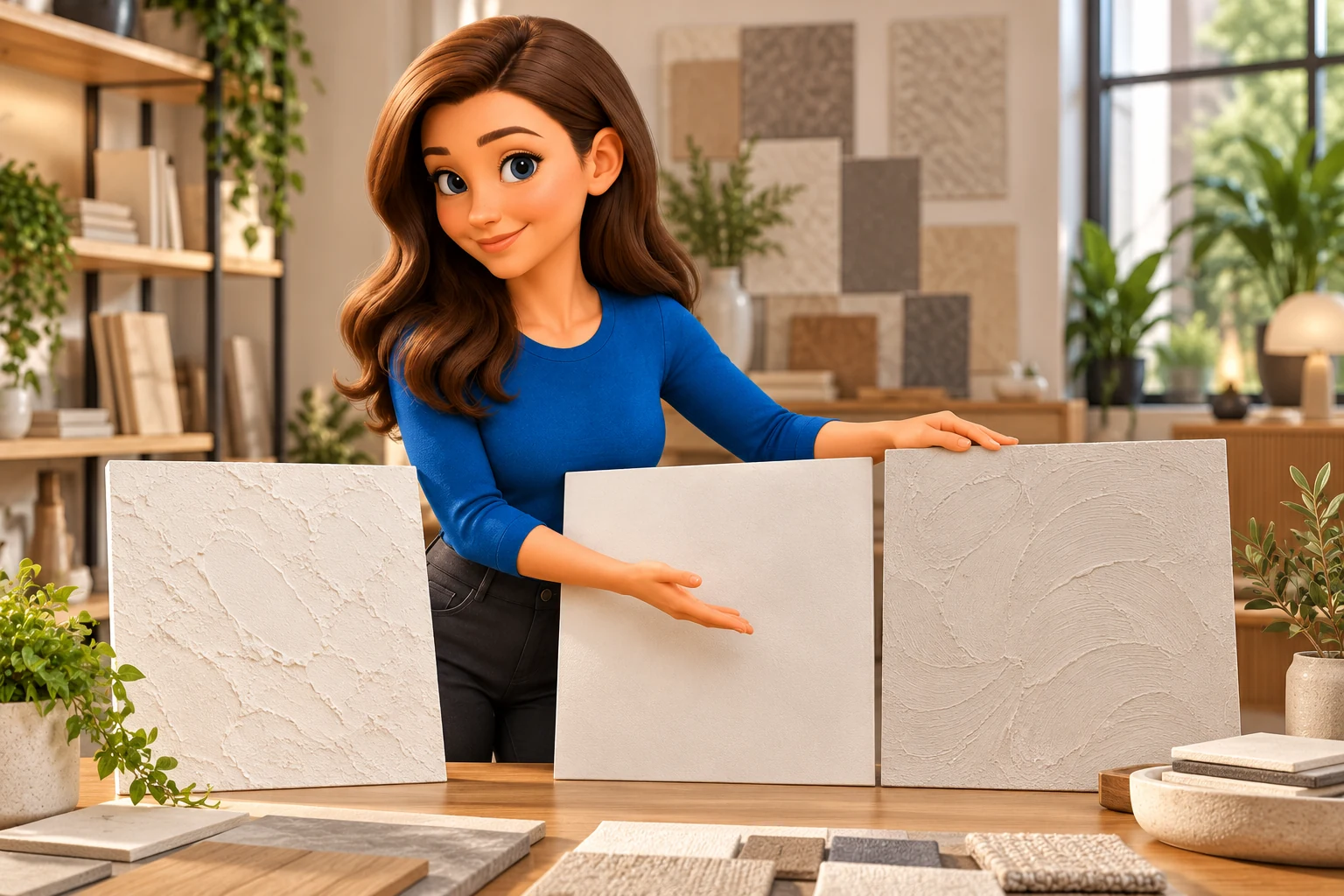
Start with fixed features such as flooring, stone or tile, then build a palette that works beside them. Our color theory guide shows how to build and test a room palette. Check samples in your room’s daylight and evening light before committing.
6. Use contrast to give the room definition
Contrast makes differences visible. It can come from light and dark, smooth and rough, straight and curved, or solid color and pattern. You can use it even in a quiet, neutral room.
Try a dark frame against a pale wall, a textured throw on a smooth sofa, or a round table beside straight furniture lines. A small contrast is often enough to make an object easier to notice.
Choose where you want the strongest contrast. If the rug, curtains, sofa and walls all make separate bold statements, test simplifying one of them. For a softer result, vary texture while keeping colors close together. For a more lively result, introduce pattern in a limited area and repeat one of its colors elsewhere.
7. Finish the details that affect everyday use
Details include the small relationships you notice up close. A lampshade that crowds your head, a side table that is hard to reach or a drawer that catches a rug can make a lovely room frustrating to use.
Do one evening walkthrough after arranging the large pieces. Switch on the lamps, close the curtains and sit in each seat. Check that reading light reaches the page, the remote has a home and charging cables stay out of walking routes. Reuse a basket or tray for items that repeatedly end up on the floor.
For decorative details, work from large to small. Place the furniture and main artwork first, then adjust cushions, objects and wall decor. Leave space for things you use and enjoy.
A worked room example, before and after
This is an invented decorating exercise using the same sofa, two chairs and coffee table. It is not a photograph of a completed client project. The diagrams simplify furniture into shapes to show visual relationships.
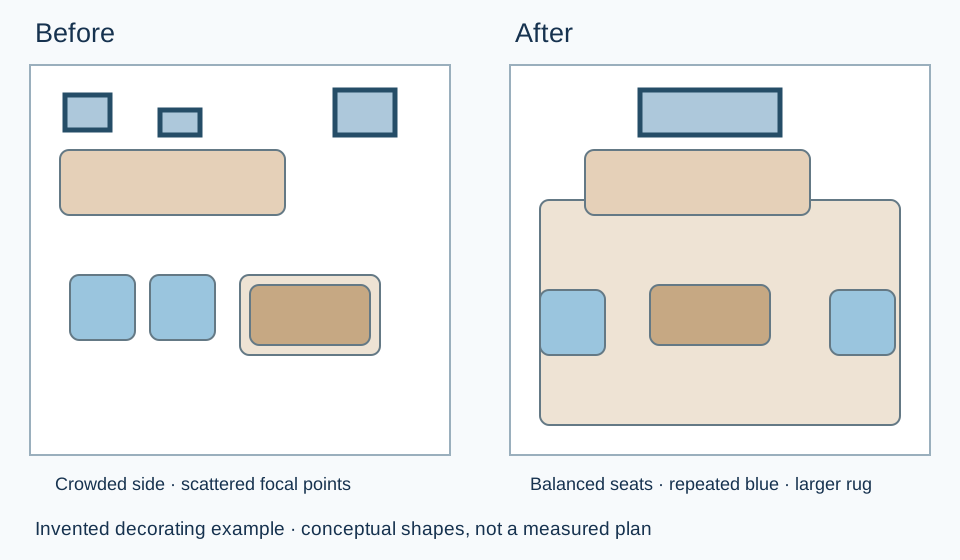
| Before | Proposed adjustment | Why it helps |
|---|---|---|
| Both chairs crowd one side of the sofa. | Move one chair to the opposite side of the seating group. | Spreads visual weight and brings the seats into a conversation group. |
| Several scattered pictures compete. | Group the smaller pictures on another wall and use one main artwork above the sofa. | Creates a clearer focal point without throwing the pictures away. |
| A small rug sits under only the table. | Test a larger rug that reaches the front legs of the seats. | Connects the group. This is a proposed purchase to measure for, not a required first step. |
| Blue appears in just one corner. | Move existing blue accessories to separated parts of the group. | Adds rhythm while keeping the palette simple. |
| Every accessory has a similar pale finish. | Test a dark frame around the main artwork. | Adds a controlled area of contrast. |
Try the moves before spending money. Photograph the result from the same doorway and compare it with your first picture. Keep changes that improve both the view and the way the room works.
A practical order for designing your room
- Write down the room’s main activities and what currently gets in the way.
- Measure the room, openings and furniture you plan to keep.
- Choose a focal point and test the largest pieces around it.
- Check walking routes, reach and furniture size.
- Balance visual weight, then connect the room with a few repeated features.
- Add contrast and smaller details where they serve a purpose.
- Live with the arrangement before buying the finishing pieces.
If you want a broader starting sequence, continue with our interior design tips. For drawing and testing the plan, use the space planning guide.
Common questions about design principles
Are there seven principles of interior design?
Seven is a common way to organize them. Some lists combine harmony and unity or scale and proportion, while others list them separately. Learn what each idea helps you decide rather than worrying about a fixed count.
Which principle should I start with?
Start with the room’s function and furniture scale. Once the pieces fit and you can move comfortably, balance and emphasis help you organize the view. Rhythm, harmony, contrast and details help connect and finish the arrangement.
Can I mix styles and still create unity?
Yes. Keep a few shared features, such as a wood tone, repeated color or similar curves. Then check the sizes and visual weight of the individual pieces. A room can feel connected without every object matching.
Does a small room need only small furniture?
No. A few well-sized pieces may work better than many tiny ones. Measure the usable area and test the main routes. A deep sectional or extra chair becomes a problem when it consumes the space you need to use the room.
Conclusion
Use the principles of interior design to solve one room problem at a time. Start with function and fit, then adjust balance, focus and the connections between your choices. Small moves can tell you what the room needs before you commit to a purchase.
Explore our Interior Design guides for more help with room planning, color, lighting and finishes.

Lara Harding
Lara contributes to DIY Home Comfort. Learn more about the team and our approach on the About page.