Smart Thermostats: Compatibility, Features and Useful Comparisons
Compare specific thermostat models, check heat-pump and power compatibility, and understand room sensors, zoning and savings claims before buying.
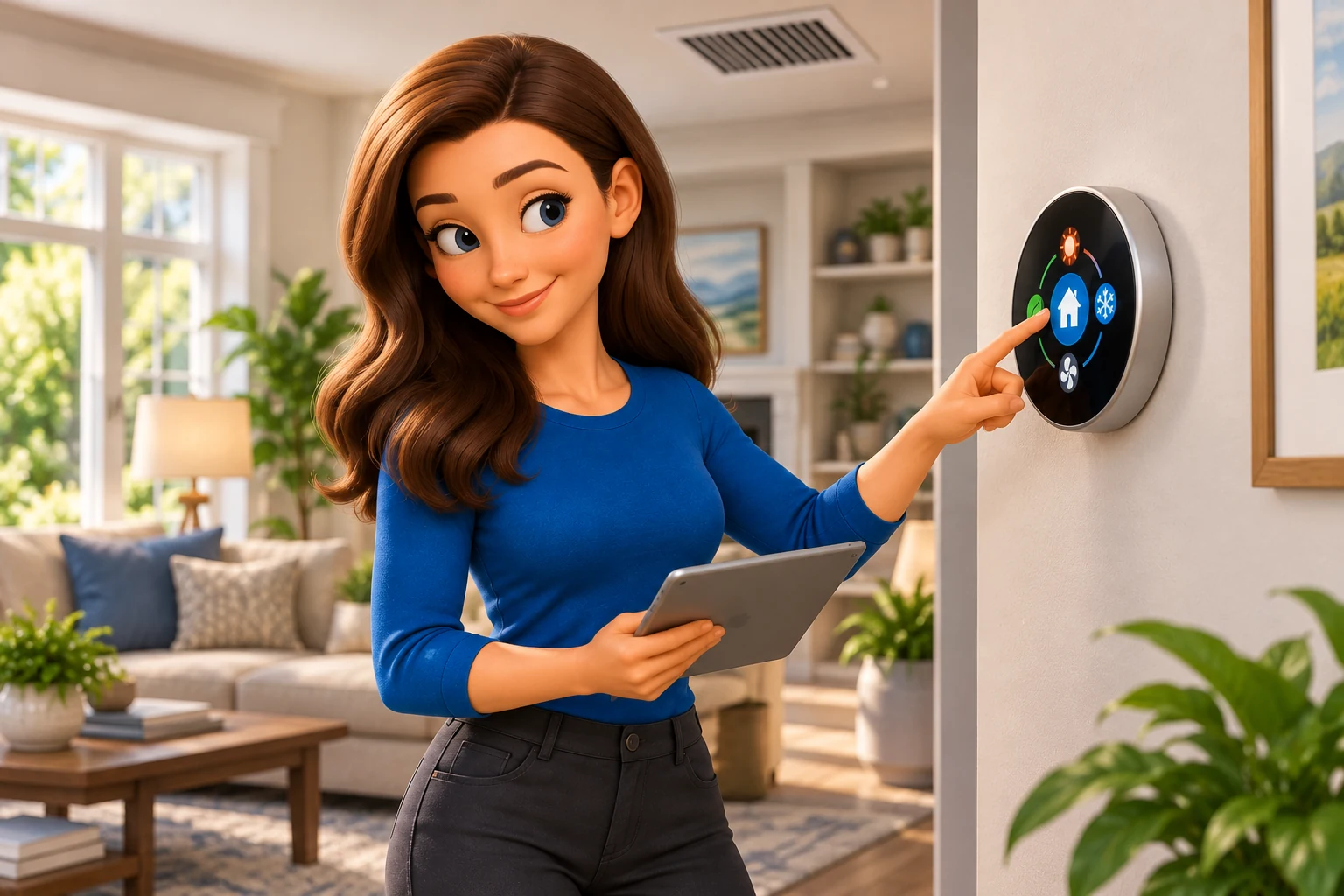
A smart thermostat is useful when its controls suit the HVAC equipment and its scheduling or remote features solve a household need. Check compatibility before comparing apps or displays. Not every connected thermostat learns a schedule, supports dual fuel or controls every stage and accessory.
Product examples below were checked October 30, 2026. Verify the exact model, generation, included accessories and current requirements before purchase; prices and bundles change.
Start with the installed system
🛑 Record the equipment and current controller models, number of stages, backup fuel, accessories and power arrangement. Communicating systems may need their approved controller to retain modulation and diagnostic features. Do not choose by wire color or terminal count alone.
🛑 Ask a qualified installer to resolve uncertain wiring, power or control configuration. Heat-pump reversing-valve setup, backup staging and outdoor lockouts affect operation. Use our commissioning checklist to retain the final settings.
For a heat pump, check the thermostat's supported heating and cooling stages, auxiliary or dual-fuel controls, and the exact equipment combination before replacing the installed controller. Our smart thermostat heat pump compatibility guide explains what to confirm with your installer.
ecobee Smart Thermostat Premium
The Premium product page lists an included room SmartSensor, occupancy features and indoor-air-quality monitoring. These are features of that named model, not every ecobee product. Accessory, voice and subscription requirements should be checked separately.
🛑 A room sensor can influence the thermostat's control decision; it does not physically redirect air to that room. Air-quality alerts do not replace required smoke or CO alarms, ventilation or diagnosis of a pollutant source.
Google Nest Learning Thermostat, fourth generation
Google's fourth-generation specifications list supported stages, accessories and connector limits and include a second-generation Nest Temperature Sensor. Check the exact combination through the compatibility process; support for individual functions does not mean all can use a shared connector simultaneously.
Power requirements depend on the installation. Do not generalize this generation's features or power arrangement to older Nest products or the separately named Nest Thermostat. Farsight availability also depends on the supported model/generation.
Amazon Smart Thermostat
Amazon's compatibility guidance excludes heat pumps with gas or oil backup and requires common-wire power or a suitable supported adapter arrangement. It is therefore not a universal low-cost replacement for a dual-fuel controller.
Check the required app, account, connectivity and automation features. A connected or voice-enabled device is not necessarily a self-learning thermostat.
Resideo Honeywell Home T9 and room sensors
The T9 user guide describes how selected room sensors influence the control temperature. Confirm whether sensors are included in the purchased package or sold separately.
Sensors alone do not create independent duct zones. Motorized dampers, zone controls and airflow design are separate. Adding smart vents without checking minimum airflow and static pressure can create new problems; see HVAC zoning.
Evaluate savings and ongoing requirements
Savings depend on the previous schedule, occupancy, climate, equipment and tariff. A manufacturer's advertised maximum uses a specified baseline; it is not a typical result guaranteed for your home. Compare weather-adjusted bills where possible and do not treat an app estimate as a controlled experiment.
Consider local operation during an internet outage, account access, privacy, sensor batteries, subscription costs and support life. Confirm which features work without a cloud service. Keep a usable manual and a record of approved heat-pump settings.
The thermostat is one part of the control chain. For a broader look at account dependencies, remote access and behavior when the internet is down, see our guide to local vs cloud home energy management.
Conclusion
Buy for verified equipment compatibility and a useful household control function. Compare exact models and complete installed cost, then coordinate scheduling, backup and airflow using our HVAC energy-efficiency guide.
Continue with our heat-pump guides for related homeowner decisions.

Scott Harding
Scott is the main author of DIY Home Comfort. Learn more about the team and our approach on the About page.