Attic Fan Installation: Assess the Home Before Adding a Fan
Distinguish powered attic fans from whole-house fans, assess air leakage and combustion risks, and plan qualified roof and electrical installation.
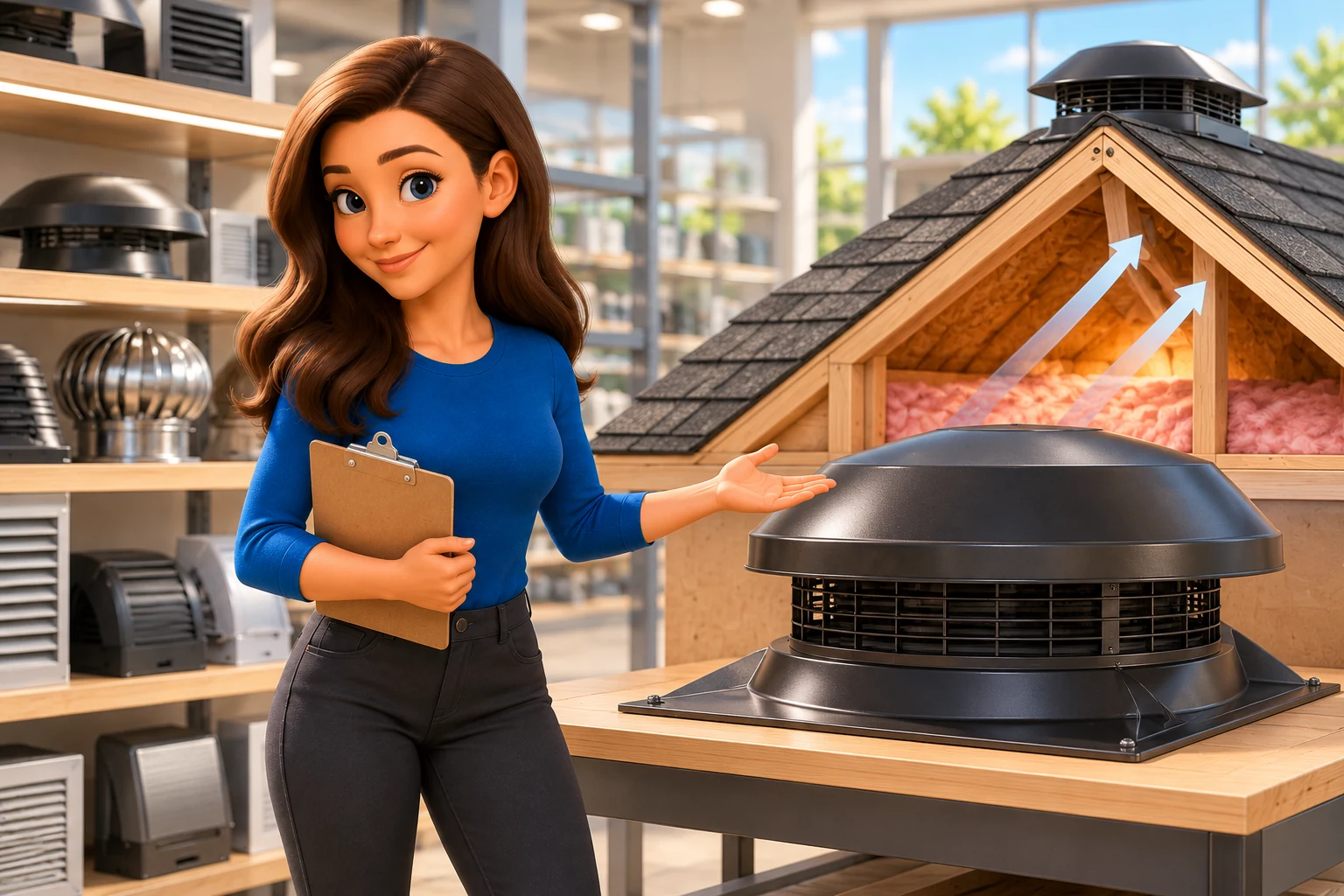
Before installing a powered attic fan, check the attic's air boundary—the surfaces and seals that control air movement between spaces—along with insulation, moisture sources and intake ventilation. A fan can pull conditioned air through ceiling leaks and create depressurization, or lower air pressure. This can contribute to combustion backdrafting, when combustion gases flow into the home instead of venting outdoors. An attic fan is not a guaranteed way to lower cooling bills or cure roof moisture.
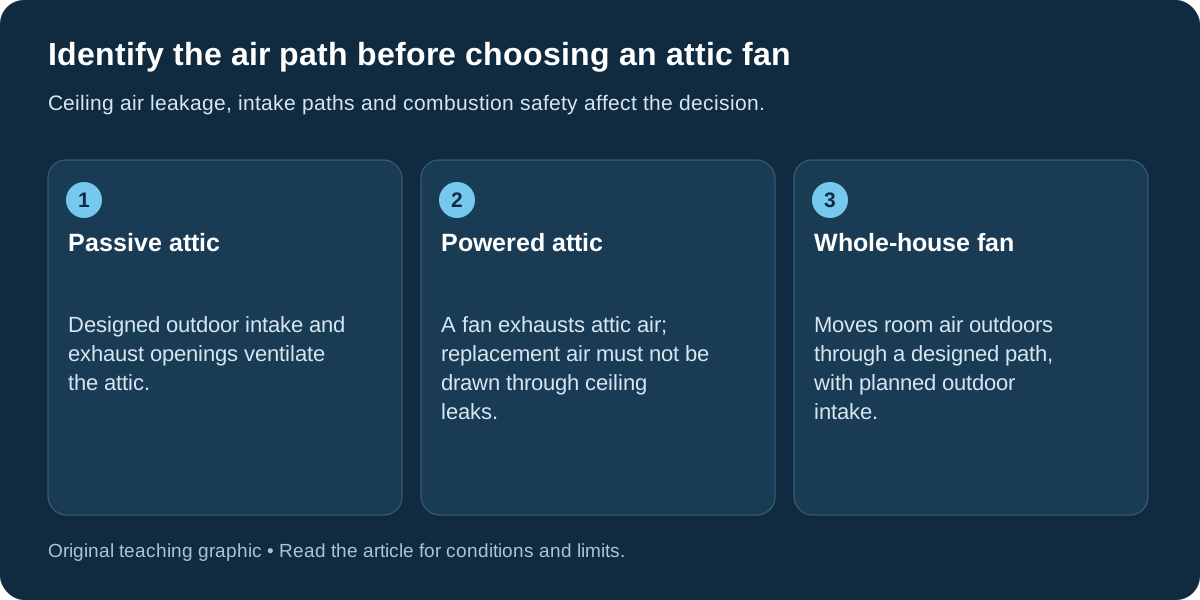
Identify the type of ventilation
| Type | Air path | Key planning issue |
|---|---|---|
| Passive attic ventilation | Outdoor air moves through designed attic intake and exhaust openings | Net free area, unobstructed paths, roof assembly and moisture control |
| Powered attic ventilator | Fan exhausts attic air and draws replacement air | Adequate outdoor intake and avoiding suction through ceiling leaks |
| Whole-house fan | Moves indoor air into an attic or dedicated exhaust path while outdoor air enters through planned openings | Suitable outdoor conditions, intake openings, exhaust capacity and combustion safety |
These systems are not interchangeable. The PNNL attic-fan guidance explains why powered attic ventilation needs careful evaluation rather than an assumed energy benefit.
Assess the attic and combustion risk
Have appropriate professionals identify ceiling air leaks, missing insulation, bathroom or kitchen exhaust terminating in the attic, roof leaks and blocked intake paths. Resolve the source of moisture before treating a fan as the remedy. Some roof assemblies are intentionally unvented and need a different design.
If combustion equipment or flues could be affected, include a combustion-safety and pressure assessment. More exhaust is not automatically better. Air drawn from the house can increase heating or cooling loads and interfere with natural-draft appliances.
🛑 Do not enter an attic with unsafe access, damaged wiring, suspect structural support or other hazards. Walking on ceiling finishes can cause a fall through the ceiling.
Plan the construction and electrical work
A qualified installer should verify product suitability, structural opening, flashing, weather resistance, intake provisions and access. Cutting a roof or gable opening requires more than a generic measurement and caulk detail. Foam or sealant is not a substitute for the required roofing and flashing assembly.
🛑 The Broan installation guide illustrates equipment-specific installation requirements. Electrical circuit capacity, grounding, disconnects and controls need qualified work under applicable local requirements. Do not tap a nearby light circuit simply because it is convenient.
If you mean a whole-house fan
A whole-house fan can help when outdoor air is suitable for cooling the home and the designed intake and exhaust paths are available. Hot, humid, smoky or polluted outdoor air can make operation unsuitable. The household needs clear operating instructions and a combustion-safety plan.
The PNNL whole-house fan guide addresses these application requirements. It does not promise a fixed room-temperature reduction or elimination of air-conditioning use.
Verify the result
Document the installed model, intake and exhaust provisions, weatherproofing, electrical work and control settings. Check whether the original moisture or comfort problem has been resolved without creating pressure or leakage problems. Compare energy use with weather and occupancy considered.
For a broader assessment, see attic insulation and ventilation and how to reduce cooling load.
Conclusion
🛑 Start with the attic assembly and house pressure behavior, then decide whether a fan is appropriate. Use qualified roof and electrical installation and verify the result; a universal fan size or a dramatic temperature graphic cannot establish performance or compliance.
Continue with our HVAC guides for related homeowner decisions.

Scott Harding
Scott is the main author of DIY Home Comfort. Learn more about the team and our approach on the About page.