Electric Water Heater vs Gas: Capacity, Cost and Installation
Compare resistance, heat pump, gas storage and tankless water heaters using peak demand, model ratings, local tariffs and complete installation quotes.
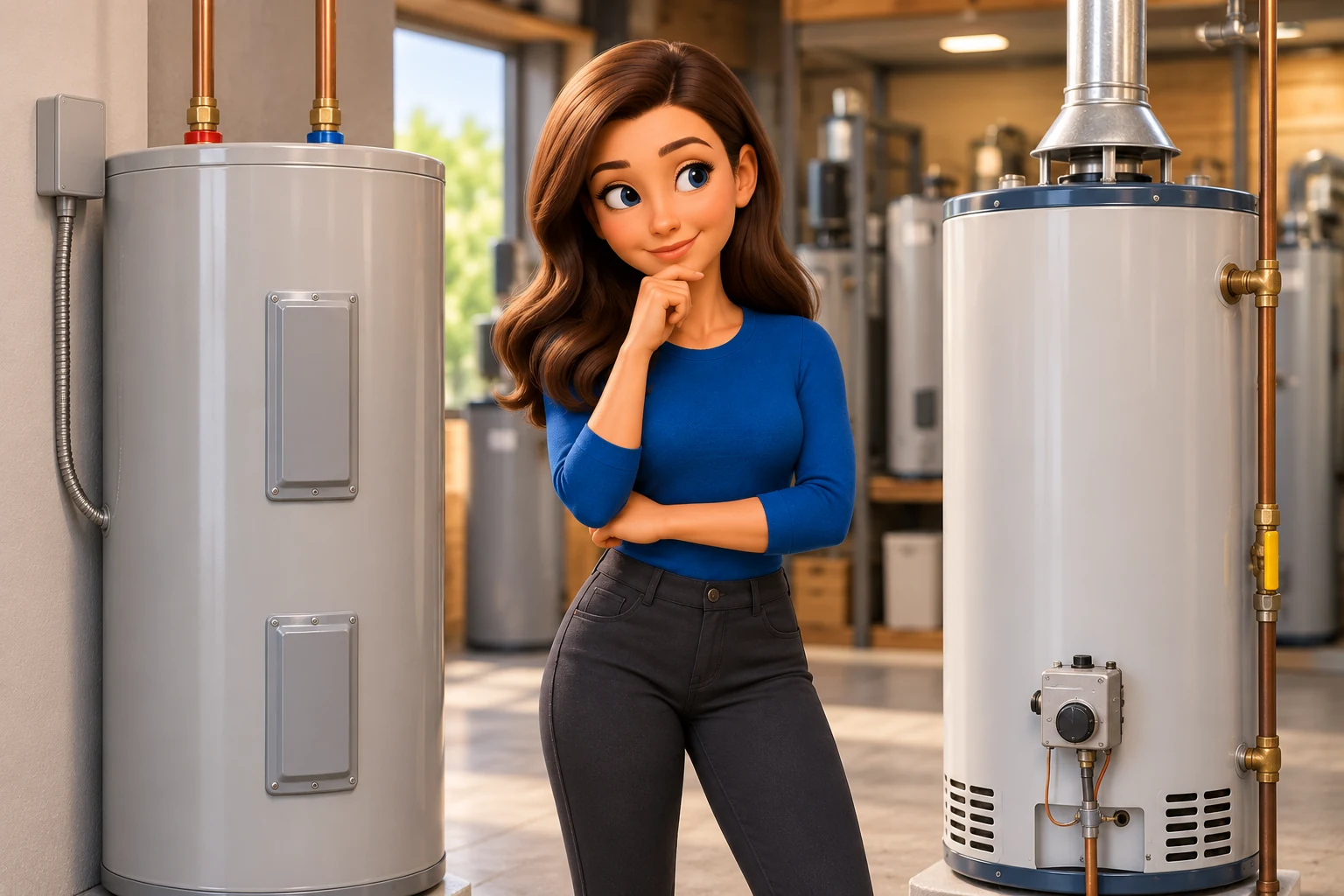
When comparing an electric water heater vs gas, separate four options: electric resistance, electric heat pump, gas storage and tankless equipment. The best fit depends on your hot-water demand, the specific model, local energy prices and the work needed for a safe installation. Fuel alone does not tell you which option has the lowest lifetime cost.
Start with the existing heater’s model number and your household’s busiest hot-water period. If the heater is leaking, use our leak identification guide before treating replacement as a routine shopping decision.
Compare the main types
| Type | How it supplies hot water | Important installation questions |
|---|---|---|
| Electric resistance storage | Elements heat a finite tank of water, with recovery between draws | Correct circuit, supply voltage, tank size and safe water connections |
| Heat pump storage | Transfers heat into stored water; many hybrid models also use resistance elements | Approved location, airflow, condensate drainage, circuit and operating mode |
| Gas storage | A burner heats stored water; capacity and recovery depend on the model | Gas supply, combustion air, venting and any required electrical supply |
| Tankless | Heats flowing water within its rated capacity | Fuel or electrical capacity, inlet temperature, required flow and manufacturer’s installation requirements |
A storage heater can run out during a heavy draw even while its elements or burner are operating. Gas storage is not a continuous supply of unlimited hot water. For a closer look at the electric options, read heat pump water heater vs tankless.
Size for peak demand
For storage models, compare first-hour rating (FHR), not tank volume alone. FHR accounts for stored hot water and recovery under the rating procedure. Two tanks of similar size can deliver different first-hour performance.
For tankless equipment, compare the required simultaneous flow with the unit’s capacity at the needed temperature rise. A headline maximum flow rating does not apply at every incoming-water temperature. Pipe length can still create a wait at the tap.
The A. O. Smith explanation of Uniform Energy Factor also explains why efficiency ratings should be compared within the appropriate usage bin. UEF is a standardized efficiency measure, not a promise that two different households will receive the same bill.
Compare operating cost with local inputs
Use the exact models’ EnergyGuide information and a common hot-water demand assumption. Then substitute your electricity and gas tariffs. Check energy units, fixed service charges, seasonal pricing and any electrical demand charges that apply to you.
- Annual energy cost is estimated energy use multiplied by the applicable unit price, with relevant additional charges.
- Compare installed prices for the same scope, including permits, circuits, venting, drainage and removal.
- Include maintenance and a realistic evaluation period; do not assume a guaranteed equipment life.
- Confirm current incentives separately before subtracting them from a quote.
Heat pump equipment can use substantially less electricity than resistance equipment because it transfers heat. Its result still depends on the model, room conditions and use of backup elements. ENERGY STAR explains the operating principle; it does not mean electric resistance and heat pump heaters have the same efficiency.
Check installation and safety
Have qualified installers assess the actual conversion. Moving from gas to electricity can require electrical work. Changing gas equipment can require changes to venting, combustion air or fuel piping. Some gas models also need electricity for controls or fans, so do not assume every gas heater works through a power outage.
🛑 Never block a relief valve, bypass a control or energize an empty tank. Water temperature, scald protection and household health needs must be considered together; our water-heater settings guide explains the questions to ask.
Consider emissions and service
Gas combustion produces emissions at the home. Electricity-related emissions depend on the electricity supply and energy used. Avoid a universal claim that either fuel has a fixed carbon advantage in every location.
Ask about local service, warranty coverage, maintenance access and replacement parts. Tank condition, water chemistry, maintenance and operating conditions affect service life; broad fuel-based lifespan ranges are not a warranty or a replacement deadline.
Conclusion
Compare electric and gas water heaters using peak-demand capacity, model efficiency, local tariffs and complete installation quotes. Separate heat pump equipment from electric resistance equipment before judging cost or performance. Explore our water heater guides to plan the next step.

Scott Harding
Scott is the main author of DIY Home Comfort. Learn more about the team and our approach on the About page.