Eliminate Garbage Disposal Smells With Safe Cleaning
Find the source of disposal odors, isolate the equipment as instructed and clean accessible parts safely without unsupported chemical recipes.
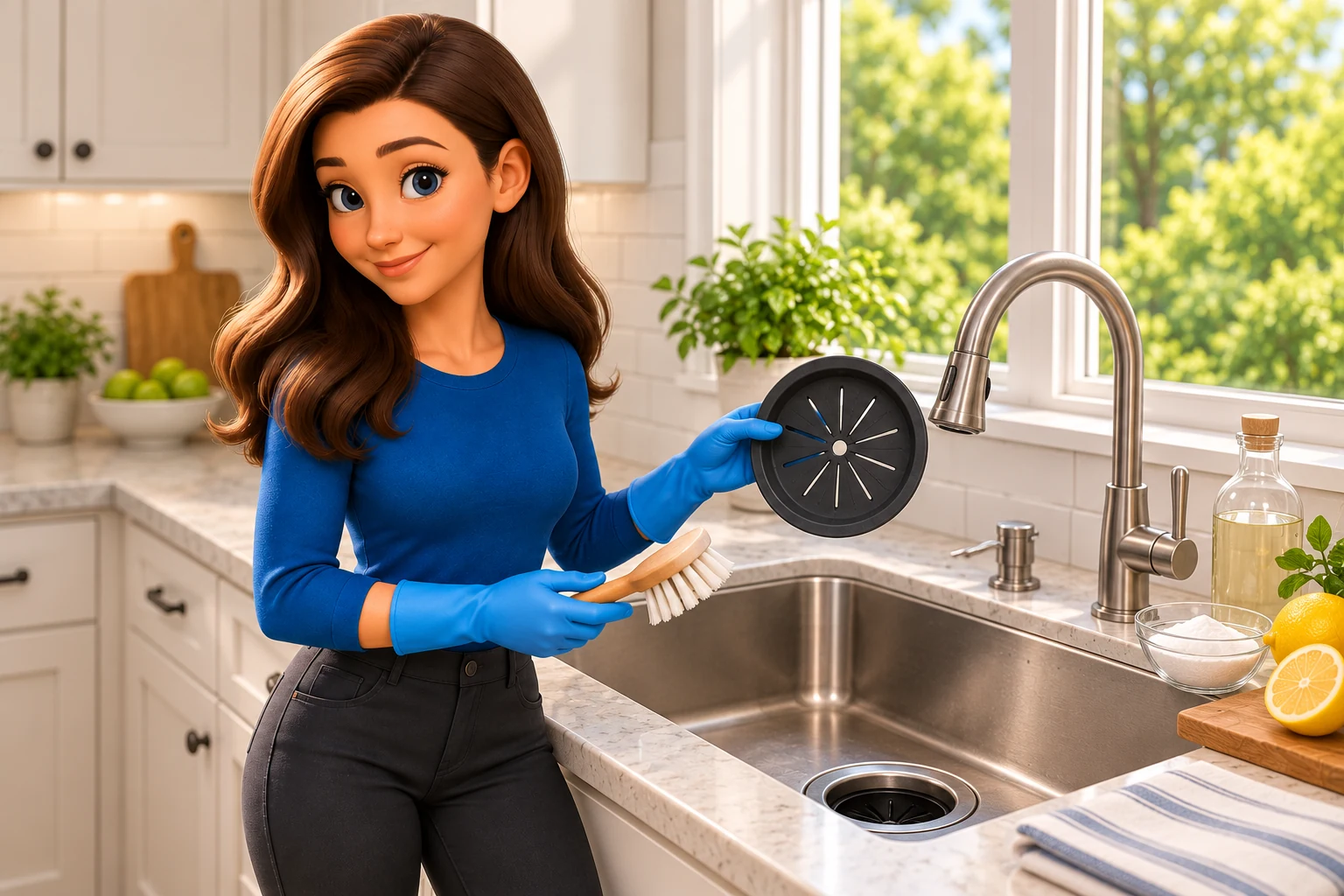
To eliminate garbage disposal smells, remove accessible food residue using your model's cleaning instructions. Odor often comes from material around the baffle or inside the grinding chamber. A fragrance or fizzing treatment may change the smell without showing that the source is gone.
Keep hands out of the grinding chamber. Before brushing or removing a permitted part, follow the manual's power-isolation instructions and prevent accidental starting. Remove every tool and refit parts before restoring operation.
Check the symptom before cleaning
| What you notice | Likely next investigation | Response |
|---|---|---|
| Food odor with normal drainage and operation | Accessible residue and baffle cleaning. | Use the model's approved cleaning method. |
| Standing water or a slow sink | Drainage fault, blockage or disposal problem. | 🛑 Do not keep running the unit to force it clear. |
| Humming, jamming, leakage or a burning smell | Mechanical, electrical or plumbing fault. | 🛑 Stop operation and follow service guidance. |
| Sewer-like odor after cleaning | Another drain, trap or plumbing source. | Use the separate odor investigation rather than stronger fragrance. |
🛑 For a broader pattern, use smelly-drain checks or the sewer-smell guide. If a chemical cleaner has already been added, follow its label and do not insert tools, add another product or run equipment when splashback is a risk.
Clean accessible parts in order
- Identify the model. Check which baffle or splash guard is owner-removable and which cleaning products are allowed.
- Isolate as instructed. Use the required power control, unplugging or circuit isolation for the task; keep others from starting the unit.
- 🛑 Remove reachable residue. Clean the permitted removable baffle or accessible surfaces with the approved tool and method. Do not reach deeper into the chamber.
- Refit and clear the area. Remove tools and cleaning materials and replace the baffle correctly before restoring power.
- Run only the approved rinse/cleaning cycle. Check drainage and operation, then reassess the odor.
InSinkErator's cleaning guidance illustrates baffle cleaning and permitted cold-water/ice/citrus use. Follow the installed product's directions; not every baffle or disposal is identical.
Keep water and products within the manual
🛑 Cold water for grinding food and warm water in an approved cleaning routine are different instructions. Do not turn either into a universal boiling-water flush. Avoid filling the chamber with ice, salt, peels or other material in quantities the manufacturer has not specified.
The InSinkErator care manual provides a defined cleaning method and chemical restrictions for its covered products. Its guidance is more useful than assuming a fixed borax dose or a baking-soda/vinegar mixture disinfects every unit.
Enzyme-based cleaners are not literally chemical-free. Use one only when its label and the disposal/plumbing instructions permit the task. A product cannot repair a damaged seal, blocked drain or faulty trap.
Understand what is being cleaned
🛑 A disposal uses a grinding mechanism rather than kitchen-knife blades. Do not try to sharpen it, feel for cutting edges or manually free parts without the model's procedure. Cleaning a removable baffle is a different task from dismantling the appliance or drain trap.
If residue cannot be reached safely or odor returns quickly, record the pattern and arrange appropriate service. A plumber can assess drainage or leakage; appliance service may be needed for the grinding unit itself.
Prevent new buildup
- Use the permitted water flow and operating sequence.
- Feed suitable food waste in manageable amounts.
- Keep fats, oils, grease and unsuitable materials out of the drain.
- Clean owner-accessible parts regularly as directed.
Conclusion
🛑 Remove the source of disposal odors with safe access and model-approved cleaning. Treat abnormal drainage, leakage, jamming or electrical symptoms as a different problem, and avoid stacking cleaning recipes.
Continue through our Plumbing guides for related sink and drain decisions.

Scott Harding
Scott is the main author of DIY Home Comfort. Learn more about the team and our approach on the About page.