Heat Pump Noises: Normal Changes and When to Call
Use a heat pump noise table to separate model-specific transitions from warning signs, make safe observations and prepare a useful service note.
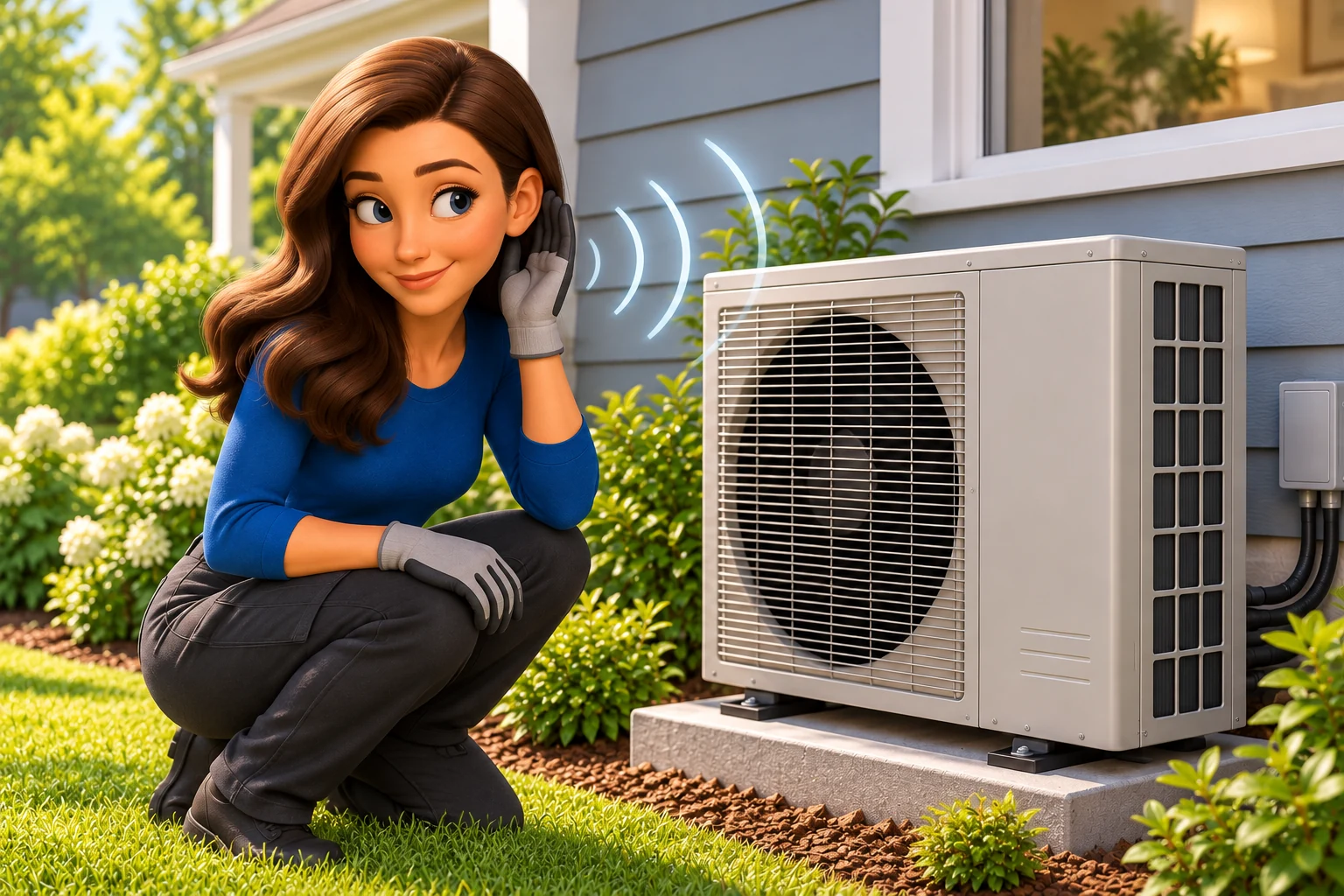
Heat pump noises need context. A brief sound during a transition described in your model's owner manual may be normal. A new, persistent or severe noise needs attention. Check the manual and note whether normal heating or cooling returns. A sound alone cannot identify a failed capacitor, valve or compressor.
🛑 Stop use when safe if there is severe grinding, metallic impact, smoke, arcing, an electrical burning smell or dangerous vibration. Keep away from moving or damaged parts and arrange service instead of opening panels or repeatedly restarting the equipment.
Record the operating context
Note whether the sound comes from an indoor head, duct, air handler, outdoor unit or pipe/support. Record the selected mode, outdoor conditions, duration, any fault code and whether room temperature is being maintained. A short audio recording made safely outside the guards can help a technician understand an intermittent complaint.
🛑 For a service note, use this format: date and time; sound location; heating/cooling/defrost context; duration; fault code; whether comfort returned; safe action taken. Mark an unknown item as unknown. Do not recreate a severe noise or restart unsafe equipment to complete the note.
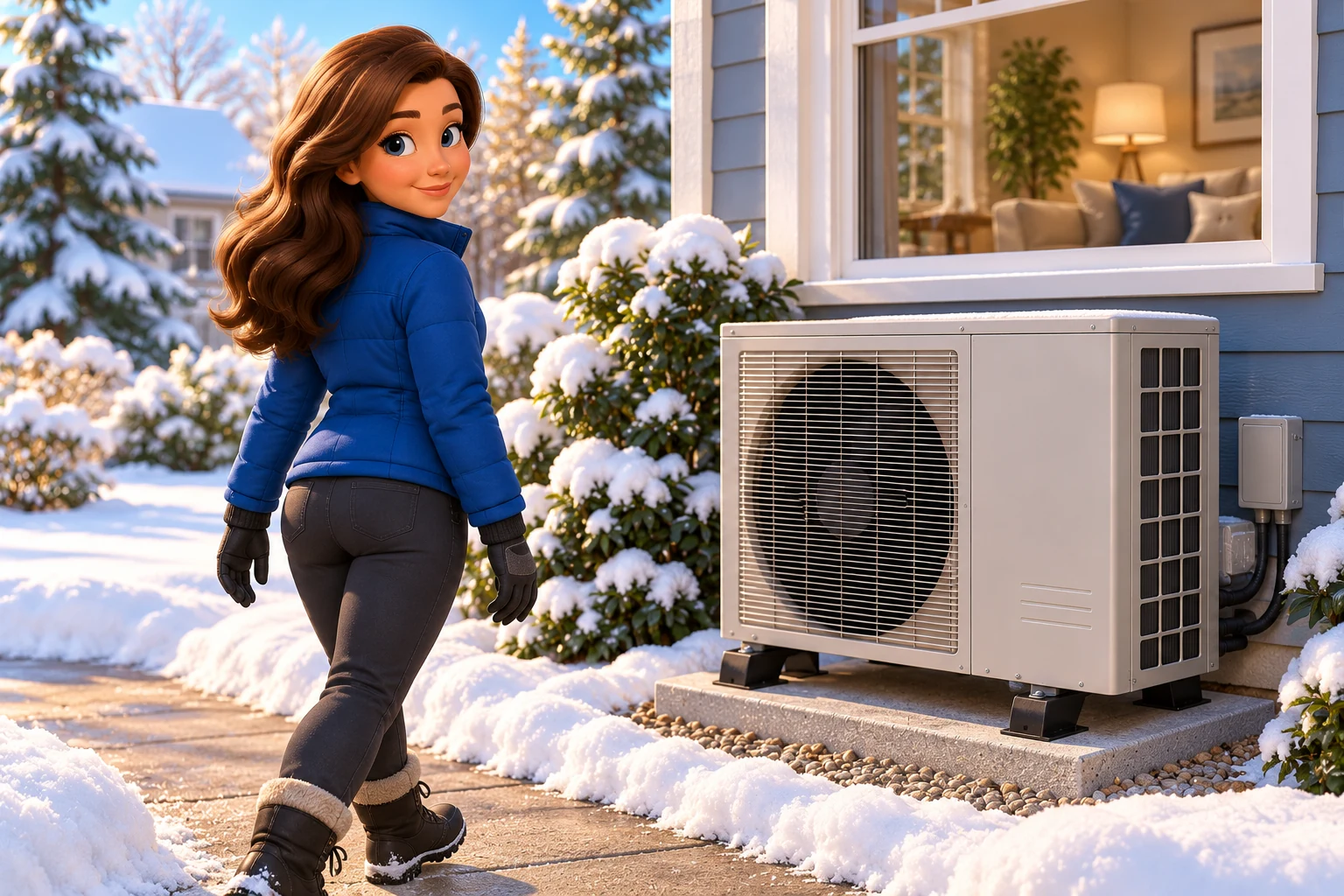
Variable-capacity equipment can change pitch as output changes. A winter defrost sequence may involve a change in fan operation, a refrigerant-flow sound and visible water vapor outdoors. That observation is different from smoke or an electrical smell; uncertainty or persistent abnormal operation warrants service.
Which heat pump noises need service?
| Sound or symptom | Response | Safe observation | Limit or escalation |
|---|---|---|---|
| Brief change during a documented defrost cycle | Observe only if there are no warning signs | Compare with the owner manual; note whether normal heating returns | If the pattern is unfamiliar, persistent or heating does not recover, request service |
| Rattle at particular speeds | Arrange source identification | Record where and when it happens from a safe position | 🛑 Do not remove guards or tighten internal parts |
| Whistle at a grille or after a filter change | Check accessible air paths | Check an owner-accessible filter and unobstructed openings using model instructions | Persistent noise or weak airflow needs professional assessment |
| Humming with failure to start | 🛑 Stop repeated start attempts | Record any displayed fault code without opening equipment | 🛑 Request qualified diagnosis; do not keep restarting |
| Grinding, sharp screeching or metal contact | 🛑 Stop operation when safe and arrange service | Keep clear of moving or damaged parts | 🛑 Do not run the unit to make a longer recording |
| Hissing plus lost performance or ice | Request qualified testing | Record performance changes and visible ice from a safe position | 🛑 Keep the refrigerant circuit closed; do not infer the failed part from sound |
| Any sound with smoke, arcing, electrical burning smell or dangerous vibration | 🛑 Keep away; stop use only if safe | 🛑 Do not approach damaged equipment to operate a switch | 🛑 If there is fire or immediate danger, leave the area and contact emergency services |
Keep owner checks accessible
Check an owner-accessible filter and clear unobstructed room air paths. Observe outdoor debris without reaching into the fan or removing a guard. Use the exact model's airflow/service clearances and snow/drainage instructions; a cover or enclosure is not automatically a sound-control solution.
🛑 Carrier's heat-pump guidance places persistent ice, noise and loss of performance beyond basic checks. Motor lubrication, fan-hub adjustment, belts, wiring, sensors and refrigerant service belong with qualified personnel or an explicitly permitted owner task in the installed manual.
Understand a quoted decibel rating
There is no single normal decibel band covering all indoor/outdoor heat pumps and every operating condition. Ask whether a figure is sound power or sound pressure, how it was measured, and at what mode/capacity. If pressure is quoted, distance and surroundings matter.
AHRI 270 defines sound-performance rating requirements for covered outdoor unitary equipment. Its ratings are not interchangeable with an indoor sound reading or a phone measurement beside a wall. Compare like quantities and model operating conditions.
Address the cause before buying sound treatments
A technician should establish whether the problem is equipment operation, airflow, supports, piping contact or the location itself. Ask for a written diagnosis and how the repair will be checked. An accessory intended to reduce noise must be approved for the equipment and preserve airflow, drainage, safety and access.
Do not infer that a heat pump needs replacement from age or one sound. Compare diagnosis, condition, warranty and complete alternatives with the repair/replacement planning guide.
Conclusion
Learn the model's normal transitions, record changes and respond promptly to severe or electrical symptoms. Safe observations support diagnosis; they do not replace it. Our heat-pump troubleshooting guide connects noises with other useful operating observations.
Continue with our heat-pump guides for related homeowner decisions.

Scott Harding
Scott is the main author of DIY Home Comfort. Learn more about the team and our approach on the About page.