How Does a Heat Pump Reversing Valve Work?
Learn how pilot pressure switches heating and cooling, why valve symptoms are inconclusive, and which reversing-valve tests require qualified service.
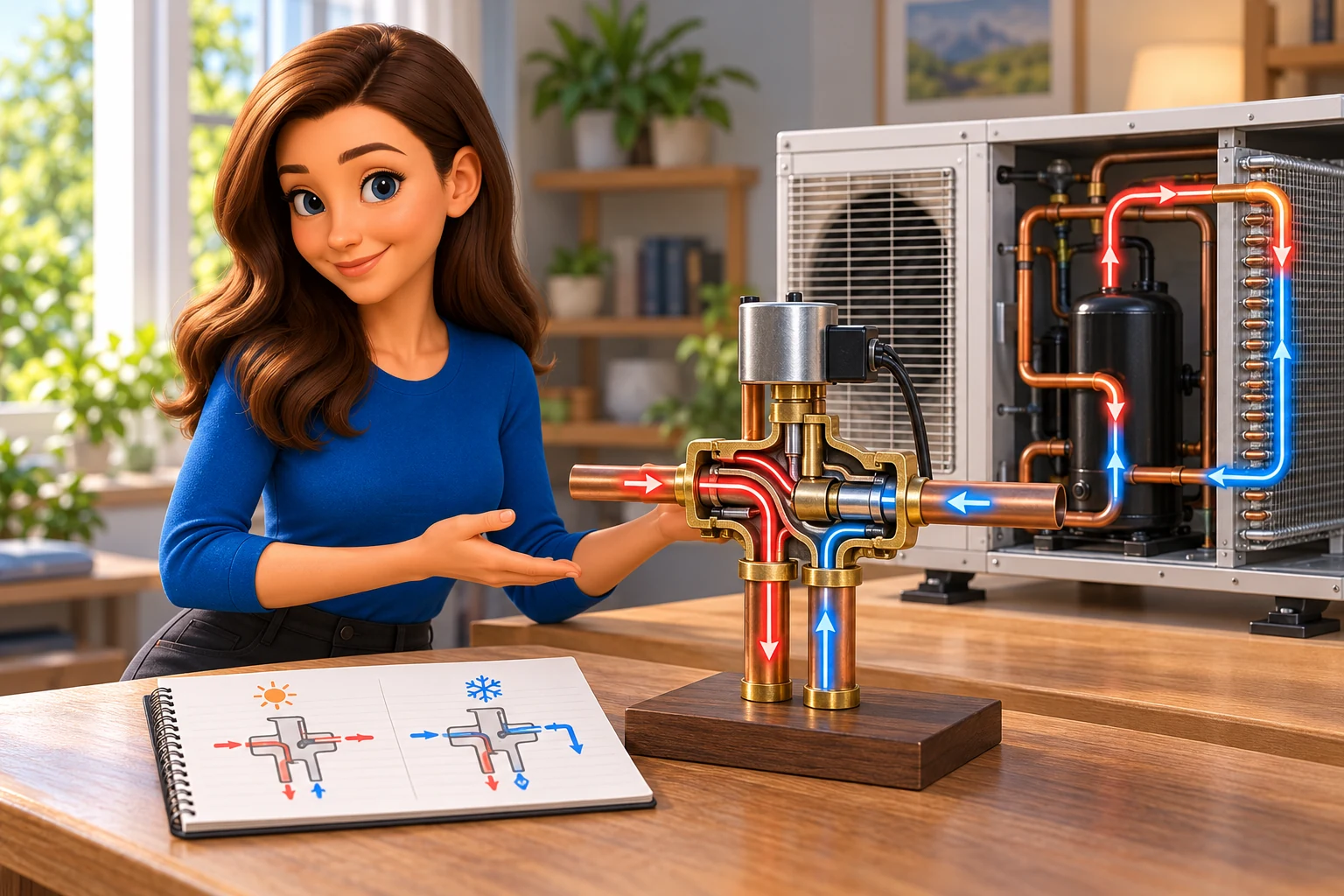
A heat-pump reversing valve changes the refrigerant's route so the indoor and outdoor coils swap their heating and cooling roles. In a common four-way design, a solenoid operates a small pilot valve. Refrigerant pressure then moves the main slide; the solenoid does not directly push that slide through its full travel.
How the valve changes the cycle
The compressor's discharge is routed to the coil that needs to release heat. The other coil returns lower-pressure vapor toward the compressor. In heating, the indoor coil releases heat; in cooling, the outdoor coil does so. Metering devices and check valves must also suit each flow direction.
The Danfoss reversing-valve explanation describes solenoid pilot operation and the pressure-driven main valve. The exact design, required pressure differential and control sequence depend on the equipment.
Is the valve energized in heating or cooling?
🛑 It depends on the manufacturer and model. A thermostat's O/B configuration must match the installed equipment. Do not copy another brand's setting or wire color as proof of the correct sequence.
Defrost may temporarily change refrigerant routing during winter operation. Sounds and air temperature can change during that sequence without proving a valve fault. Record whether the symptom occurs during normal heating, cooling, startup or defrost before requesting service.
Symptoms that need diagnosis
| Observation | Possible explanations to distinguish |
|---|---|
| Heating when cooling is selected, or the reverse | Thermostat configuration, command/wiring problem or valve operation |
| Weak heating or cooling | Airflow, charge, compressor, metering or internal valve leakage |
| Click without correct mode change | Pilot command may occur without full main-valve travel |
| Intermittent behavior | Controls, electrical connections, operating pressures or mechanical sticking |
A click or coil continuity does not establish that refrigerant is routed correctly. Nor does warm air alone identify the failed part. The technician needs the service sequence and appropriate temperature, pressure and electrical evidence.
Safe homeowner observations
🛑 Confirm the selected mode and setpoint, note the displayed fault, check the approved filter and observe whether accessible fans run from a safe distance. Do not reach through a grille, remove service panels, apply voltage to a coil or strike the valve.
🛑 For broader checks, use heat-pump troubleshooting. Stop operation for smoke, burning electrical smells, arcing or repeated breaker trips rather than continuing mode changes.
Testing and replacement
🛑 Electrical testing and refrigerant-circuit work belong to qualified personnel. Valve replacement can require refrigerant recovery, brazing, leak testing, evacuation and verified charging. EPA Section 608 requirements apply to covered refrigerant service; a voluntary training credential does not replace required certification or local licensing.
Ask a repair quote to identify the diagnosis, covered parts and labor, refrigerant work, warranty and commissioning checks. A national undated price range cannot establish a fair local quote for every system.
Conclusion
The reversing valve selects heat-flow direction through pilot control and pressure-driven movement. Record the operating symptoms and model information, then require evidence before approving valve replacement. Include the final operating checks in your HVAC commissioning records.
Continue with our heat-pump guides for related homeowner decisions.

Scott Harding
Scott is the main author of DIY Home Comfort. Learn more about the team and our approach on the About page.