Residential Plumbing Terms: A Homeowner’s A–Z Glossary
Understand residential plumbing terms, water-heater ratings, safety devices and U.S. code terminology with this practical homeowner glossary.
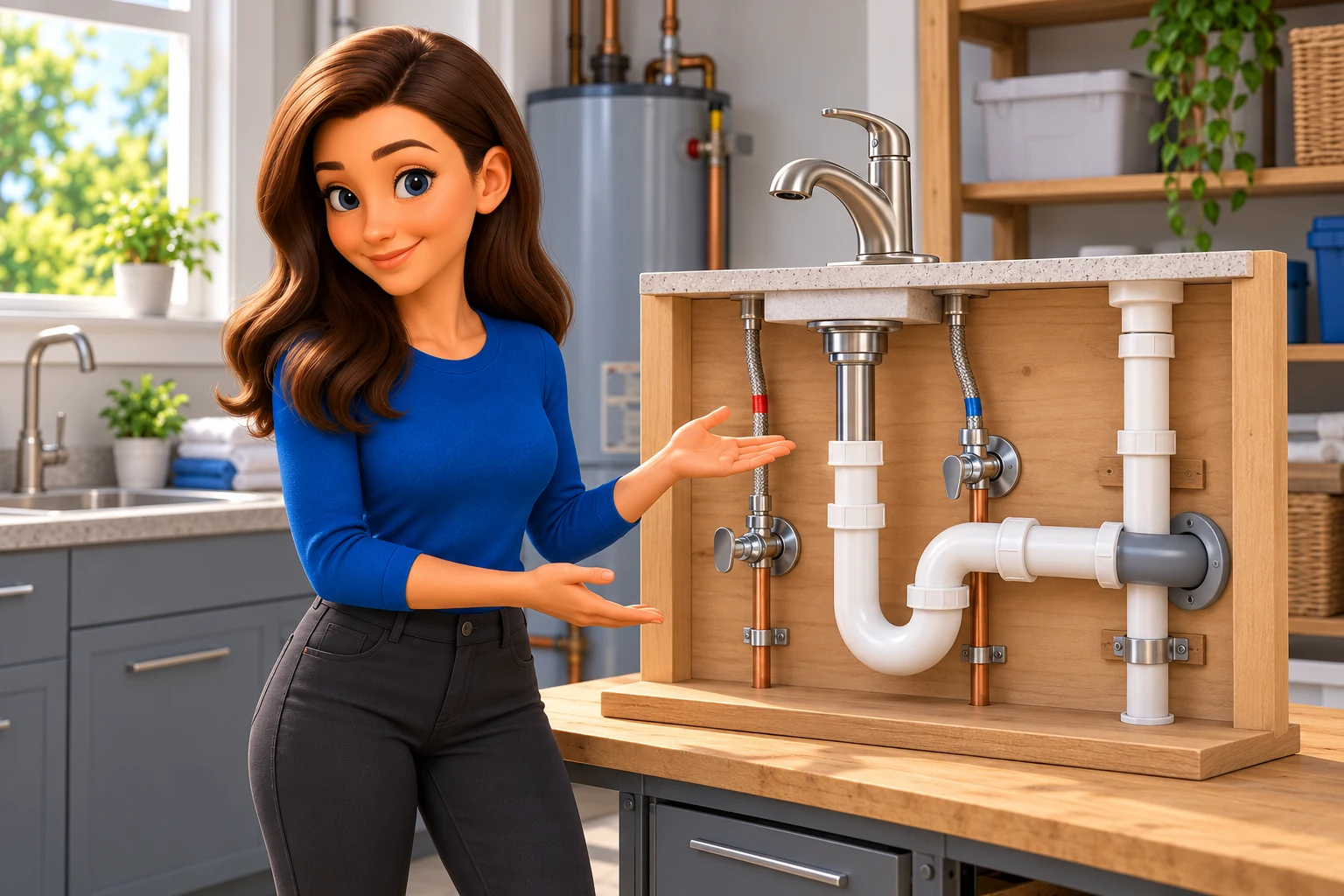
Use these residential plumbing terms to understand a service quote, describe a problem and recognize when a qualified professional is needed. The glossary covers U.S. terminology; an entry is a definition, not an installation instruction.
Code editions, local amendments, product listings and the installed manufacturer’s instructions determine what is permitted. For symptoms and next steps, visit our bathroom smells guide or hot-water troubleshooting guide.
A
- ABS (acrylonitrile-butadiene-styrene): Black plastic pipe used in drain, waste, and vent systems.
- Access panel: Removable cover that lets you reach shutoffs or hidden plumbing.
- Adaptor (adapter): Fitting that connects different types or sizes of pipes.
- Aerator: Faucet tip screen that mixes air with water to reduce splashing.
- Air admittance valve (AAV): A one-way device that admits air to a drainage system under specified conditions. Its use, location and access must comply with the adopted code and product instructions.
- Air chamber: A legacy capped pipe intended to cushion water hammer. It can become waterlogged and is not equivalent to a properly selected, approved water-hammer arrester.
- Air gap: Unobstructed vertical separation between a water-supply outlet and the receiving fixture’s flood-level rim. Required dimensions and applications depend on the adopted rules; it is not simply a gap above the drain opening.
- Angle stop: Small shutoff valve under sinks or toilets.
- ANSI: U.S. standards body for plumbing and mechanical products.
- Anti-siphon valve: Prevents reverse flow caused by siphoning.
- Appliance (plumbing): Water-using device like a dishwasher or washing machine.
- Arrester (water hammer arrester): Device that absorbs shock when water flow stops suddenly.
- ASTM: Organization that sets specifications for pipe and fittings.
- Auger (plumber’s snake): Flexible cable used to clear clogs.
See Sioux Chief’s water-hammer arrester guidance for the distinction between engineered arresters and waterlogged air chambers.
B
- Backflow: Reverse flow of water that can contaminate the supply.
- Backflow preventer: Device that keeps contaminated water from flowing into potable supply.
- Backwater valve: Valve that prevents sewage from backing into a home.
- Ball valve: Quarter-turn shutoff valve with a drilled ball inside.
- Ballcock (fill valve): Toilet tank valve that controls refill after flushing.
- Basin wrench: Tool for tightening nuts in hard-to-reach places under sinks.
- Bidet: Fixture or toilet attachment for personal cleansing.
- Black water: Wastewater from toilets containing human waste.
- Boiler: Appliance that heats water for heating systems.
- Booster pump: Pump that raises water pressure in low-pressure areas.
- Branch drain: Pipe that carries wastewater from fixtures to a larger drain.
- Brass: Copper-zinc alloy used in fittings and valves.
- BTU (British Thermal Unit): Unit of heat energy; used to rate heaters.
- Bushing: Fitting that reduces pipe size.
- Building drain: Horizontal pipe inside the building that carries waste to the sewer.
- Building sewer: Pipe that carries wastewater from the house to municipal sewer or septic system.
- Butterfly valve: Valve with a rotating disk to control flow.
- Bypass: Alternate piping route, such as around a water softener.
C
- Cast iron pipe: Heavy drain pipe used in older homes.
- Check valve: Valve that allows water to flow one way only.
- Cleanout: Access fitting for clearing blockages in drains.
- Closet auger: Auger tool designed to unclog toilets.
- Closet bend: Curved fitting connecting a toilet to the drain.
- Closet flange (toilet flange): Fitting that secures a toilet to the floor and drain pipe.
- Combination wye and 1/8 bend (combo): Fitting combining a wye and 45° elbow for smooth flow.
- Compression fitting: Fitting that seals with a nut and ferrule.
- Condensate drain: Pipe that carries condensation away from AC units or furnaces.
- Coupling: Short fitting that joins two pipes.
- Cross-connection: Connection between potable water and non-potable sources.
- Curb stop: Shutoff valve at the property line, usually owned by the water utility.
- CPVC (chlorinated polyvinyl chloride): Plastic pipe for hot and cold water.
D
- Diaphragm: Flexible membrane inside certain valves.
- Dip tube: Tube in a water heater that directs cold water to the bottom.
- Drain: Pipe that carries wastewater away from a fixture.
- Drain tile (French drain): Perforated pipe around a foundation that redirects groundwater.
- Drainage fixture unit (DFU): Unit used to size drain pipes.
- Drain cleaning: Process of removing clogs from drain lines.
- Drip leg (sediment trap): Pipe extension on gas lines that catches moisture or debris.
- Drop ear elbow: Elbow with mounting ears for securing to framing.
- Dual flush toilet: Toilet with two flush options to save water.
- DWV (drain, waste, vent): Piping system that removes wastewater and vents sewer gases.
E
- Ejector pump: Pump that moves sewage from a lower to a higher drain line.
- Elbow (ell): Fitting that changes pipe direction.
- Energy factor (EF): An older water-heater efficiency measure. Current comparisons generally use Uniform Energy Factor (UEF); the two ratings are not interchangeable.
- Escutcheon: Decorative plate covering a pipe hole.
- Expansion joint: Flexible connector allowing for thermal expansion.
- Expansion tank: Tank that absorbs pressure from expanding hot water.
A. O. Smith explains EF, UEF and usage-bin comparisons for water-heater ratings.
F
- Faucet: Fixture that controls water flow.
- Ferrule: Ring inside a compression fitting that seals a connection.
- Fixture: Any water-using or draining device (toilet, sink, shower).
- Fixture unit: Value used to size plumbing systems.
- Flapper: Rubber valve in a toilet tank that lifts to flush.
- Flexible connector: Flexible pipe that connects fixtures or appliances.
- Float valve: Valve that shuts off toilet tank water when full.
- Floor drain: Drain set in floors to remove standing water.
- Flow restrictor: Insert that limits water flow in fixtures.
- Flushometer: Valve that delivers a measured flush (common in commercial restrooms).
- Flux: Paste used in soldering copper pipes.
- Frost-proof hose bibb: Outdoor faucet designed to prevent freezing in cold climates.
G
- Galvanized pipe: Zinc-coated steel pipe, common in older homes.
- Garbage disposal: Under-sink appliance that grinds food waste.
- Gasket: Flexible seal between two surfaces.
- Gas cock: Shutoff valve for a gas appliance.
- Gate valve: Valve that raises/lowers a gate to stop flow.
- Globe valve: Valve that throttles water flow.
- Gravity flush toilet: Standard toilet that uses gravity to flush.
- Graywater: Certain non-toilet wastewater, commonly from baths, showers, bathroom sinks and laundry. Definitions and permitted reuse vary; kitchen wastewater is often excluded. Collected rainwater is a different source.
EPA’s water-reuse definitions distinguish graywater and collected rainwater; local reuse requirements still apply.
H
- Hard water: Water with high mineral content.
- Hose bibb (sillcock): Outdoor faucet for hose connection.
- Hot water heater (water heater): Appliance that heats water for home use.
- Hubless coupling: Rubber and clamp fitting used to connect pipes.
- Hydro jetting: High-pressure water method for clearing clogs.
- Hydronic heating: Heating system that uses circulating hot water.
I
- ID (inside diameter): Interior measurement of a pipe.
- Immersion heater: Electric element that directly heats water.
- Indirect water heater: Tank heated by a boiler.
- Interceptor: Device that traps grease, sand, or oil.
- Insulation (pipe insulation): Material that slows heat transfer. It can reduce heat loss or delay freezing but does not guarantee freeze protection.
- Instantaneous water heater (tankless): Heats water on demand without storage.
- Isolation valve: Shutoff valve for a fixture or section of piping.
J
- J-bend: Curved part of a trap that holds water.
- J-hook: Pipe hanger shaped like a J.
- Jet pump: Pump that lifts water in shallow wells.
K
- Kitchen sink strainer: Basket fitting covering a sink drain opening.
- Kitec piping: A brand of composite plastic-and-aluminum piping. Identify the actual product markings and have a qualified plumber assess its condition; appearance alone does not establish a failure or a required repair.
L
- Lavatory: Bathroom sink.
- Lead: A toxic metal that can be present in older plumbing. Federal rules restrict lead in covered drinking-water products, but “lead-free” does not mean zero lead or that all existing lead plumbing has disappeared.
- Leak detection: Process of finding hidden leaks.
- Liquid waste: Wastewater without solids.
- Loop vent: Vent pipe loop connected to the main vent.
- Laundry box: Recessed wall box for washer shutoffs and drain.
- Laundry tub (utility sink): Deep sink for laundry and cleaning.
EPA explains the scope of federal “lead-free” plumbing requirements and their limits.
M
- Main: Primary water or drain pipe in a system.
- Manifold: Hub that distributes water to branches.
- Mixing valve: Valve that blends hot and cold water.
- Moen cartridge: Cartridge controlling flow/temperature in Moen faucets.
- Mold: Fungus that grows in damp plumbing areas.
- Municipal water supply: Treated water provided by a utility.
N
- Neutralizer: Device that reduces acidity in drains.
- New plumbing installation: Installation of new plumbing lines and fixtures.
- Nipple: Short threaded pipe.
- No-hub coupling: Flexible coupling with clamps for cast iron pipes.
O
- Offset: Change in pipe direction.
- O-ring: Round rubber seal.
- OD (outside diameter): Exterior measurement of pipe width.
- Overflow tube: Tube in a toilet tank preventing overfilling.
P
- P-trap: Curved pipe under sinks that blocks sewer gases.
- PEX (cross-linked polyethylene): Flexible plastic piping for supply.
- Pipe dope (thread sealant): Paste for sealing threaded joints.
- Pipe hanger: Support for holding pipes in place.
- Pitch (slope): Angle that ensures drains flow properly.
- Plumber’s putty: Sealing compound for fixtures.
- Plumber’s tape (PTFE tape): Tape for sealing threaded connections.
- Plumbing snake: Flexible tool for unclogging drains.
- Polybutylene (Poly-B): Plastic pipe used in older homes, prone to leaks.
- Potable water: Safe drinking water.
- Pressure-balancing valve: A valve that compensates for changes in relative hot and cold supply pressure. It does not provide the same temperature control as a thermostatic valve or correct every temperature change.
- Pressure-reducing valve (PRV): Device that lowers incoming water pressure.
- Pump: Device that moves water in wells, sumps, or systems.
- P-trap primer: Device that adds water to traps to keep seals from drying out.
Q
- Quarter-turn valve: Valve that opens or closes with a 90° turn.
- Quick-connect fitting: Push-to-connect fitting for easy installation.
R
- Recirculation pump: A pump in a designed hot-water loop that can reduce waiting at fixtures. Controls, pipe layout and heat loss affect performance and energy use.
- Reducer: Fitting that connects different pipe sizes.
- Relief valve: Safety valve that releases excess pressure or heat.
- Re-piping: Replacing old plumbing with new pipes.
- Retaining nut: Nut that secures faucet stems or valves.
- Riser: Vertical pipe that carries water upward.
- Rooter service: Professional drain clearing, often tree root removal.
- Rough-in: Initial installation of pipes before finishes.
- Roof vent termination: The point where a vent extends to open air above the roof. “Vent stack” and “stack vent” describe different parts of the vent system, not interchangeable names for every roof pipe.
- Sewer lateral: Pipe that connects a home’s plumbing to the municipal sewer line.
S
- Sanitary tee: T-shaped fitting directing waste into a drain.
- Septic tank: Underground tank treating sewage for homes not on municipal sewer.
- Septic field (leach field): Underground system dispersing treated effluent into soil.
- Service call: Standard plumber visit fee.
- Service line: Pipe carrying water from the main to a house.
- Shutoff valve: Valve that stops water flow to fixtures.
- Slope (fall): Angle that ensures wastewater flows properly.
- Soil stack: Vertical pipe carrying waste from toilets.
- Stop-and-waste valve: Outdoor shutoff valve with a drain port.
- Sump pump: Pump that removes collected groundwater.
- Sweat fitting: Copper fitting joined with solder.
- Sediment trap: Pipe section that collects debris in gas lines.
- Stack vent: The extension of a soil or waste stack above the highest horizontal drain connection. It is distinct from a separate vent stack.
T
- Tailpiece: Pipe between a fixture and its trap.
- Tankless water heater: On-demand water heating appliance.
- Tap: Another term for faucet.
- Temperature and pressure relief valve (T&P valve): Safety device on water heaters.
- Thermostatic mixing valve (TMV): A valve that responds to temperature to mix hot and cold water. Safe delivery depends on the correct listed device, installation, adjustment and maintenance; it is not an automatic safety guarantee.
- Trap: Curved pipe that holds water to block gases.
- Trap arm: Pipe section between a trap and vent.
- Trap primer: Device that adds water to traps automatically.
- Trap seal: Water in a trap that blocks sewer gases.
U
- Union: Fitting that connects two pipes but can be disconnected.
- Urinal: Wall-mounted fixture for liquid waste.
- Utility sink (laundry tub): Deep sink for laundry or cleaning.
- Uniform Energy Factor (UEF): A standardized water-heater efficiency rating. Compare ratings within the appropriate usage bin; UEF alone does not predict a household bill.
V
- Valve: Device that controls water flow.
- Vent boot: Flashing around a roof vent pipe.
- 🛑 Vent cap or terminal: A model- and application-specific termination component. Do not add a cap that obstructs a plumbing vent; use only an arrangement permitted by the applicable design and code.
- Vent pipe: Piping that provides air circulation and pressure equalization in a drainage system and helps protect trap seals.
- Vent stack: A vertical vent pipe installed primarily for air circulation through the drainage system. It is distinct from the stack vent above the highest drain connection.
- Vertical lift pump: Pump that moves water from low to high levels.
The ICC venting guide illustrates model-code terminology. It does not establish which edition or amendments your jurisdiction has adopted.
W
- Waste arm: Horizontal pipe from a trap to a drain.
- Washer: Flat ring that seals faucets or valves.
- Water hammer: Loud banging from sudden stoppage of flow.
- Water main: Large utility pipe supplying water to homes.
- Water meter: Device measuring water use.
- Water softener: Appliance that removes hardness minerals.
- Wax ring: Seal between a toilet base and flange.
Y
- Y-branch (wye): Fitting that joins a branch at a 45° angle.
- Yoke vent: Vent that connects a soil stack to a vent stack.
Z
- Zone valve: Valve that controls flow in heating system zones.
- Zoning (plumbing/heating): Dividing a system into independently controlled sections.
Standards and codes in the U.S.
- International Plumbing Code (IPC): A model code published by the International Code Council (ICC).
- Uniform Plumbing Code (UPC): A model code developed by IAPMO.
- International Residential Code (IRC): An ICC model code for qualifying residential buildings, including plumbing provisions.
- National Standard Plumbing Code (NSPC): A model plumbing code owned by IAPMO following the 2017 transfer from PHCC. See IAPMO’s NSPC information.
- State plumbing rules: Requirements can adopt a model code, a specific edition, amendments or a separate state framework. Do not assume every state uses only IPC or UPC.
- Local amendments: Applicable local changes or requirements. Confirm the controlling edition, amendments, permits and inspection process with the authority having jurisdiction.
Associations and trade bodies in the U.S.
- Plumbing-Heating-Cooling Contractors Association (PHCC): A national contractor association.
- American Society of Plumbing Engineers (ASPE): A professional organization for plumbing engineers and designers.
- International Association of Plumbing and Mechanical Officials (IAPMO): A code and standards organization associated with the UPC and NSPC.
- ASSE International: An organization that develops plumbing-related standards and certification programs.
- International Code Council (ICC): Publisher of the IPC and IRC.
- American Water Works Association (AWWA): An organization focused on water supply and water quality.
- National Association of Home Builders (NAHB): A home-building industry association.
- United Association (UA): A union representing plumbing, pipefitting and related skilled trades.
- Licensing boards and code authorities: Responsibilities vary by state and locality. The licensing authority is not necessarily the same agency that issues a local permit or inspects work.
Conclusion
Use this glossary to ask clearer questions and understand the components in a proposed repair. Definitions do not replace model instructions, a diagnosis or locally adopted requirements. Continue with our plumbing guides for practical troubleshooting and planning.

Scott Harding
Scott is the main author of DIY Home Comfort. Learn more about the team and our approach on the About page.