Why Does My Hot Water Run Out So Fast? A Diagnostic Guide
Compare demand, recovery, fixture and heater symptoms before changing settings. Learn useful homeowner checks and when internal service is needed.
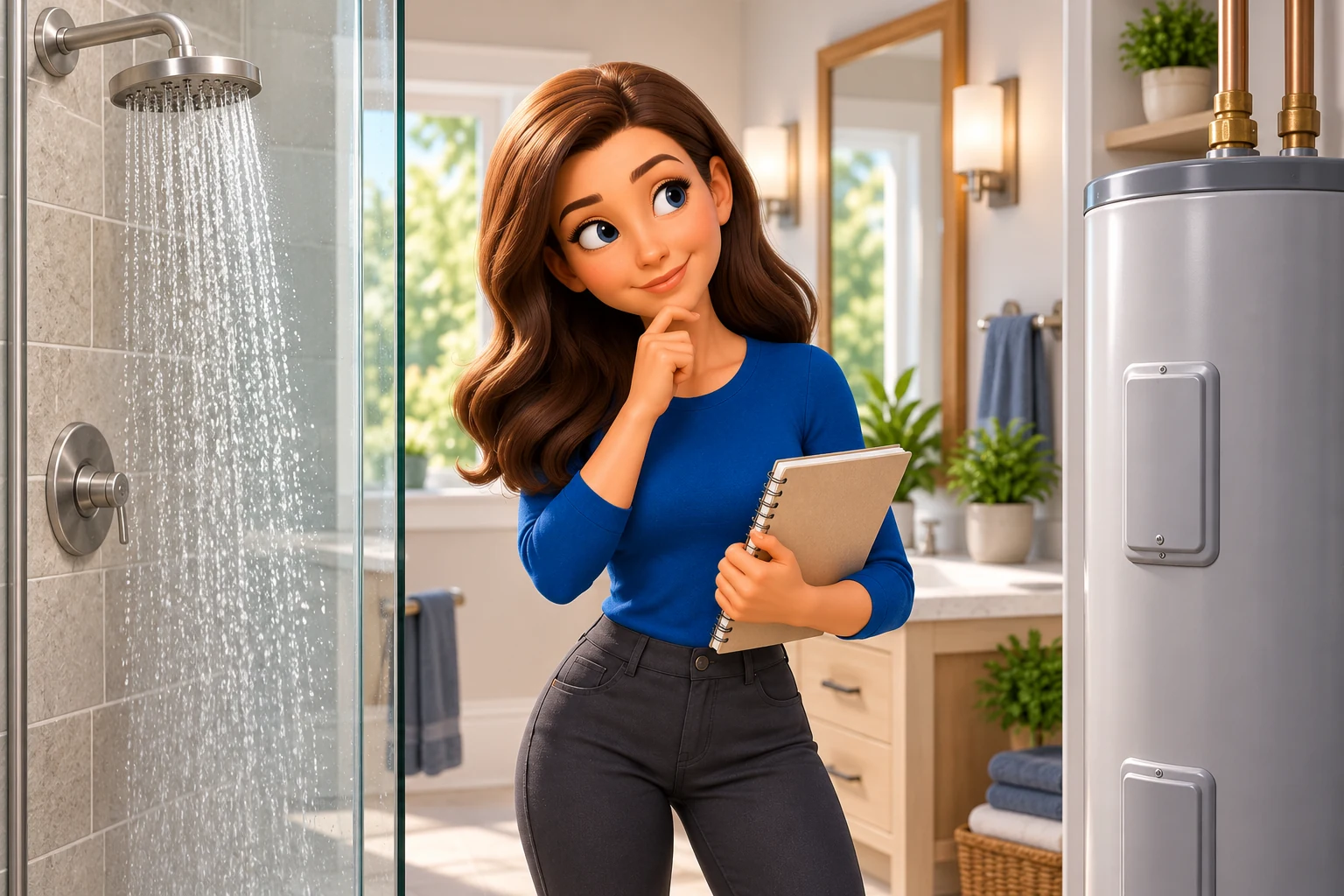
If your hot water runs out quickly, first pin down the pattern. Does a storage tank start hot and then run cold, does the water never get hot, is there a delay at one tap, or is a tankless unit reaching its flow limit? Note the heater type, timing and affected fixtures to guide the investigation.
🛑 Stop routine troubleshooting for active leakage, damaged equipment or suspected gas leakage. Leave a suspected gas leak, avoid ignition sources and call emergency assistance and your utility from a safe location. Do not open electrical covers, repeatedly reset protection devices or bypass safety controls to restore hot water.
Sort the symptom
| Pattern | Possible investigation | Safe next step |
|---|---|---|
| Storage heater starts hot, then cools during overlapping use | Peak demand, recovery, mode or available storage. | Record timing and compare with the installed model. |
| Previously adequate service changes suddenly | A fault, leak, mixing problem or changed control condition. | Record alerts and arrange diagnosis. |
| Only one shower or tap has the problem | Fixture cartridge, local restriction or mixing issue. | Compare other fixtures without dismantling valves. |
| Tankless performance drops with several outlets | Flow demand versus capacity at the required temperature rise. | Record simultaneous uses and model details. |
| A distant tap eventually gets hot and stays hot | Distribution delay or recirculation behavior. | Distinguish the wait from depletion at the heater. |
Make a short observation log
- Identify the heater. Note model, fuel/technology, approximate age, operating mode and visible alerts.
- Describe the pattern. Record which fixtures are affected and whether the water starts hot.
- Record overlapping demand. Include baths, consecutive showers, laundry, dishwashing and guests.
- 🛑 Look for accessible leakage. Observe from a dry safe place; do not remove covers.
- Compare with normal behavior. Tell the technician what changed and when.
This information helps a professional choose an investigation instead of replacing parts from a list of possible causes.
Check storage and recovery
A storage heater has a finite volume of heated water and a particular recovery capability. Nominal tank gallons alone do not establish performance through a busy hour. Heat-pump, resistance and gas operation can replenish hot water differently.
Use our water-heater sizing guide to compare peak demand, first-hour rating and recovery. A changed household pattern may need a different operating plan or equipment selection, but a new shortage in an unchanged routine deserves a fault check first.
A. O. Smith's Voltex sizing example demonstrates that similar nominal tank sizes across different technologies need not deliver equivalent first-hour hot water. Its product comparison is not a universal sizing rule.
Keep internal faults as professional diagnoses
Depending on the heater, a failed element, damaged dip tube, thermostat/control fault, scale or sediment, burner problem, safety shutdown or leak can affect delivery. These are possibilities, not instructions to open the appliance and test each part.
- 🛑 Leave electrical testing, element/thermostat replacement and internal panels to qualified personnel.
- 🛑 Leave gas, combustion, venting and safety-control work to qualified service.
- Have dip-tube, anode, valve and pressurized plumbing work assessed before dismantling.
- 🛑 Do not repeatedly reset a tripping breaker or temperature limit.
A. O. Smith's maintenance guidance explains shutdown, cooling, drainage and restoration precautions. Follow the actual model rather than starting a generic annual flush as a diagnostic experiment.
Separate mixing, pressure and temperature
A faulty mixing valve, fixture cartridge or plumbing crossover can change delivered temperature even when the heater is working. Pressure complaints also need the supply, restrictions and heater type distinguished; a pressure regulator is not a universal cure for running out of stored hot water.
🛑 Have a plumber investigate unexpected hot/cold mixing or persistent pressure changes. Do not raise the storage temperature to mask an undersized or faulty system. Storage temperature and the temperature delivered at a fixture are separate safety decisions.
The settings guide covers model modes and the health/scald trade-off. Pipe insulation can reduce distribution heat loss, but it does not by itself restore lost heater capacity or repair an internal fault.
Understand tankless limits
A tankless heater can keep producing hot water only within its available heating capacity, flow and operating conditions. Colder inlet water requires a greater temperature rise; simultaneous showers can exceed the selected unit's capacity. Water still takes time to travel through pipes.
Do not buy tankless equipment on a promise of instant, unlimited service to every outlet. Compare the required simultaneous flow and temperature rise with the exact product data. Our heat-pump versus tankless comparison explains the selection questions.
Choose maintenance, repair or replacement
Ask what evidence supports the diagnosis, what maintenance is due under the manual and what a repair includes. Age can inform replacement planning, but an age range alone does not prove that a heater is worn out or that replacement will fix a delivery problem.
- Compare the diagnosed fault and tank/equipment condition.
- Confirm that replacement capacity and installation scope suit the household.
- Check repair and product warranty terms without treating them as lifespan guarantees.
- Have commissioning demonstrate normal delivery, safe controls and leak-free operation.
Conclusion
A useful hot-water investigation starts with the symptom and demand pattern. Separate capacity, recovery, distribution and mixing before considering parts. Keep internal service qualified and select any replacement from demonstrated household needs.
Explore more Water Heaters guides for maintenance and equipment planning.

Scott Harding
Scott is the main author of DIY Home Comfort. Learn more about the team and our approach on the About page.