Water Heater Troubleshooting by Symptom
Match cold showers, weak hot water flow, sudden temperature changes or a puddle to the next safe check. Learn what to report when you call for service.
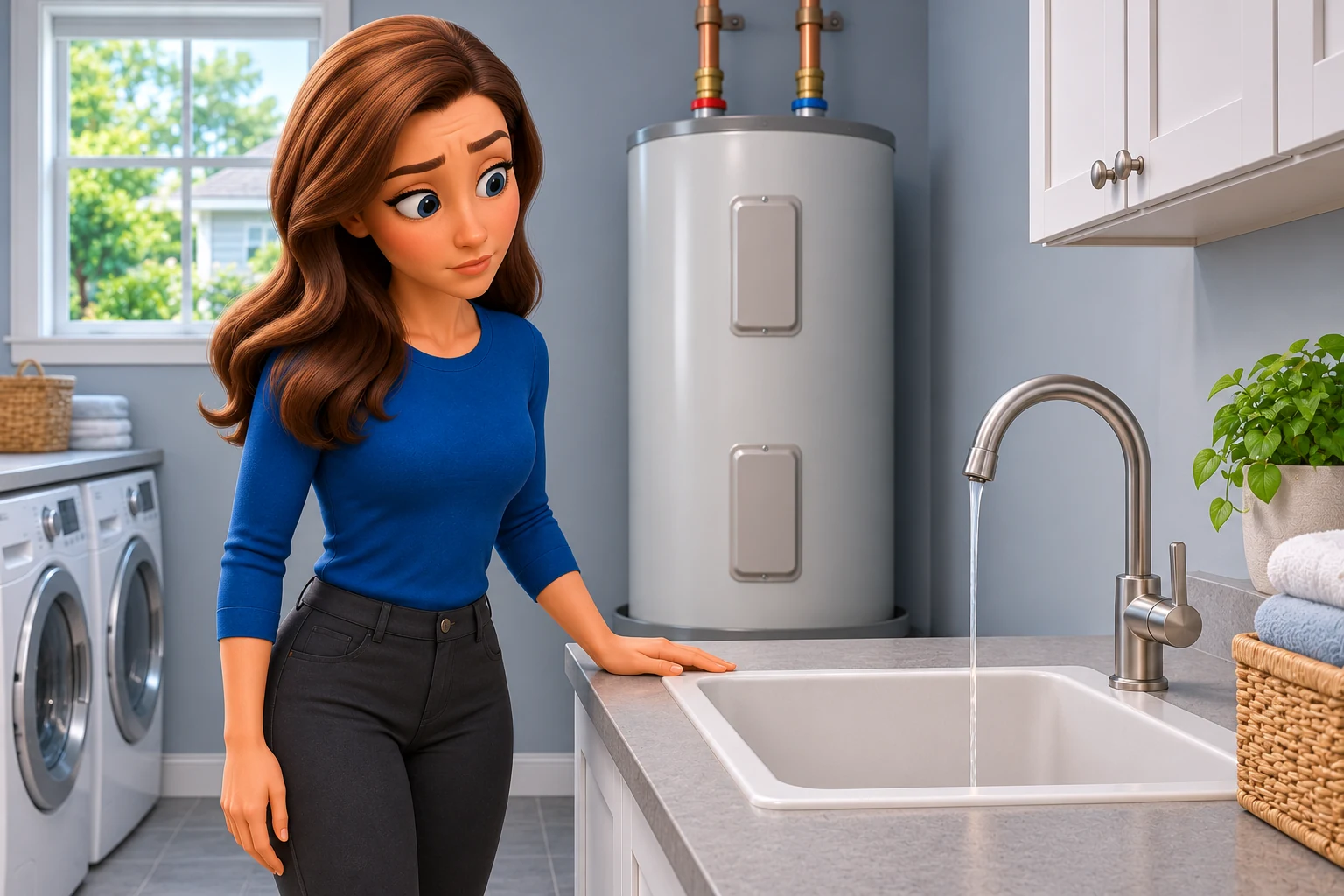
Start water heater troubleshooting at the tap that surprised you. Did the water start hot and turn cold, stay cold the whole time, or barely flow at all? Compare it with a second fixture that usually gets hot. A working bathroom sink beside a cold shower gives you a different place to start than two cold sinks on opposite sides of the house.
🛑 If you smell gas or a carbon monoxide alarm sounds, get everyone outside immediately. Leave switches and appliances alone. Call 911 from a safe location away from the building and wait for responders to clear it. See the U.S. Consumer Product Safety Commission’s emergency guidance.
Which symptom best describes what you see?
| What you notice | What to check next |
|---|---|
| Normal flow, cold water everywhere | Note the last time any tap got hot. If the whole house is affected, follow the checks for a water heater that isn’t heating. |
| Starts hot, then runs cold | For a storage tank, note what used hot water just beforehand and whether heat returns after a quiet stretch. Use the hot water runout guide to compare demand and recovery. |
| Only the shower stays cool | Try the bathroom sink. If it gets hot, tell a plumber about the shower and its mixing valve, the part that blends hot and cold water. Leave the heater setting alone. |
| A distant sink takes longer to get hot | If it eventually gets and stays hot, compare its usual wait with that of a closer sink. Water already sitting in the pipe has to reach the tap first. Mention a sudden change from the usual wait. |
| Little or no flow on the hot side | Compare hot and cold flow at two sinks. If both sides are weak throughout the home, check for a building or utility water interruption. If only hot flow is weak at several taps, report that distinction to a plumber. |
| Suddenly much hotter than usual | 🛑 Unexpectedly hot water can scald. Stop using the affected fixture, keep others away and arrange prompt service. Tell the technician which outlets were affected without testing by hand. |
What if there’s a puddle, a noise or an unusual smell?
🛑 If water is reaching electrical equipment or you would have to stand in water to reach the heater, stay clear. Call for urgent professional help from a dry location. Keep clear of hot water coming from a discharge pipe and leave the outlet open.
From a dry spot, note where water first appears. A puddle under the tank can collect water from a connection above it. If the first drip is at the low drain fitting, see what to check around a leaking drain valve. Water coming from the separate safety relief pipe warrants a plumber’s assessment.
Timing can help trace a drip. Water expands as it heats. If it has nowhere to expand in a closed plumbing system, pressure can rise while the tank reheats. Tell the plumber if you saw drips from the relief pipe just after a long shower, or if water keeps flowing even when nobody has used hot water for hours. The plumber can check the supply pressure, the relief valve and any expansion tank. Whirlpool explains the connection between reheating, pressure and drips.
If you have a heat-pump water heater, moisture from the air also drains away through a condensate line. If water is collecting on the floor, tell the plumber where you see it in relation to that line, the relief pipe and the base of the tank.
Does the noise come from the tank or the pipes?
Try describing the timing without naming the cause. “One knock in the wall when the washing machine stops filling” points a plumber toward the pipes. “Popping at the base of the tank as it reheats after showers” gives them a reason to check for mineral buildup. If you already hear the sound from a dry, safe spot, a short recording can be more useful than trying to imitate it on the phone.
Is the odor in the water or in the room?
If you suspect fuel gas in the room, follow the emergency steps above immediately. If you’ve already noticed an odor confined to hot tap water at several fixtures, tell the plumber whether the home has a well or a public water supply. Water chemistry and the tank’s anode, a rod that helps protect the tank from corrosion, can contribute to a sulfur-like odor. A plumber can assess the water and the rod together. If the cold water also smells different, contact the public water supplier or, for a private well, your local health department for testing advice.
Does the symptom change with how much water you use?
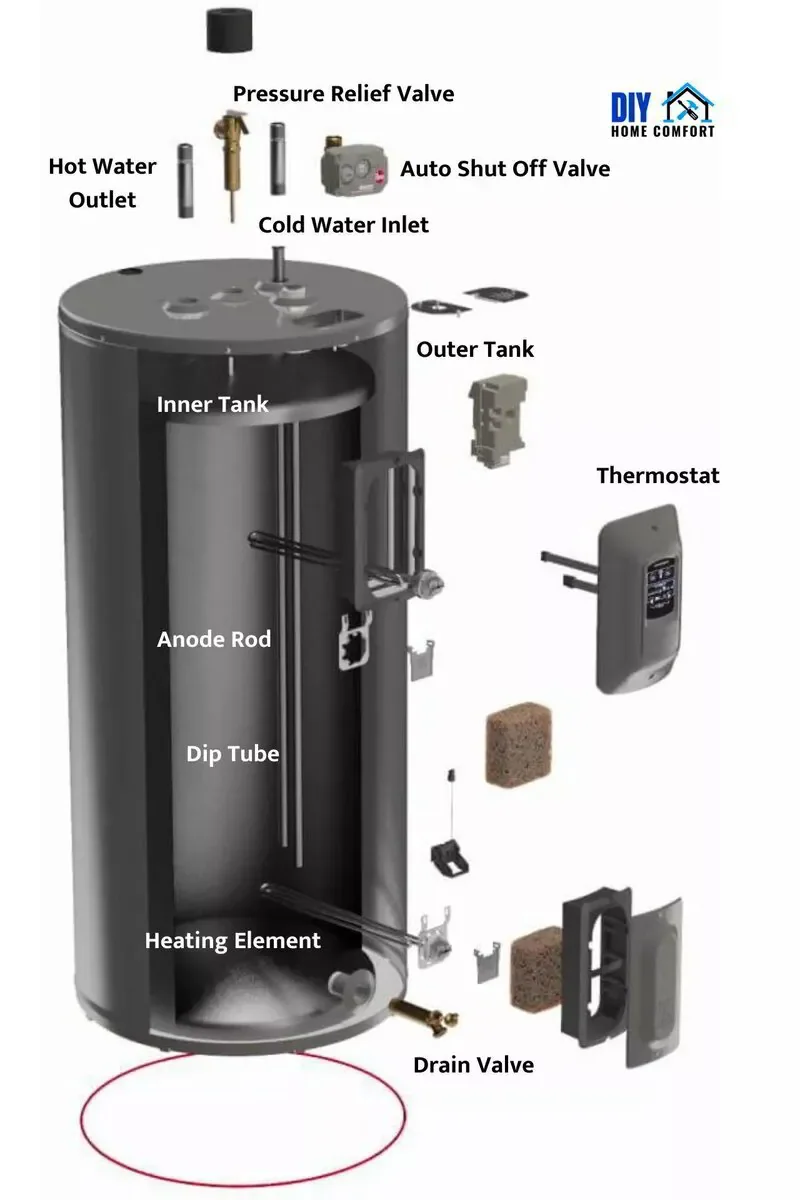
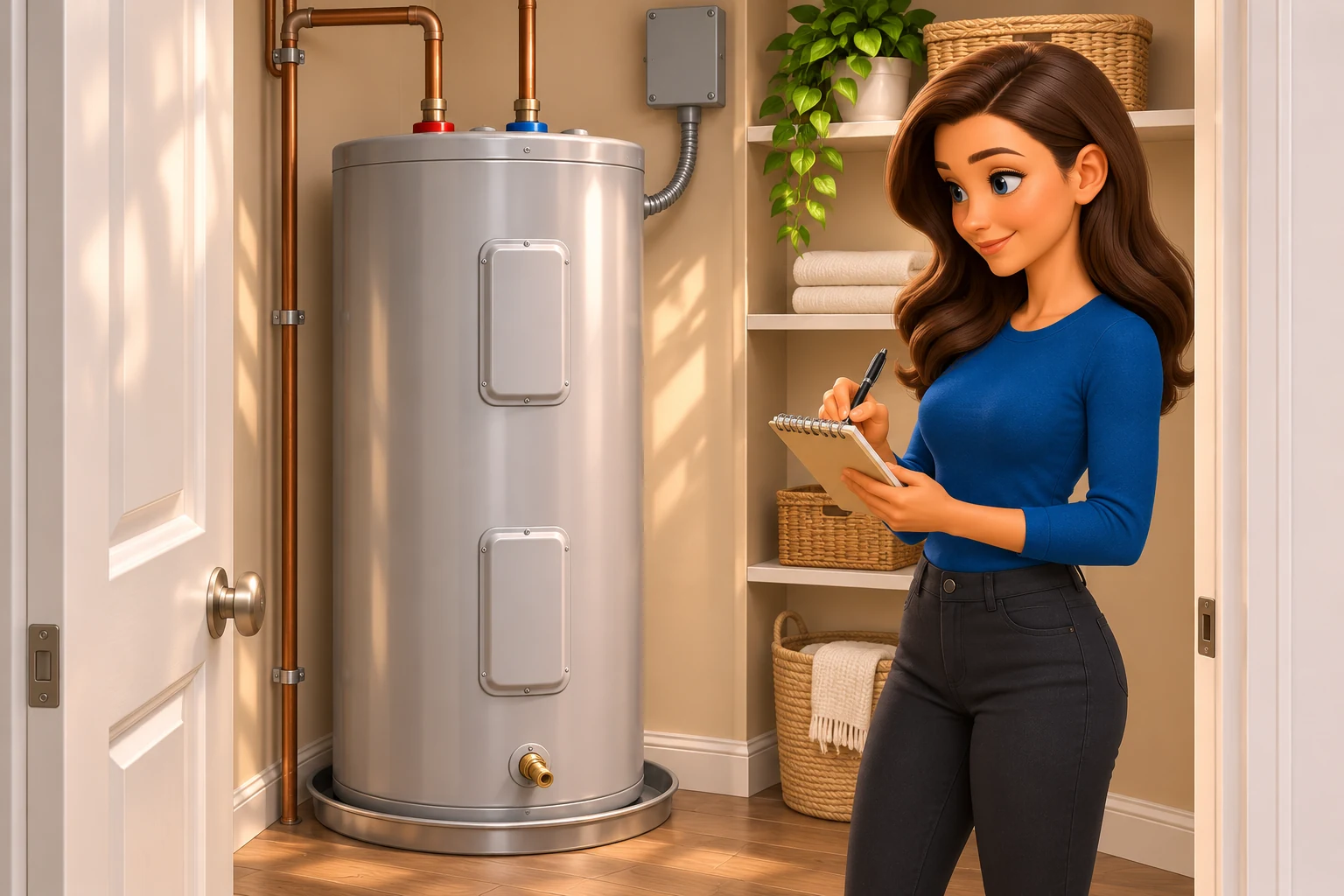
The storage tank in the illustration holds hot water ready for the next draw. When two showers use it close together, the second person may get less hot water. If your first shower now runs cold halfway through even after a quiet night, tell the technician how that differs from your normal morning.
A tankless unit starts heating when enough water flows through it. A sink running at a trickle can behave differently from the shower, and opening a second fixture can change the demand. Note which taps were in use and copy any display code before it disappears. Rinnai explains how low-flow fixtures affect its tankless units.
If you need service, is this a repair or a replacement?
Before comparing prices, ask the technician to identify the part that failed. For a puddle, a useful question is “Did you trace the water to a fitting, the relief pipe or the tank wall?” A leaking connection can often be repaired on its own. A confirmed leak through the storage tank itself usually leads to a replacement discussion. Ask to see where the water first appeared, especially if the estimate calls for a whole new heater.
If the complaint is short showers, ask how the technician ruled out a change in hot water use. A damaged dip tube, the pipe that carries incoming cold water toward the bottom of many tanks, can cause water at the tap to cool early even while the heater makes heat. An estimate should explain why the proposed work addresses the symptom you reported.
Have the model number, serial number and installation date handy when you call about a warranty. Ask what the manufacturer covers for the tank or failed part and what you would pay for labor. If the heater is in a rental or a shared mechanical room, send the symptom notes to building maintenance so they can arrange the inspection.
Conclusion
When you call for help, describe the fixture, the flow and when the symptom starts. “The upstairs shower cools when the kitchen tap opens” gives a plumber more to work with than “the heater is broken.” Keep the model number, manual and last service date together so you can find the right maintenance schedule. For more help with a specific system or symptom, explore our water heater guides.

Scott Harding
Scott is the main author of DIY Home Comfort. Learn more about the team and our approach on the About page.