Best Location for an AC Outdoor Unit: Planning Checklist
Choose an outdoor AC location using manufacturer clearances, airflow, service access, drainage, noise and site conditions rather than one universal distance.
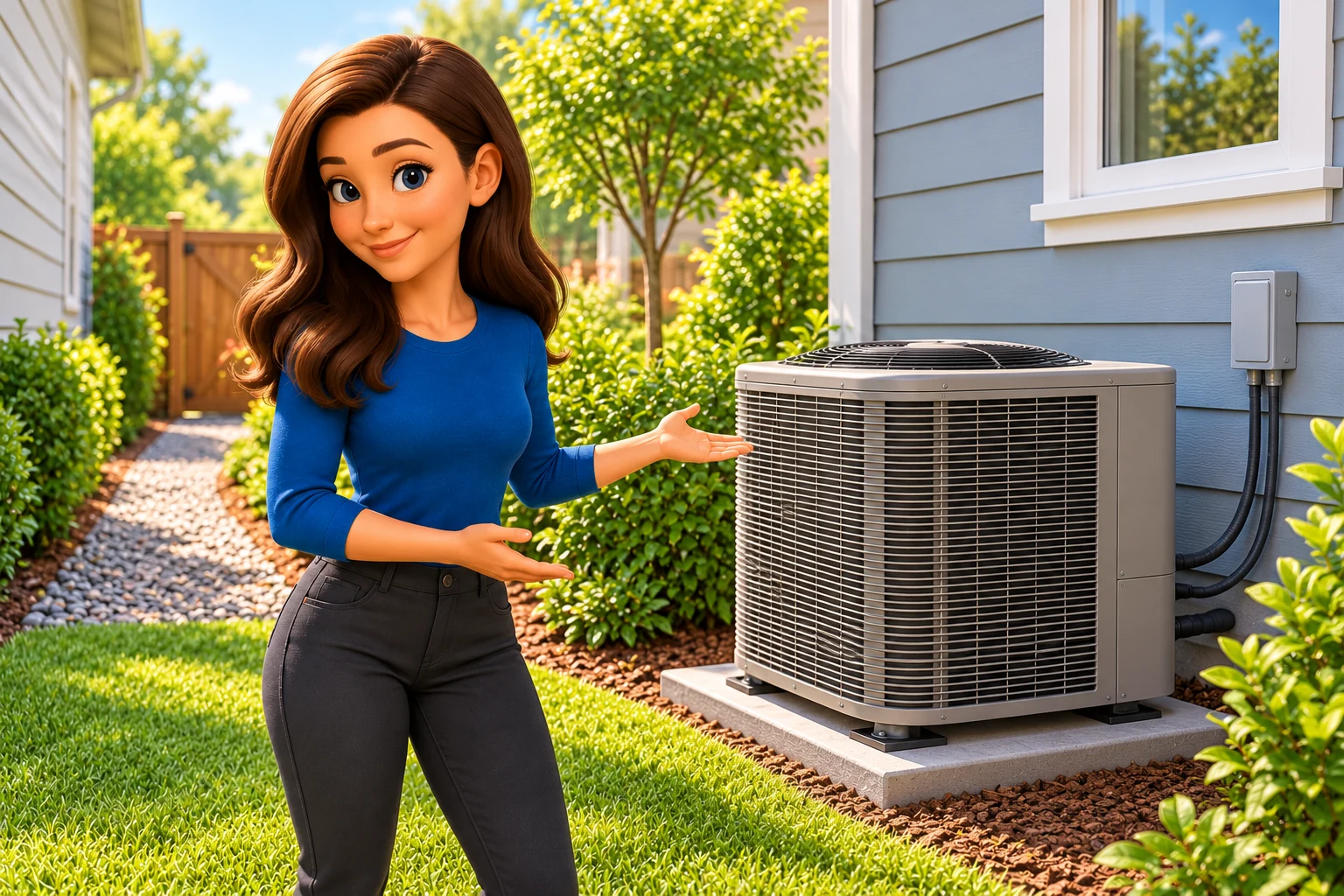
Choosing the best location for an AC outdoor unit starts with the exact model and a look at your property. Use this checklist to compare possible locations before approving the installation.
What is the best location for an AC outdoor unit?
The best location for an AC outdoor unit is a stable, well-drained spot with clear airflow and enough room for servicing. Follow the exact model's installation manual for spacing from walls, fences, plants and overhead structures. Consider roof runoff, noise and the route to the indoor unit. No compass direction or clearance distance works for every model.
Start with the exact installation instructions
Different models discharge air in different directions and have different requirements around walls, fences, overhangs and other units. A stated clearance for one side of one unit is not permission to use it everywhere. Ask the installer to mark the required intake, discharge and service spaces on the site plan.
The PNNL installation and commissioning guide treats location, airflow and verified installation as connected decisions. Use the equipment's actual manual and applicable local requirements for dimensions.
Evaluate the site
| Site condition | What the plan should resolve |
|---|---|
| Air movement | 🛑 Avoid hot discharge air recirculating into the intake, including between nearby units |
| Support | Stable, suitable mounting, vibration control and protection from settlement |
| Water and weather | Roof runoff, flooding, snow or debris that could obstruct or damage equipment |
| Access | Safe service approach and the required working space |
| People and neighbors | Sound near bedrooms, patios, walkways and property boundaries |
| Connections | Allowed refrigerant-line length/lift, electrical supply and protected routing |
Keep the unit away from avoidable contamination or damage where practical. A coastal or corrosive environment may require manufacturer-specific protection and maintenance, rather than simply selecting another side of the house.
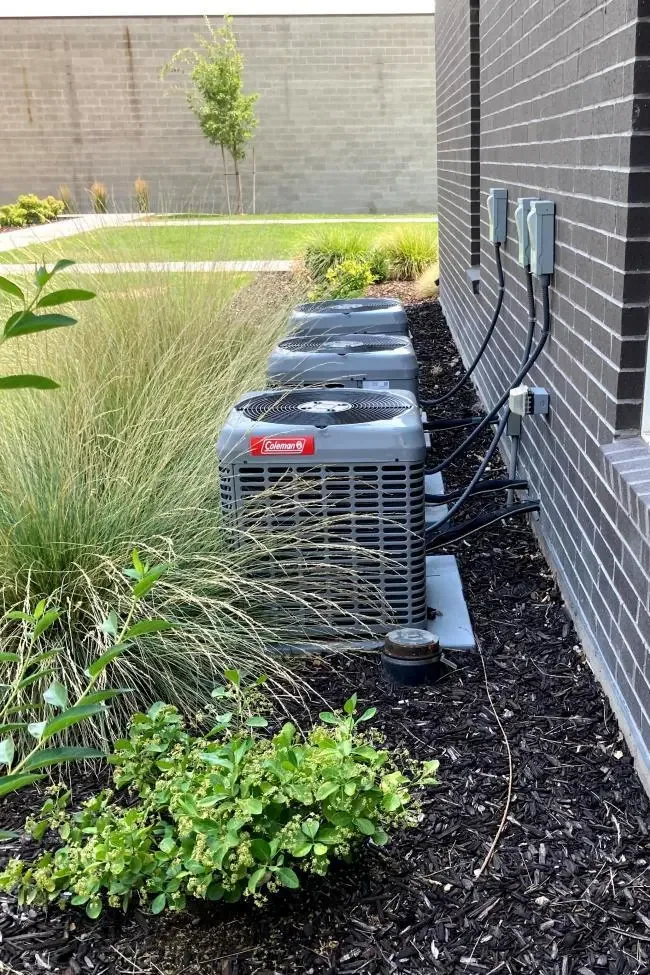
Shade is not a reason to restrict airflow
🛑 Do not build a close enclosure, cover the discharge or plant dense shrubs against the coil to create shade. An overhead structure or screen must preserve every required clearance and service space. A north or east location is not automatically more efficient than a different site with good airflow.
Consider sun exposure alongside routing, drainage, noise and access. The installer should compare feasible locations as a whole rather than promise a fixed saving from shade.
Refrigerant lines and electrical work
🛑 Line sizing, permitted length and elevation, oil return, charge adjustments and insulation depend on the equipment. Shortening the route is useful only when the complete installation remains compliant and serviceable. Do not move a unit or alter lines as a homeowner landscaping task.
🛑 Electrical supply, disconnect location, grounding and working clearances require the applicable design and qualified installation. The outdoor unit's control being off does not establish that it is safe to open.
Before approving the location
Ask for the model numbers, manual page showing the relevant clearances, mounting detail and proposed service route. Confirm drainage and any local sound or setback constraints before construction. Photograph the finished installation and retain startup results in the commissioning checklist.
For a reversible system, winter frost, snow and defrost water add requirements; use where to install a heat pump. For room-by-room comfort or persistent heat gain, consult the cooling-load guide.
Conclusion
Choose an outdoor AC location by the exact manual and the whole site. Clear airflow, drainage, suitable support and service access are better decision criteria than a generic distance, a compass direction or an unsupported installation anecdote.
Continue with our HVAC guides for related homeowner decisions.

Scott Harding
Scott is the main author of DIY Home Comfort. Learn more about the team and our approach on the About page.