Smart Heat Pump Tips for Comfort and Efficient Operation
Practical heat-pump tips on thermostat modes, scheduling, airflow, defrost and monitoring, with clear limits for owner maintenance.
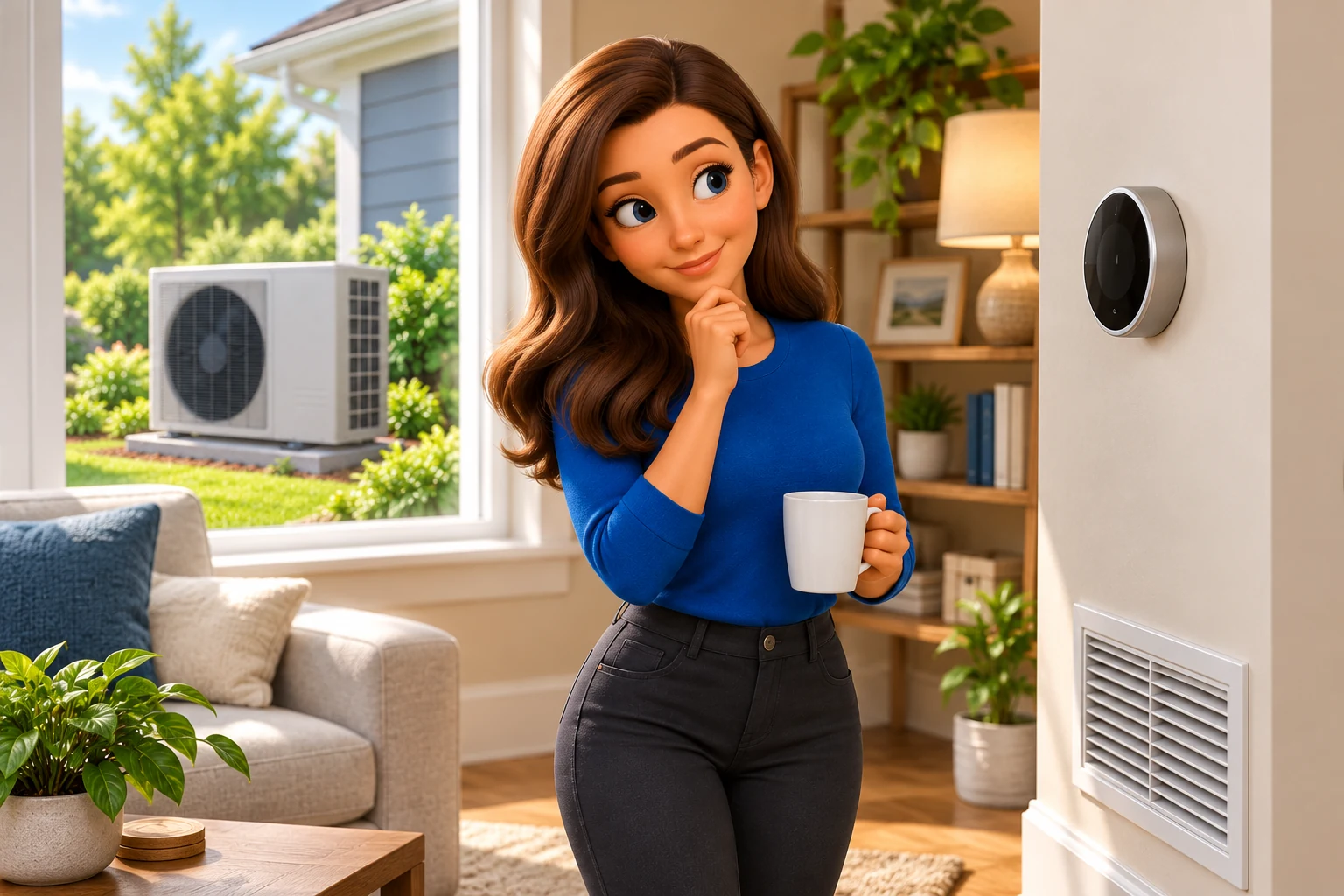
Smart heat-pump operation starts with the right setup, clear airflow and a schedule that works with the installed controls. Connected features can help you observe operation, but they cannot correct a refrigerant fault, poor sizing or leaking ducts.
Understand the thermostat labels
The thermostat's System Heat, Cool and Auto settings choose the operating mode. System Auto can switch between heating and cooling using a configured temperature gap, called a deadband. Fan On and Fan Auto control the indoor fan. A ductless remote may have a separate automatic fan-speed setting. Check the manual before changing either setting.
Fan Auto is often appropriate for conventional cycling systems. Continuous fan operation may serve a designed filtration or ventilation purpose, but its electricity and humidity effects need consideration. Do not equate Fan On with better comfort in every home or assume an Auto label guarantees lower energy use.
Make scheduling changes deliberately
Choose comfortable occupied settings and a manageable away or sleep schedule. Heating setbacks can reduce the building's heat loss, while recovery may call for backup on some systems. The net effect depends on controls, weather, equipment and the duration of the setback.
🛑 If backup runs heavily after recovery, review the schedule and ask whether adaptive recovery or staging settings suit the equipment. Do not disable backup, make repeated tiny changes to trick the thermostat or set manual Emergency Heat for ordinary cold weather. See auxiliary-heat guidance.
Protect airflow and recognize defrost
- Service the correct filter according to the manual and actual loading.
- Keep supplies, returns and ductless-head inlets and outlets clear.
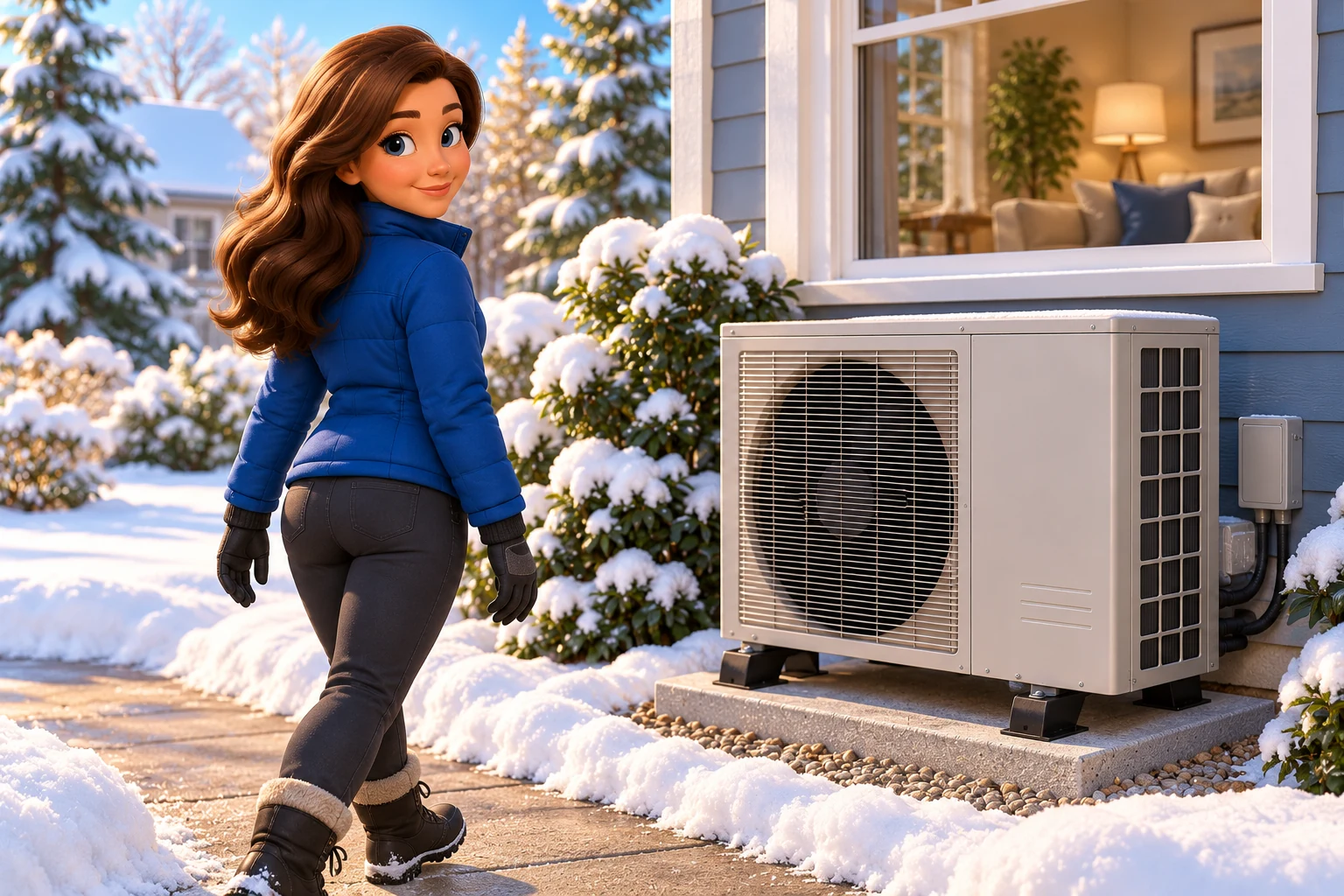
- Keep vegetation, leaves and snow outside the outdoor unit's specified clearances.
- Observe drainage and report indoor leaks promptly.
- 🛑 Leave internal electrical, refrigerant and combustion service to qualified personnel.
Light outdoor-coil frost during heating can be normal. Defrost can briefly change sound, stop the outdoor fan or produce water vapor. Persistent solid ice, blocked drainage or falling indoor temperature needs diagnosis. Ice on the indoor coil during cooling is a different problem; follow the frozen-AC guide.
Evaluate cold-weather performance correctly
There is no single outdoor temperature below which all heat pumps become inefficient or stop working. Compare the exact model's capacity and power input at the home's design conditions with its calculated load. A low-temperature operating limit, an efficiency rating and sufficient capacity are different things.
ENERGY STAR's cold-climate criteria use defined test conditions; the designation alone does not prove that backup is unnecessary in your house. Equipment selection belongs with a load calculation and performance data.
Track useful results
Record comfort, humidity, faults, unusual backup operation and energy use alongside weather and occupancy. An app's runtime chart is useful evidence, but it is not a measured savings comparison against an identical home without the change. If comfort remains poor, use our commissioning checklist to request documented tests.
Conclusion
Make one sensible operating change at a time, then observe the result. Appropriate controls, clear airflow and verified system performance are more useful than a universal thermostat rule or an unsupported savings percentage.
Continue with our heat-pump guides for related homeowner decisions.

Scott Harding
Scott is the main author of DIY Home Comfort. Learn more about the team and our approach on the About page.