What Are Heat Pump Heat Strips? Backup Heat Explained
Understand electric heat strips, automatic auxiliary heat and manual Emergency Heat, and learn what to check before changing backup settings.
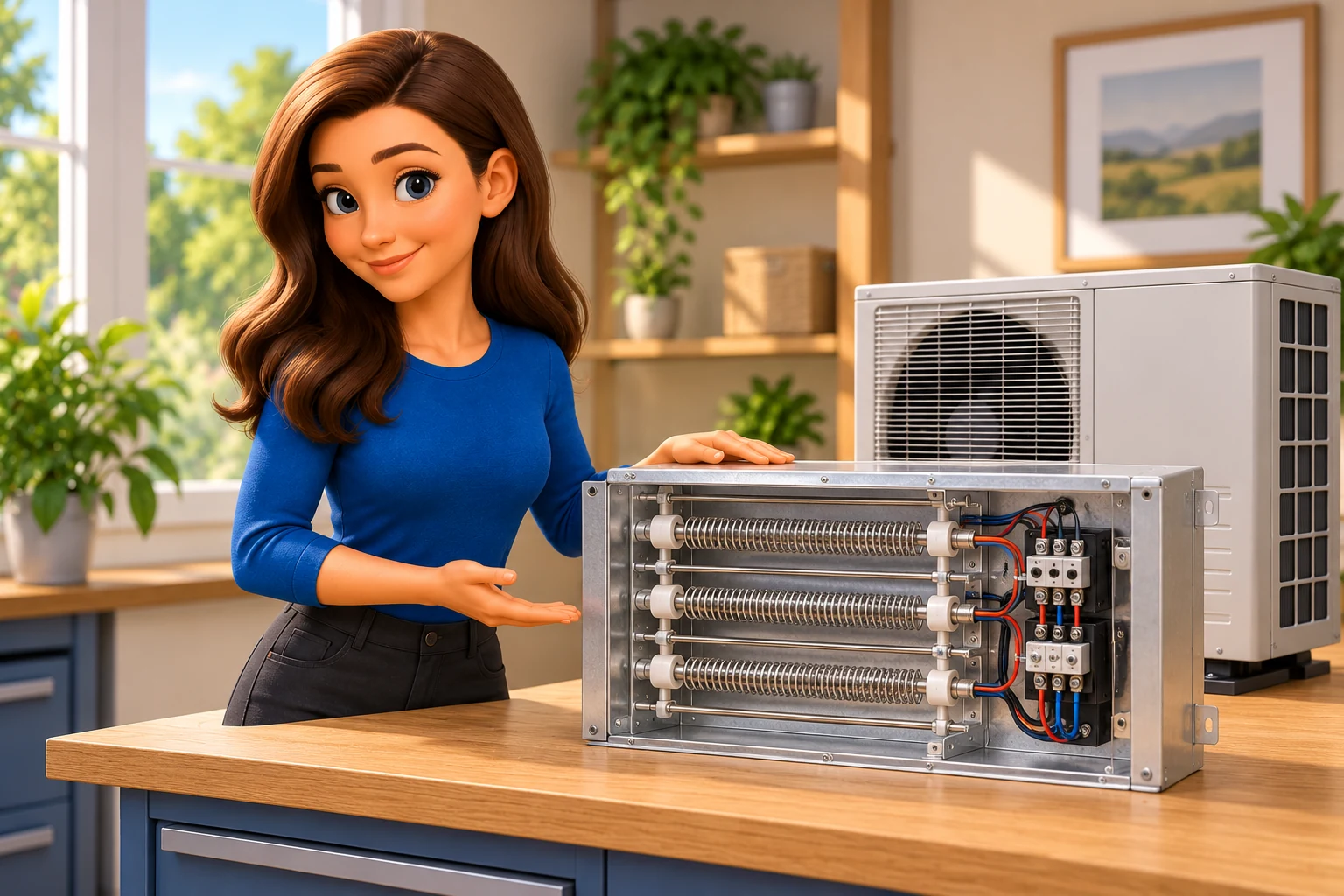
Heat pump heat strips are electric resistance elements installed in a compatible air handler to provide supplemental or backup space heating. The blower moves air across the elements and into the ducts. They are not a separate fuel source: both the heat pump and the strips use electricity, but they deliver heat differently.
🛑 If there is smoke, a burning electrical smell, arcing or repeated breaker tripping, stop using the system and arrange qualified service. Do not open the heater compartment or test live wiring.
How heat strips work
Electric current heats the resistance elements. The listed heater kit, controls, airflow and electrical supply must all suit the air handler and installation. Kits come in different capacities and may have several stages. A small portable heater's wattage does not tell you the capacity of a whole-house backup bank. The manufacturer's heater-kit information shows why the exact kit and its compatibility matter.
Resistance heat converts approximately one unit of electricity into one unit of heat at the element. A heat pump can deliver more heat per unit of electricity by moving heat from outside. Compare operation at the same outdoor condition, including backup and defrost, rather than assuming a fixed bill increase.
Auxiliary heat versus Emergency Heat
| Control or mode | What it generally does | Homeowner decision |
|---|---|---|
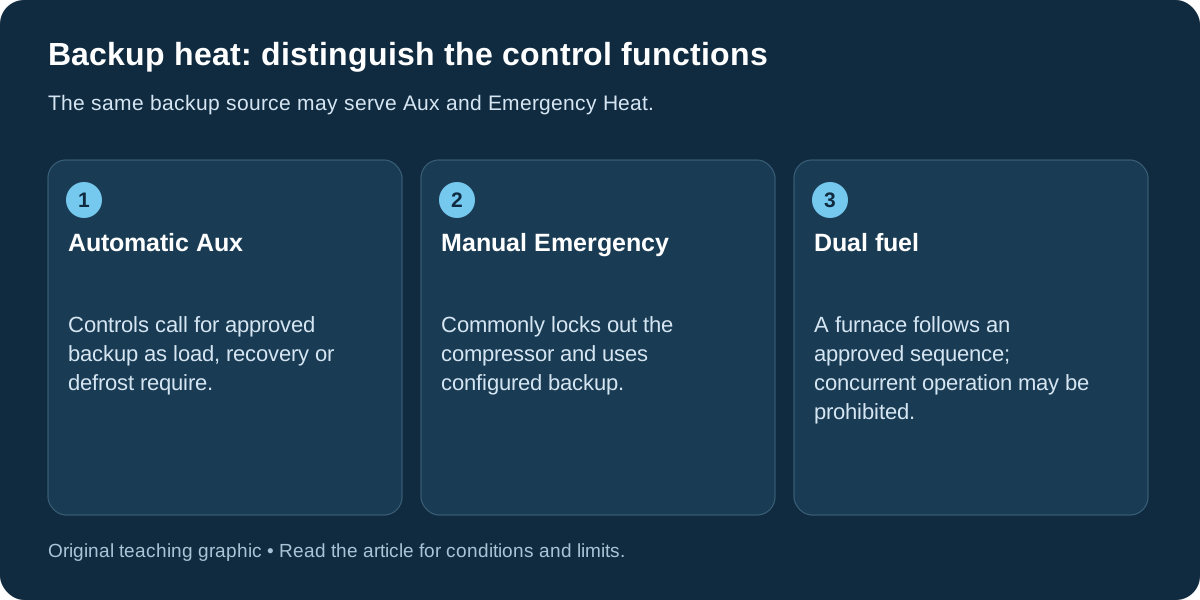
| Auxiliary or Aux heat | Automatically adds approved backup when the control sequence calls for it; it may also support defrost | 🛑 Observe when and how long it runs; do not disable it to hide a symptom |
| Manual Emergency Heat | Usually locks out the heat-pump compressor and uses the configured backup source | Follow the installed manual and service advice when the compressor is unavailable |
| Dual-fuel backup | Uses a furnace according to an approved sequence, often with compressor lockout | Have fuel settings and changeover logic commissioned professionally |
Aux and Emergency Heat can use the same electric elements. They are different control functions, not necessarily two separate heaters. Some systems use a furnace rather than strips. See when a heat pump switches to Emergency Heat for this distinction.
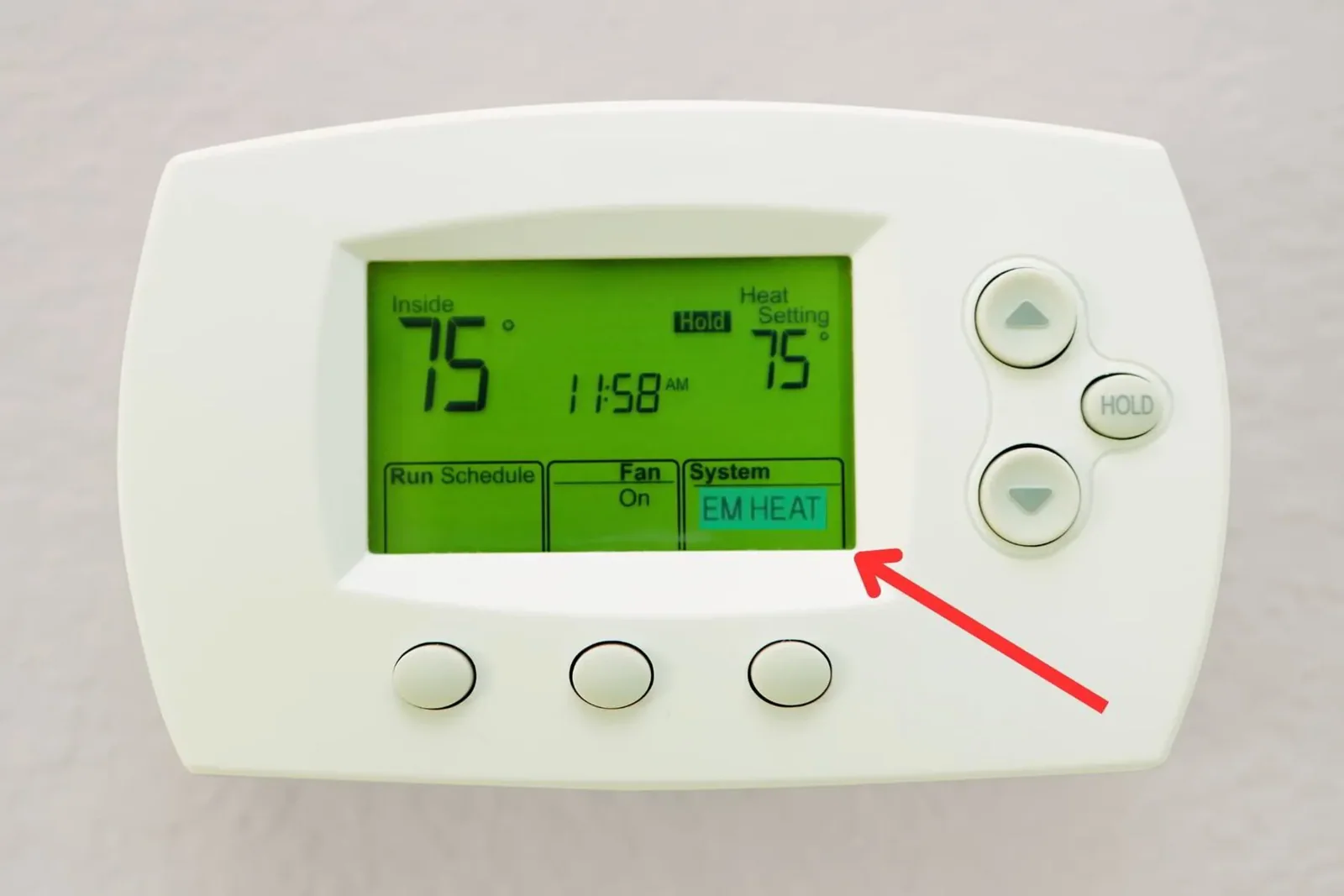
Why backup heat may run
Backup can meet a load above the compressor's available output, support temperature recovery or operate during defrost. Outdoor temperature, indoor demand, timers, staging and equipment faults can all affect the sequence. There is no universal temperature or thermostat-change threshold that proves the strips should turn on.
Record outdoor conditions, the setpoint, indoor temperature, displayed mode and run time. Compare those observations with the installed instructions. If Aux stays on in mild conditions, comfort falls or electricity use changes unexpectedly, request diagnosis. A technician should check capacity, airflow, staging, sensors and compressor operation before recommending a settings change.
Can you reduce strip use safely?
Keep the correct filter clean, maintain unobstructed supply and return paths, and use a schedule suited to your controls. Large recovery demands can call for backup on some systems. Repair duct leakage and building heat loss where an assessment supports that work; our HVAC energy-efficiency guide puts these measures in order.
🛑 Do not disconnect the heater, bypass a limit or change installer wiring. Backup sizing, branch circuits and airflow require qualified design and installation. A thermostat, solar panel or water heater is not a direct substitute for a space-heating backup system.
Conclusion
Heat strips provide useful backup when properly matched and controlled. Reduce avoidable use by investigating the load and control sequence, while preserving the heat needed for comfort and freeze protection. Keep the final settings and test results in your commissioning checklist.
Continue with our heat-pump guides for related homeowner decisions.

Scott Harding
Scott is the main author of DIY Home Comfort. Learn more about the team and our approach on the About page.