Why Is My AC Unit So Loud? Sounds, Stop Points and Service
Record when and where an AC noise occurs, recognize urgent electrical or mechanical symptoms, and avoid unsafe internal fan or motor repairs.
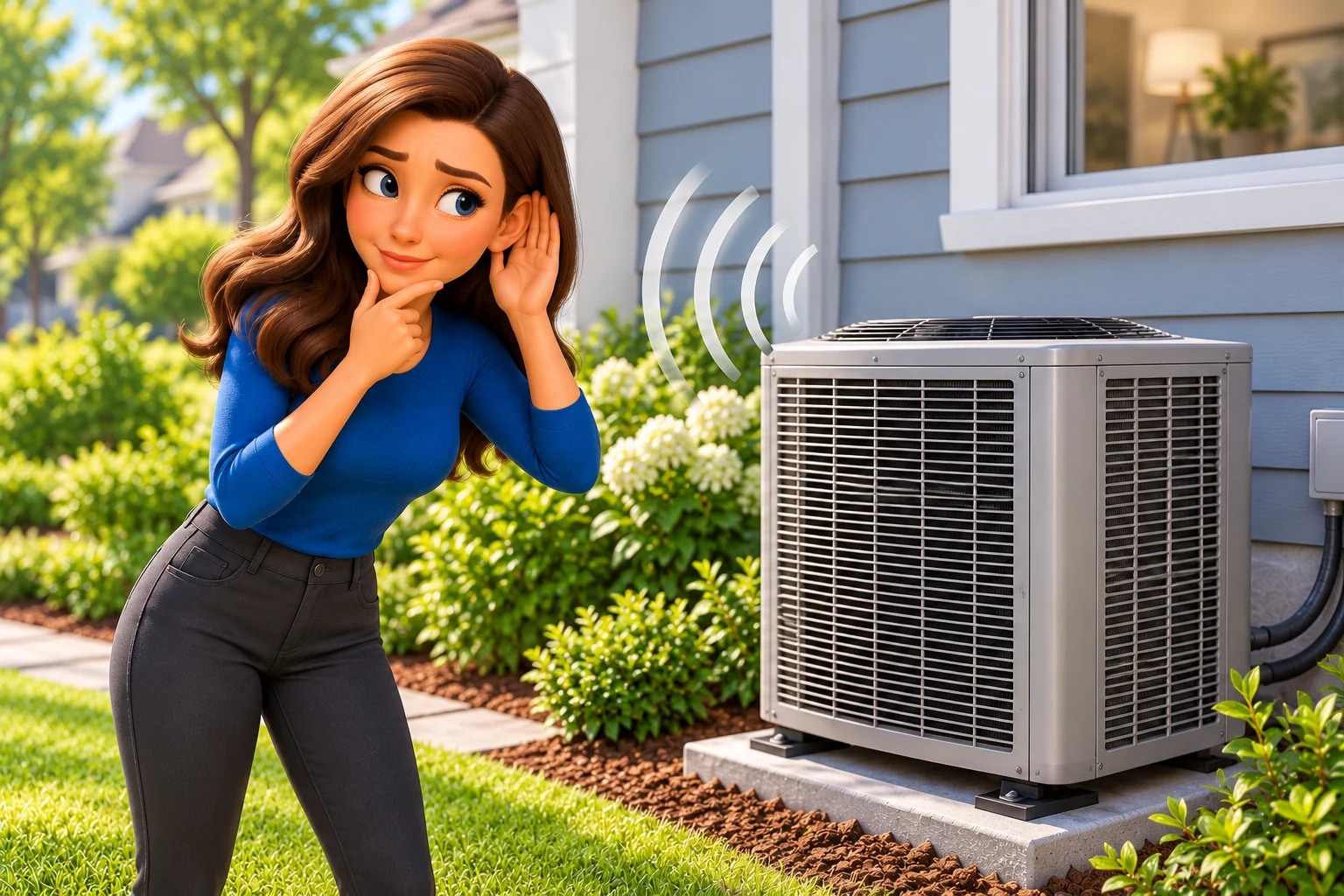
An AC can become loud because of airflow, vibration, installation conditions or an internal equipment fault. A new sound deserves attention, but its name alone does not identify a failed part. Start by noting where it comes from and which part of the operating cycle produces it.
🛑 If you hear severe grinding or screeching, see arcing or smoke, or notice an electrical burning smell, stop operating the system when safe and arrange qualified service. Keep away from damaged wiring and moving parts. Do not open a cabinet to listen more closely.
Describe the noise before choosing a repair
| Sound or pattern | What to record | Appropriate response |
|---|---|---|
| Rattle or vibration | Indoor/outdoor location, start/stop versus steady operation | Check for safely accessible loose household items; have mounting/internal parts inspected |
| Whistle or strong air rush | Filter change, grille location and airflow complaint | Check accessible filter/openings; request airflow and pressure assessment |
| Hum with no successful start | Whether a fan or compressor attempts to run | 🛑 Stop repeated starts; electrical/mechanical diagnosis is needed |
| Grinding, screeching or metallic impact | Where and when it occurs | 🛑 Stop use when needed and request service; do not tighten internal fan hubs |
| Hiss or bubbling with loss of cooling | Timing, visible ice and performance change | Keep the circuit closed and arrange diagnosis; sound does not prove a refrigerant leak |
Keep safe checks outside the equipment
Move furniture or objects that obstruct room grilles. Inspect the normal owner-accessible filter, especially if noise began after replacement. A filter's dimensions, fit and resistance matter as well as its MERV rating.
🛑 Observe the outdoor unit from a safe position outside the guards. Loose leaves on a surrounding surface may be removable without touching the equipment, but do not reach inside, push a fan, tighten a hub, adjust a belt or lubricate a motor. Do not remove panels just because the breaker has been switched off.
Carrier's AC troubleshooting guidance reserves high-voltage component work for qualified personnel. Capacitors can store energy, and repeated breaker resets are not a noise remedy.
Assess vibration and air delivery as a system
Sound can travel through refrigerant piping, brackets, ducts or the building structure. A mounting issue may need appropriate supports or isolation specified for the equipment. Improvised pads, covers or enclosures can obstruct airflow, drainage or service access.
For a duct whistle or rush, ask the contractor to examine airflow, external static pressure, filter resistance and duct/grille design together. Closing registers can make pressure and airflow problems worse. Read MERV and airflow and why closing vents is not a reliable saving strategy.
Compare sound ratings fairly
A decibel number needs a measurement method, operating mode and context. Outdoor sound power is different from sound pressure measured at a particular distance. Indoor fan settings, compressor capacity, nearby walls and installation can change what a listener hears.
Do not use one universal decibel range to declare every modern AC normal or defective. If noise is a purchase concern, request comparable model ratings and discuss the proposed location, boundary requirements and operating conditions with the installer.
Repair or replace based on evidence
Ask for a diagnosis, itemized repair scope and the check after repair. There is no universal rule that spending one-third or one-half of replacement cost proves replacement is the better choice. Condition, warranty, other faults, complete replacement scope and expected operating cost all matter.
Our repair-versus-replace comparison shows how to compare a consistent time horizon. An unresolved duct or mounting problem may remain noisy even after new equipment is installed.
Conclusion
Record the timing and location, correct safe accessible obstructions and leave internal fan, electrical and refrigeration work to qualified service. For heat-mode sounds and winter defrost, see the heat-pump noise guide.
Continue with our heat-pump guides for related homeowner decisions.

Scott Harding
Scott is the main author of DIY Home Comfort. Learn more about the team and our approach on the About page.