Home Energy Efficiency: A Practical Upgrade Roadmap
Plan home energy efficiency upgrades with a practical roadmap for audits, insulation, HVAC, solar, batteries and EV charging. Learn what to prioritize.
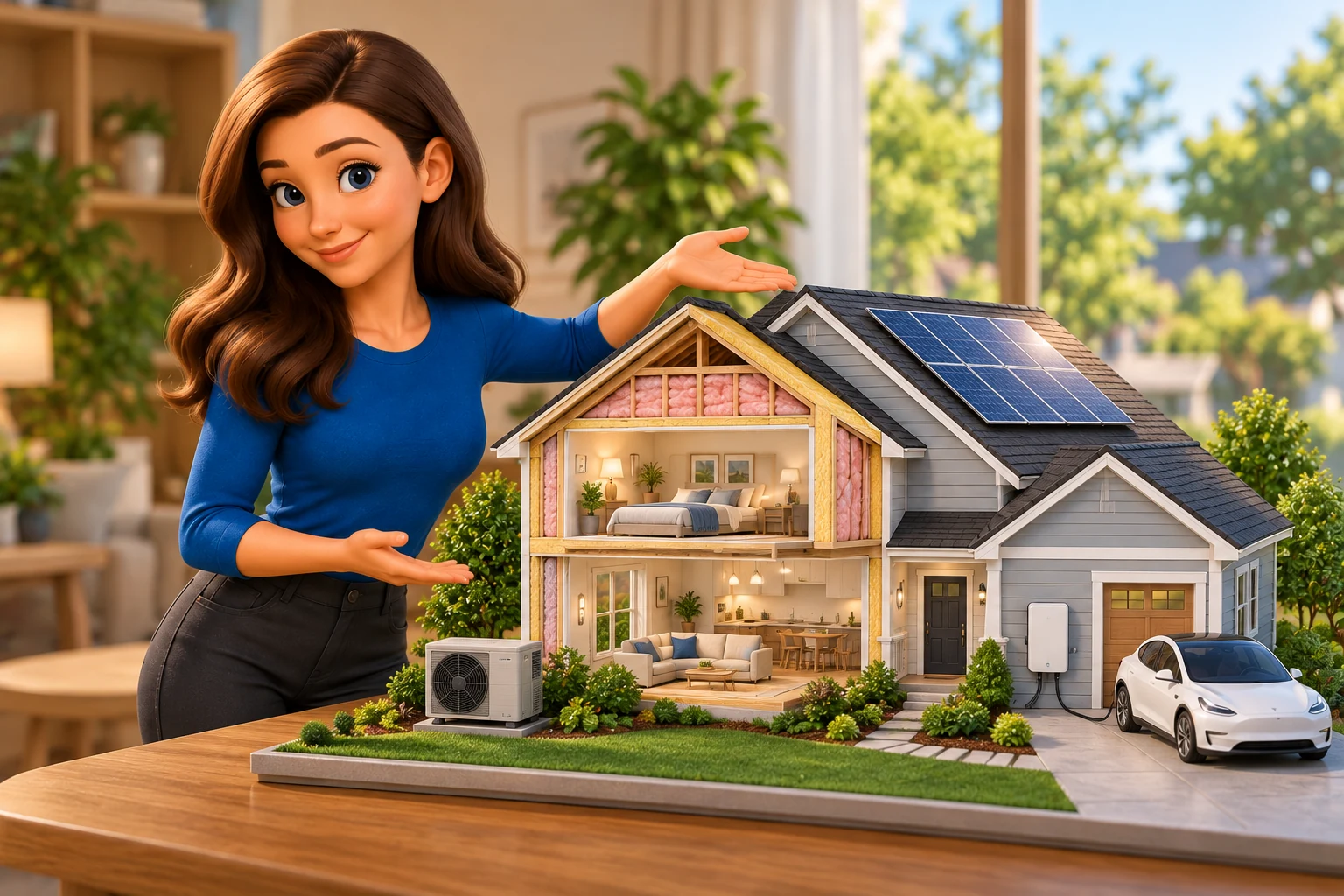
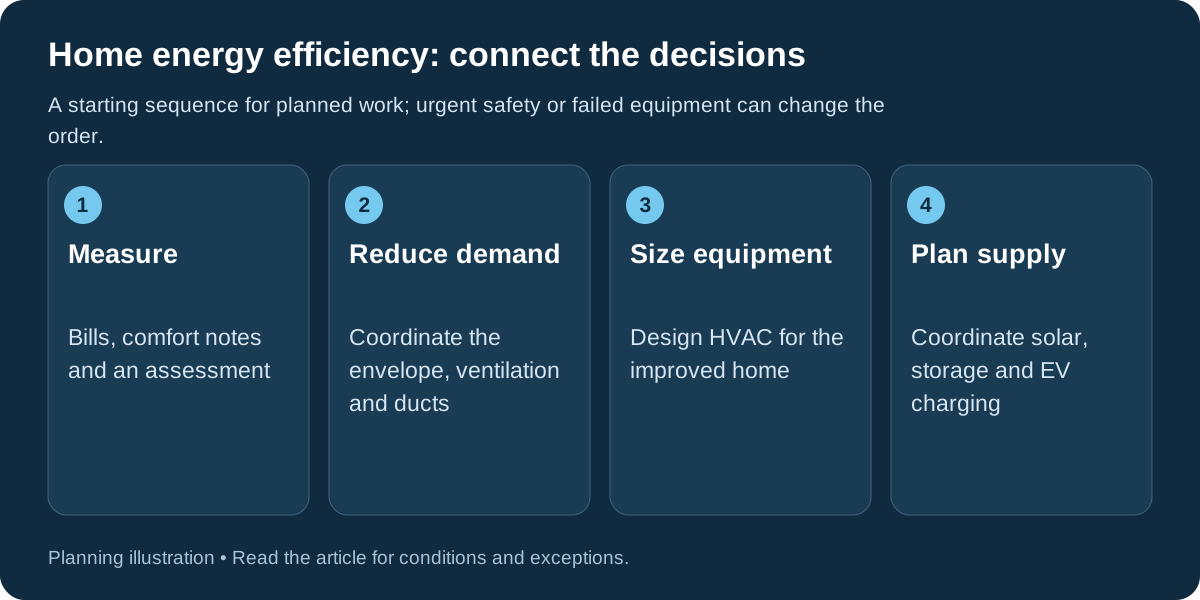
Home energy efficiency starts with knowing where your home uses energy. Then you can choose improvements that work together. For most planned upgrades, measure current use, fix building problems and reduce heating and cooling demand first. Choose equipment for the improved home. Use that plan to work out your future electricity needs for solar, batteries and EV charging.
That order is a starting point, not a rule that forces you to keep unsafe or failed equipment. This roadmap helps U.S. homeowners organize the decisions, compare proposals and avoid paying twice for work that could have been coordinated.
Start with the problem you want to solve
A lower utility bill, a comfortable upstairs bedroom and backup power during an outage are different goals. One project may help all three, but it should not be judged against a promise it cannot deliver. Write down your top two outcomes before shopping for equipment.
| Your priority | First question | Useful evidence |
|---|---|---|
| Lower energy spending | Is the increase from usage, rates or both? | Monthly bills and tariff details |
| More even temperatures | Is the problem heat gain, air leakage or delivery? | Room observations and assessment findings |
| Replace aging HVAC | What capacity will the improved house need? | Equipment condition and a load calculation |
| Outage resilience | Which loads must run, and for how long? | Critical-load list and operating schedule |
The Department of Energy calls this a whole-house systems framework. In plain English, your building and its equipment affect each other. The steps below help you turn that idea into a written plan.
Build a baseline before choosing upgrades
Collect at least a full year of available electric and fuel bills. Record usage separately from dollars, along with billing days, estimated meter readings and changes in occupancy. A new EV, an unusually hot summer or a utility rate increase can change the bill without proving that your insulation has failed.
🛑 Use our guide to reading your energy bill to build a simple worksheet. Then make a room-by-room list: where is it uncomfortable, at what time, and under what weather conditions? Photograph accessible problem areas without opening equipment or entering unsafe spaces.
If you cannot explain the pattern, a home energy audit can turn observations into a prioritized scope. Ask what measurements the service includes before assuming every assessment offers the same tests.
Reduce demand through the building and ducts
The building envelope separates your heated and cooled rooms from outdoors and unconditioned spaces, such as an unfinished attic. Air leakage and inadequate insulation are different problems. Your ducts also matter. They need to deliver conditioned air to the right rooms without too much leakage or heat transfer.
- Use air sealing versus insulation to identify which mechanism a quote addresses.
- Use the attic planning guide before covering hidden conditions with more insulation.
- Use duct sealing versus duct insulation when rooms remain uncomfortable despite normal equipment operation.
- Try appropriate cooling-load reductions before assuming a larger AC is the answer.
Resolve roof leaks, water intrusion and safety concerns before covering up the areas being worked on. Include an assessment of ventilation needs when reducing air leakage. Air sealing does not mean blocking required combustion air, exhaust terminations or designed ventilation.
Select equipment for the home you are creating
Give your HVAC contractor the current assessment and your planned improvements to the building envelope, such as insulation and air sealing. Ask how they calculated your heating and cooling load, which assumptions they used and how the equipment performs in your home's design conditions. Simply matching the old unit's nominal capacity, or labeled size, doesn't answer those questions.
Also ask about duct capacity, airflow, controls, electrical requirements and commissioning. Efficient equipment can still disappoint if the installation does not fit the house. If your heat pump is serviceable, our heat-pump operating guide offers a separate starting point for operating habits while you plan larger upgrades.
Do not delay an urgent replacement simply to complete a perfect retrofit sequence. Instead, document what must happen now and which future improvements the replacement design should anticipate. The upgrade-order guide shows how to handle that exception.
Coordinate solar, batteries and EV charging
Solar generates electricity; a battery stores energy; an EV charger adds a potentially substantial electrical load. These functions should be considered together, but they do not solve the same problem. A battery’s usefulness depends on both the energy it can deliver and the power it can supply at one time.
Prepare a future-load list before obtaining solar proposals: planned HVAC changes, water heating, EV charging, other appliances and likely occupancy changes. Ask the installer to show the assumptions rather than size a system solely from last year’s bill.
🛑 For backup, list essential circuits and desired runtime separately from annual energy savings. Have a qualified electrician evaluate service capacity and equipment compatibility. Do not assume rooftop solar operates during an outage or that any EV can power a home. Treat those as system-design questions requiring confirmed equipment and utility requirements.
Plan a complete rooftop project with our home solar guide, including roof checks, sizing, export rules and quotes.
Once you know the loads and goals you want to coordinate, a home energy management system can connect controls across HVAC, solar, batteries and EV charging.
Use a staged roadmap you can actually fund
Here's an illustrative planning sequence to help you get started. It isn't a cost estimate or a promise of savings. You may need to move a step forward to handle an urgent problem or coordinate it with other work.
- Document: collect bills, rank comfort concerns and define your spending limit.
- Investigate: obtain the assessment and resolve safety, moisture and repair priorities.
- Reduce loads: coordinate air sealing, insulation, duct work and appropriate ventilation.
- Upgrade systems: select and commission HVAC and water-heating equipment using the planned house conditions.
- Plan electricity: evaluate solar, storage and EV charging with future loads included.
- Verify: retain test results, invoices and operating instructions, then monitor performance.
For each proposal, write down the work included, what needs to happen first, what's excluded and how you'll check the finished job. These are your scope, dependencies, exclusions and acceptance checks. Keep incentives separate until the program confirms your eligibility and timing. Comfort or a necessary replacement can justify a project without an invented short payback.
Measure results without confusing weather with savings
After work, compare usage over similar periods and note weather, occupancy, thermostat settings and new electrical loads. Ask for post-work tests where appropriate; a lower bill alone cannot verify duct sealing or ventilation performance.
Keep one project log. Record the date, work performed, test result and any concern that still needs attention. If you install several measures together, their effects can overlap. Don't add separate sales estimates and treat the total as proven savings.
Your next step is simple: choose the uncertainty that could change your spending decision. Start with the bill worksheet if usage is unclear, the audit guide if the building is unclear, or the upgrade-order guide if a replacement deadline is driving the project.
The home energy savings measurement guide walks through matched billing dates, weather adjustment and the difference between lower energy use and a lower price.
Include low-cost improvements while planning larger work
You don't have to wait for a major renovation to make useful changes. Look at lighting you use for long periods, unnecessary always-on equipment, accessible weatherstripping and how you use window coverings. Try these smaller actions while you investigate the bigger issues.
🛑 The DOE’s home energy checklist includes lighting, equipment maintenance and household operating habits. Treat water heating as another item to evaluate: record the water heater's condition and usage concerns, then ask about appropriate operating and replacement options. Do not copy a temperature setting or add an insulation blanket without checking the equipment instructions and household requirements.
For each quick win, record its purpose and cost. A modest comfort improvement may be worthwhile even when the change is too small to isolate on a monthly bill. Avoid replacing serviceable windows or equipment simply to complete a checklist; compare targeted repairs, operating changes and replacement proposals first.
For the equipment side of your plan, use our HVAC energy efficiency guide to connect ratings, airflow, filters and installation checks.
When the roadmap reaches equipment selection, plan a heat pump purchase around the home's loads, room layout, cold-weather performance and complete installation scope.
Conclusion
Start your home energy plan with your bills, comfort concerns and building condition. Use those findings to choose an order of work. Coordinate improvements that depend on each other, then check the results before your next major purchase.
Keep building your plan: explore more Energy Efficiency articles for practical guidance on home systems, energy use and your next upgrade.

Scott Harding
Scott is the main author of DIY Home Comfort. Learn more about the team and our approach on the About page.